

"I want to add that the safety profile was impeccable for this. No one experienced a [device-related] adverse event," says Matthew J. Mutter, MD.
"I want to add that the safety profile was impeccable for this. No one experienced a [device-related] adverse event," says Matthew J. Mutter, MD.

"A lot of shared decision-making has to do with, what is important to the individual man?" says Dean S. Elterman, MD, MSc, FRCSC.

"My second book is on pelvic pain or prostatitis. It is focused on a holistic approach and stretches and mindfulness exercises," says Vanita Gaglani, RPT.

“I would say both there could be an increase in MRI-guided [SBRT] and there may be increase in investigation into shrinking margins with CT-guided SBRT as well,” says Amar U. Kishan, MD.

"Despite the fact that multiple new procedures have come to light, nothing has the same excellent outcomes as HoLEP," says Amy E. Krambeck, MD.

“While sperm cryopreservation is very safe, there might be hidden costs that patients aren't aware of, both [in] the upfront costs of preserving the sperm and then the annual cost of maintaining it at a facility,” says Bradley Roth, MS4.
"It was interesting to think about the relationship between a disease process and a person's environment, and measure that and establish that relationship in a quantitative way," says William Furuyama, MD.

This video segment explores treatment approaches for PSMA-positive mCRPC patients, algorithms for monitoring liver dysfunction in advanced CRPC, and exciting advancements in mCRPC treatment.

Panelists discuss how for patients with BCG-unresponsive bladder cancer, treatment selection depends on key factors including tumor characteristics (carcinoma in situ vs papillary), patient fitness, and preferences. Standard options include radical cystectomy (the gold standard) or bladder-preserving approaches such as pembrolizumab, intravesical chemotherapy, or clinical trials. The decision requires careful individualization based on risk stratification, comorbidities, and shared decision-making.
Panelists discuss how FDA approvals have expanded options for BCG-unresponsive non–muscle-invasive bladder cancer (NMIBC), with pembrolizumab, nogapendekin alfa inbakicept-pmln, and nadofaragene firadenovec-vncg offering new immunotherapy and gene therapy approaches.
This video segment discusses the frequency of encountering mCRPC patients with hepatic dysfunction, additional tests to consider, and treatment options for these patients.

“Black patients have over 2-fold excess mortality compared to White men, and that has been fairly consistent; the actual rate ratio has hovered between 2 and 2.5 for many years,” says Matthew R. Cooperberg, MD, MPH.

"Most of these comorbidities, while they do affect the bladder, don't seem to affect the surgeries for stress urinary incontinence," says Jaspreet S. Sandhu, MD.

A panelist discusses how targeted gene therapy has revolutionized BCG-unresponsive non–muscle-invasive bladder cancer (NMIBC) treatment through agents like nadofaragene firadenovec, which shows promising complete response rates at 3 months, though long-term follow-up remains crucial for assessing durability of response and comparing real-world outcomes with clinical trial data.

Experts discuss current trial data from several studies on non-muscle invasive bladder cancer (NMIBC).
A panelist discusses how BCG-unresponsive non–muscle-invasive bladder cancer (NMIBC) has evolved from having limited treatment options beyond radical cystectomy to now having several therapeutic alternatives including intravesical chemotherapy and immunotherapy, though each current option comes with its own efficacy limitations and adverse effect profiles that must be carefully weighed against patient factors.
Experts discuss the evolving landscape of chemotherapy and immunotherapy options for patients with non-muscle invasive bladder cancer (NMIBC).

"We need to think carefully about what we're putting in our body and what the regulations are about natural products that we ingest," says Channing J. Paller, MD.

"There are actually no data to support that 1 neuromodulation is better than another based on disease severity, and this is based on the systematic review done for the OAB guideline," says Anne Pelletier Cameron, MD, FRCSC, FPMRS.
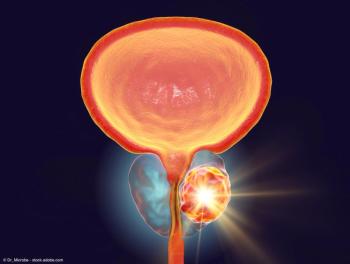
"Physician scored GU toxicity grade 2 or greater at 2 years was 51% with the CT-guided and 27% with the MRI-guided," says Amar U. Kishan, MD.

“It does seem clear that we need to get back to a smarter middle ground of screening—using screening more intelligently, finding the high-grade cancers and treating them—so that we can get that mortality curve back on a downward trajectory,” says Matthew R. Cooperberg, MD, MPH.

"It really remains to be seen whether we can expand this to care for other types of urological inpatients," says Timothy D. Lyon, MD.

"I would say the fact that we performed 754 HoLEP procedures in 2024 is a reflection of the efficiency and the high quality of care that you receive at Northwestern," says Amy E. Krambeck, MD.
"The idea here is to determine, from an epidemiologic perspective, whether freezing sperm for many men before their vasectomy is cost-effective compared to whether we should simply avoid this routine practice and allow men to proceed with their vasectomy and then restore their fertility in the future," says Scott D. Lundy, MD, PhD, HCLD.
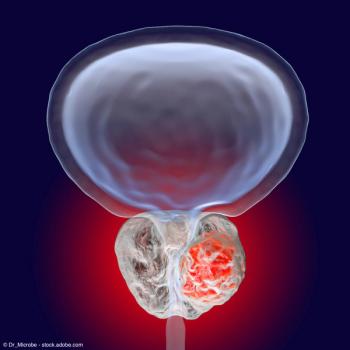
“The trial was specifically looking at whether that aggressive margin reduction from 4 mm to 2 mm would lead to a reduction in physician-reported urinary toxicity, specifically in the first 90 days after radiation,” says Amar U. Kishan, MD.

"I think we're learning slowly—I hope faster—how to use these agents as any other drug that a pharmaceutical company would study," says Channing J. Paller, MD.
Panelists discuss how BCG-unresponsive bladder cancer is defined by disease persistence/recurrence within 6 to 12 months of adequate BCG therapy. Treatment options include cystectomy, intravesical chemotherapy, immunotherapy, or clinical trials.
This video segment covers patient selection criteria for different versions of abiraterone, strategies for assessing treatment efficacy and safety, engaging caregivers to monitor compliance and side effects, and navigating insurance challenges to ensure patients receive the recommended version.
This video segment discusses patient selection criteria for choosing between the original brand, generic, and micronized versions of abiraterone.
Panelists discuss how low-risk non–muscle-invasive bladder cancer (NMIBC) requires transurethral resection of bladder tumor (TURBT) with surveillance. Intermediate-risk disease needs adjuvant intravesical chemotherapy. High-risk cases receive BCG induction/maintenance therapy after TURBT, with close monitoring.