
Opinion|Videos|October 14, 2024
Navigating PD-1/PD-L1 Agents: Influential Factors in Choosing the Right Therapy
Key Takeaways
- Route of administration impacts patient compliance and convenience, influencing the choice of PD-1/PD-L1 agents.
- Duration of therapy affects patients' quality of life and is a key consideration in treatment selection.
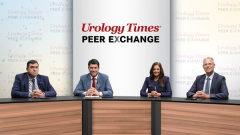
Panelists discuss how various factors, such as route of administration, duration of therapy, safety, efficacy, and cost, could influence the selection of different PD-1/PD-L1 agents once they receive approval, highlighting the importance of these considerations in optimizing patient care.
Advertisement
Episodes in this series
Video content above is prompted by the following:
- What factors could influence the choice between different PD-1/PD-L1 agents if they are eventually approved [ie, route of administration, duration of therapy, safety, efficacy, place of administration, drug preservation, biomarkers, cost, etc]?
Advertisement
Related to this article
VOLGA results raise the question of treatment de-intensification in perioperative MIBC care, according to Suzanne B. Merrill, MD, FACS.

Virtuoso Surgical expects to initiate a focused US launch at leading urology centers in 2027.
Pasritamig is being evaluated with or without JNJ-9401 in the ongoing phase 3 KLK2-comPAS trial.
The combination of nogapendekin alfa inbakicept plus BCG demonstrated a statistically significant improvement in efficacy vs BCG alone.
These FAQs outline key recommendations from ASTRO's updated guideline on shorter-course radiation therapy for localized prostate cancer.
Patient goals, disease features, and response to prior therapy guide treatment choices across high-risk NMIBC, according to Suzanne B. Merrill, MD, FACS.

Suzanne B. Merrill, MD, discusses emerging perioperative approaches in MIBC and the potential for more personalized treatment selection based on disease characteristics.
BCG monotherapy and a high-quality TURBT remain the foundation for BCG-naive high-risk NMIBC, according to Vignesh T. Packiam, MD.
Advertisement
Advertisement
Trending on Urology Times
1
FDA grants De Novo authorization to Virtuoso Robotic System for bladder tumor resection
2
Pasritamig combination yields 73% PSA response rate in phase 1 mCRPC study
3
FAQ: ASTRO guideline on hypofractionated radiation therapy for localized prostate cancer
4
Q&A: Suzanne B. Merrill, MD, FACS, on perioperative therapy in MIBC
5