
Opinion|Videos|May 27, 2026
Evaluation of a Post-RP MMAI Model: Design and Cohort
Author(s)R. Jeffrey Karnes, MD
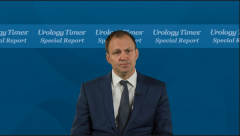
In this video, R. Jeffrey Karnes, MD, describes the design of the Mayo Clinic external validation study of the post-RP MMAI model, including the rationale for focusing on a long-term survivor cohort, the structure of the MMAI score, and the primary and secondary end points used in the analysis.
Advertisement
Episodes in this series
The external validation study of the post–radical prostatectomy (RP) multimodal AI (MMAI) prognostic model was designed to assess performance in a rigorously followed, long-term survivor population drawn from the Mayo Clinic radical prostatectomy registry. In the second segment of this 5-part seires, R. Jeffrey Karnes, MD, the Dr. Anson Clark Professor of Urology at Mayo Clinic in Rochester, Minnesota, explains the rationale for selecting a cohort defined by at least 10 years of survival—a threshold that reflects the standard life-expectancy consideration applied in prostate cancer screening and treatment decisions—and describes a registry infrastructure that has tracked approximately 30,000 men with annual surveys monitoring oncologic outcomes and quality of life.
The study enrolled 500 men who had undergone RP at Mayo Clinic, with approximately 480 patients remaining after quality assurance review of the pathology slides. The median follow-up was 15 years, aligning with the longest randomized data available in the field. The MMAI model, developed by Artera, incorporates standard clinical variables—including patient age, tumor grade and stage, surgical margin status, and postoperative PSA—alongside a digital pathology component that analyzes hematoxylin and eosin–stained whole-slide images. Karnes explains that MMAI scores were compared against the CAPRA-S system, a widely used 12-point clinical scoring tool developed at the University of California, San Francisco, that estimates the likelihood of 5-year recurrence after surgery.
The primary end points were distant metastasis and prostate cancer–specific mortality, with prostate-specific antigen persistence and biochemical recurrence treated as secondary end points. Karnes notes that prostate cancer–specific deaths were relatively infrequent given the 15-year median follow-up—a finding he interprets favorably as evidence of the curative potential of RP in appropriately selected patients. On the question of competing risk, he observes that the cohort's overall health and longevity, along with age being incorporated as a model variable, adequately addressed the primary competing risk in this disease context without requiring formal Charlson comorbidity adjustment.
Advertisement
Related to this article

Updated CAPItello-281 data showed a clinically meaningful benefit in OS when capivasertib was added to abiraterone and ADT in PTEN-deficient mHSPC.

Andrea Necchi, MD, discusses how results from the CA017-078 trials compares with other perioperative immunotherapy trials in muscle-invasive bladder cancer.

In TALAPRO-3, talazoparib plus enzalutamide improved rPFS vs placebo plus enzalutamide (HR, 0.48; P < .0001) in HRR-mutated mAPMN/S prostate cancer.

Final phase 3 CA017-078 data show perioperative nivolumab plus GC did not significantly improve pCR (39.1% vs 29.6%) or EFS (HR, 0.94) vs GC alone in MIBC.

Daniel Heng, MD, discusses final LITESPARK-011 results, including sustained PFS benefit with belzutifan plus lenvatinib vs cabozantinib in advanced ccRCC.
In the randomized phase 2 PE-PE trial, median relapse-free survival was 25.4 months with pembrolizumab plus surgery or SABR vs 11.0 months with local therapy alone.

Interim phase 3 data show a 58% reduction in the risk of metastasis or death with the addition of darolutamide to ADT + radiation.

Carlos A. Vargas, MD, discusses updated survival outcomes, safety, and the mechanism of SYNC-T SV-102, an investigational in situ immunotherapy for metastatic prostate cancer.
Advertisement
Advertisement
Trending on Urology Times
1
Adding darolutamide to ADT and radiation improves MFS in very high-risk localized prostate cancer
2
PROTEUS Substudy: Perioperative apalutamide plus ADT improves EFS vs surgery alone
3
Talazoparib/enzalutamide approved for HRR-mutated mAPMN/S prostate cancer
4
In situ immunotherapy shows encouraging survival findings in prostate cancer
5