
Opinion|Videos|June 17, 2026
Putting Data from a Post-RP Multimodal AI Prognostic Model Into Context
Author(s)R. Jeffrey Karnes, MD
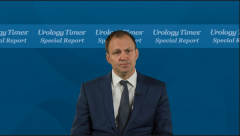
R. Jeffrey Karnes, MD, addresses the limitations of the retrospective validation study design, outlines the future research he considers necessary for broad clinical adoption of MMAI, and offers his perspective on the trajectory of digital pathology and multimodal AI across urologic oncology over the next 5 years.
Advertisement
Episodes in this series
Every retrospective prognostic study carries limitations that must be weighed when translating findings into practice, and the external validation of the post–radical prostatectomy (RP) multimodal AI (MMAI) model at Mayo Clinic is no exception. In the final segment of this 5-part series, R. Jeffrey Karnes, MD, the Dr. Anson Clark Professor of Urology at Mayo Clinic in Rochester, Minnesota, discusses the constraints of the study design candidly and frames what prospective evidence would be required to fully establish MMAI's role in routine post-RP management. Chief among the limitations he identifies are the retrospective cohort structure, limited racial diversity, and the geographic and socioeconomic characteristics associated with a tertiary referral center—factors that may affect generalizability to broader practice settings.
Karnes notes that a prospective randomized trial, in which the MMAI score is incorporated into the decision-making process rather than applied retrospectively to archival tissue, represents the evidentiary gold standard—and that such a trial is currently under way, examining whether MMAI can guide intensification or de-intensification of hormonal therapy in the postoperative setting with radiation. He also describes the model's practical accessibility as one of its more notable attributes: because it is based on digitized hematoxylin and eosin slides available from standard pathology workflows, it does not require additional tissue extraction, is rapidly returnable, and is in principle deployable globally. He identifies the development of predictive—rather than purely prognostic—models as a key priority, noting that tools capable of predicting response to specific therapies would represent a meaningful advance beyond current risk stratification.
Looking further ahead, Karnes anticipates that digital pathology and multimodal AI will reshape oncology practice across multiple disease sites, including bladder and kidney cancers, in addition to prostate cancer. He acknowledges the broader implications for the pathology workforce—suggesting that AI may support higher-quality subspecialty reads and facilitate expert consultation across institutions through digital slide sharing—while expressing measured optimism about how competitive innovation in the AI model space may accelerate progress. His closing message for community urologists is direct: engage patients in a conversation about what the MMAI score is designed to answer before ordering it, establish a shared plan for both possible results, and recognize the test's demonstrated value in a post-RP setting where minimizing both overtreatment and undertreatment remains an enduring clinical challenge.
Advertisement
Related to this article

Updated CAPItello-281 data showed a clinically meaningful benefit in OS when capivasertib was added to abiraterone and ADT in PTEN-deficient mHSPC.

Andrea Necchi, MD, discusses how results from the CA017-078 trials compares with other perioperative immunotherapy trials in muscle-invasive bladder cancer.

In TALAPRO-3, talazoparib plus enzalutamide improved rPFS vs placebo plus enzalutamide (HR, 0.48; P < .0001) in HRR-mutated mAPMN/S prostate cancer.
Final phase 3 CA017-078 data show perioperative nivolumab plus GC did not significantly improve pCR (39.1% vs 29.6%) or EFS (HR, 0.94) vs GC alone in MIBC.

Daniel Heng, MD, discusses final LITESPARK-011 results, including sustained PFS benefit with belzutifan plus lenvatinib vs cabozantinib in advanced ccRCC.
In the randomized phase 2 PE-PE trial, median relapse-free survival was 25.4 months with pembrolizumab plus surgery or SABR vs 11.0 months with local therapy alone.
Interim phase 3 data show a 58% reduction in the risk of metastasis or death with the addition of darolutamide to ADT + radiation.

Carlos A. Vargas, MD, discusses updated survival outcomes, safety, and the mechanism of SYNC-T SV-102, an investigational in situ immunotherapy for metastatic prostate cancer.
Advertisement
Advertisement
Trending on Urology Times
1
Adding darolutamide to ADT and radiation improves MFS in very high-risk localized prostate cancer
2
PROTEUS Substudy: Perioperative apalutamide plus ADT improves EFS vs surgery alone
3
Talazoparib/enzalutamide approved for HRR-mutated mAPMN/S prostate cancer
4
In situ immunotherapy shows encouraging survival findings in prostate cancer
5