
Opinion|Videos|June 3, 2026
How a Post-RP MMAI Model Performed in a Long-Term Survivor Population
Author(s)R. Jeffrey Karnes, MD
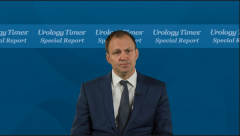
R. Jeffrey Karnes, MD, presents the performance results of the MMAI model in the Mayo Clinic long-term survivor cohort, including its ability to outperform CAPRA-S in multivariable analysis, its sustained discrimination at 15 years of follow-up, and its prognostic value in patients with biochemical recurrence, salvage radiotherapy receipt, and persistent postoperative PSA.
Advertisement
Episodes in this series
An MMAI prognostic model demonstrated meaningful risk stratification in a Mayo Clinic long-term survivor cohort, with findings that extend the model's validated performance horizon well beyond what most existing prognostic tools have been formally tested against. In the third segment of 5-part series, R. Jeffrey Karnes, MD, the Dr. Anson Clark Professor of Urology at Mayo Clinic in Rochester, Minnesota, presents the headline results: Among men classified as MMAI High, the probability of distant metastasis at 10 years approached 15%, compared with less than 5% in the MMAI Low group—representing an approximately fivefold difference in risk. In multivariable analysis, MMAI carried strong hazard ratios for distant metastasis and, importantly, the CAPRA-S score was no longer an independent predictor once MMAI was included in the model.
Karnes explains that the ability of MMAI to add prognostic value above and beyond CAPRA-S is particularly significant given that CAPRA-S is freely calculable from routinely available clinical variables. That the digital pathology component of the MMAI model—its analysis of hematoxylin and eosin–stained slide morphology—contributed incremental information beyond what clinical variables alone could capture suggests the model is detecting biologic features not fully reflected in standard pathologic grading. In the subgroup of patients who developed biochemical recurrence, MMAI retained its prognostic significance: Men with a high score who experienced recurrence had a metastasis risk of approximately 20% on follow-up, compared with less than 10% for those with a low score. Karnes further notes that prior studies incorporating MMAI into banked tissue from the NRG 9601 and 0534 salvage radiation trials showed a benefit from salvage radiotherapy in patients with high scores, with a possible additional signal for concurrent hormonal therapy.
The model also maintained its prognostic performance at 15 years of follow-up, a time horizon at which events such as metastasis and prostate cancer–specific death continue to occur, as demonstrated by the long-term data from the ProtecT trial. Karnes emphasizes that this durability is clinically meaningful, because patients undergoing RP today are generally healthy men with normal life expectancies who warrant sustained oncologic surveillance. Even in the approximately 75 patients with detectable PSA immediately after surgery—a population that often creates acute management uncertainty—the MMAI model maintained its ability to discriminate between those at higher and lower risk for future metastasis, supporting its utility across the full spectrum of post-RP clinical presentations.
Advertisement
Related to this article

Updated CAPItello-281 data showed a clinically meaningful benefit in OS when capivasertib was added to abiraterone and ADT in PTEN-deficient mHSPC.

Andrea Necchi, MD, discusses how results from the CA017-078 trials compares with other perioperative immunotherapy trials in muscle-invasive bladder cancer.

In TALAPRO-3, talazoparib plus enzalutamide improved rPFS vs placebo plus enzalutamide (HR, 0.48; P < .0001) in HRR-mutated mAPMN/S prostate cancer.

Final phase 3 CA017-078 data show perioperative nivolumab plus GC did not significantly improve pCR (39.1% vs 29.6%) or EFS (HR, 0.94) vs GC alone in MIBC.

Daniel Heng, MD, discusses final LITESPARK-011 results, including sustained PFS benefit with belzutifan plus lenvatinib vs cabozantinib in advanced ccRCC.
In the randomized phase 2 PE-PE trial, median relapse-free survival was 25.4 months with pembrolizumab plus surgery or SABR vs 11.0 months with local therapy alone.

Interim phase 3 data show a 58% reduction in the risk of metastasis or death with the addition of darolutamide to ADT + radiation.

Carlos A. Vargas, MD, discusses updated survival outcomes, safety, and the mechanism of SYNC-T SV-102, an investigational in situ immunotherapy for metastatic prostate cancer.
Advertisement
Advertisement
Trending on Urology Times
1
Adding darolutamide to ADT and radiation improves MFS in very high-risk localized prostate cancer
2
PROTEUS Substudy: Perioperative apalutamide plus ADT improves EFS vs surgery alone
3
Talazoparib/enzalutamide approved for HRR-mutated mAPMN/S prostate cancer
4
In situ immunotherapy shows encouraging survival findings in prostate cancer
5