
Opinion|Videos|June 24, 2026
From Guideline to Practice: Bridging the 3 Gaps in OAB
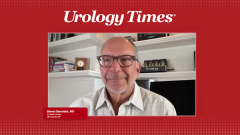
Aleece Fosnight, MSPAS, PA-C, identifies the 3 most consequential gaps between the 2024 AUA/SUFU OAB guideline and real-world clinical practice—clinician awareness, prescribing mindset, and payer alignment—and offers her single most important takeaway for clinicians applying this framework at the point of care.
Advertisement
Episodes in this series

Even the most rigorously developed clinical guideline is only as effective as the degree to which it penetrates daily practice, and the 2024 AUA/SUFU overactive bladder (OAB) guideline—built from a comprehensive systematic review rather than an incremental update—faces meaningful implementation gaps in the real world. In the final segment of this series, Aleece Fosnight, MSPAS, PA-C, CSC-S, CSE, IF, MSCP, HAES founder, Fosnight Center for Sexual Health in Asheville, North Carolina, identifies 3 gaps she considers most consequential: clinician awareness, prescribing mindset, and payer alignment. On awareness, she notes that many clinicians are not yet familiar with the scope of the guideline's changes, and that reading the document is only the first step—translating its principles into concrete changes in practice workflow requires deliberate action that has not yet occurred at scale.
The mindset gap, Fosnight argues, is the deeper and more personal challenge. Shared decision-making has been a stated value in medicine for years, yet the patient is often conspicuously absent from the clinical encounter in which treatment decisions are made. Generations of clinicians have been trained to direct rather than partner, and the reflex toward a step-by-step, protocol-driven approach to OAB does not dissolve simply because a new document has been published. She describes the 2024 guideline's formalization of shared decision-making—placing it in explicit, central terms alongside strong clinical evidence—as a meaningful structural lever for changing how those clinical conversations unfold, but acknowledges that the cultural shift required of individual practitioners is not immediate.
The insurance gap, Fosnight states plainly, is the most operationally disruptive of the three: payers have not aligned their prior authorization requirements with the 2024 guideline, and continue to demand documentation of failed behavioral therapy and oral medications before approving minimally invasive options—exactly the step-therapy mandate the guideline has moved away from. This mismatch places clinicians in the position of navigating coverage requirements that diverge from evidence-based best practice, particularly in cases where proceeding directly to a minimally invasive therapy would be the most appropriate and patient-centered choice. Fosnight's closing message to clinicians is direct: the most important takeaway from this program is to present patients with the full range of available options—from bladder training to botulinum toxin—in plain and honest terms, and then yield the decision to the patient. The clinician's role, she concludes, is to guide and translate, not to choose.
Advertisement
Related to this article
Interim phase 3 data show a 58% reduction in the risk of metastasis or death with the addition of darolutamide to ADT + radiation.

Carlos A. Vargas, MD, discusses updated survival outcomes, safety, and the mechanism of SYNC-T SV-102, an investigational in situ immunotherapy for metastatic prostate cancer.

Perioperative durvalumab (Imfinzi) plus neoadjuvant enfortumab vedotin-ejfv (Padcev) cut the risk of EFS events by 49% and death by 42% in cisplatin-ineligible MIBC.

The PROTEUS substudy addresses a key limitation of the main study, which had no surgery-alone control arm.
At a median follow-up of 60.9 months, median EFS was 74.1 months in the pembrolizumab arm and not reached in the placebo arm.

The phase 1/2 CELC-G-201 study found preliminary antitumor activity and manageable toxicity with gedatolisib plus darolutamide in metastatic castration-resistant prostate cancer.

Kim Chi, MD, FRCPC, discusses the rationale and design of the phase 3 KLK2-comPAS trial evaluating pasritamig alone and in combination with JNJ-9401 in patients with mCRPC.

Longer-term findings from the phase 2 ARACOG study suggest differences in objectively measured cognitive function between ARPIs.
Advertisement
Advertisement
Trending on Urology Times
1
PROTEUS Substudy: Perioperative apalutamide plus ADT improves EFS vs surgery alone
2
VOLGA: Durvalumab plus enfortumab vedotin improves EFS, OS in MIBC
3
In situ immunotherapy shows encouraging survival findings in prostate cancer
4
Adding darolutamide to ADT and radiation improves MFS in very high-risk localized prostate cancer
5