
Opinion|Videos|June 24, 2026
OAB: Burden, Diagnosis, and the Guideline's New Framework
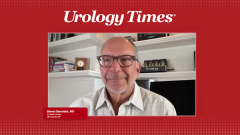
Aleece Fosnight, MSPAS, PA-C, introduces her practice philosophy and credentials, characterizes the full scope of OAB's impact on patients who go undiagnosed or undertreated, and explains what the 2024 AUA/SUFU guideline's shift away from mandatory step therapy means for patient-centered care.
Advertisement
Episodes in this series

Overactive bladder (OAB) affects a substantial proportion of the adult population—approximately 40% of cisgender women and 20% of cisgender men—with prevalence rising with age, yet the condition frequently goes undiagnosed or inadequately treated for years. In the first segment of this series, Aleece Fosnight, MSPAS, PA-C, CSC-S, CSE, IF, MSCP, HAES founder, Fosnight Center for Sexual Health in Asheville, North Carolina, introduces her practice background and the clinical and human dimensions of OAB, situating the diagnosis as a symptom-based, quality-of-life condition in which patient bother—not laboratory findings—defines disease severity. Fosnight emphasizes that when OAB goes untreated, the consequences extend well beyond urinary symptoms, driving falls, sleep disruption, social isolation, depression, and sexual avoidance.
Fosnight describes her practice as rooted in patient agency, trauma-informed care, and weight-inclusive principles, and she frames her approach to OAB management accordingly. Rather than guiding patients through a predetermined treatment sequence, she has long presented the full range of available options at the outset of the clinical encounter, allowing patients' own goals and values to shape the plan. The 2024 AUA/SUFU guideline's elimination of mandatory step therapy and its formal adoption of shared decision-making as the organizing framework of OAB care, she notes, is an affirmation of what patient-centered practice has always required—not a departure from prior standards, but a codification of them.
Fosnight acknowledges that the guideline change carries practical significance beyond her own practice: It provides clinicians who have felt constrained by step-therapy requirements—whether through prior authorization demands, institutional habit, or training reflexes—with explicit professional support for offering minimally invasive therapies earlier and tailoring the treatment plan to the individual patient. She describes the shift as meaningful not because it changed her own workflow but because it expands access to individualized care for patients whose clinicians previously lacked guideline backing to deviate from a rigid ladder.
Advertisement
Related to this article
Interim phase 3 data show a 58% reduction in the risk of metastasis or death with the addition of darolutamide to ADT + radiation.

Carlos A. Vargas, MD, discusses updated survival outcomes, safety, and the mechanism of SYNC-T SV-102, an investigational in situ immunotherapy for metastatic prostate cancer.

Perioperative durvalumab (Imfinzi) plus neoadjuvant enfortumab vedotin-ejfv (Padcev) cut the risk of EFS events by 49% and death by 42% in cisplatin-ineligible MIBC.

The PROTEUS substudy addresses a key limitation of the main study, which had no surgery-alone control arm.

At a median follow-up of 60.9 months, median EFS was 74.1 months in the pembrolizumab arm and not reached in the placebo arm.

The phase 1/2 CELC-G-201 study found preliminary antitumor activity and manageable toxicity with gedatolisib plus darolutamide in metastatic castration-resistant prostate cancer.
Kim Chi, MD, FRCPC, discusses the rationale and design of the phase 3 KLK2-comPAS trial evaluating pasritamig alone and in combination with JNJ-9401 in patients with mCRPC.

Longer-term findings from the phase 2 ARACOG study suggest differences in objectively measured cognitive function between ARPIs.
Advertisement
Advertisement
Trending on Urology Times
1
PROTEUS Substudy: Perioperative apalutamide plus ADT improves EFS vs surgery alone
2
VOLGA: Durvalumab plus enfortumab vedotin improves EFS, OS in MIBC
3
In situ immunotherapy shows encouraging survival findings in prostate cancer
4
Adding darolutamide to ADT and radiation improves MFS in very high-risk localized prostate cancer
5