
Opinion|Videos|June 24, 2026
Non-Invasive and Pharmacologic Approaches to Treating OAB
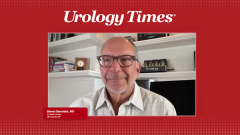
In this video, Aleece Fosnight, MSPAS, PA-C, reviews the evidence and practical application of behavioral interventions and pharmacologic therapy for OAB, including the clinical and safety rationale for leading with beta-3 agonists over anticholinergics, and outlines how she frames the transition to minimally invasive therapy for patients who have not responded to prior treatments.
Advertisement
Episodes in this series

Behavioral interventions occupy a foundational role in overactive bladder (OAB) management, supported by a Grade A recommendation in the 2024 AUA/SUFU guideline and a growing body of evidence demonstrating additive benefit when combined with pharmacotherapy. In the second segment of this series, Aleece Fosnight, MSPAS, PA-C, CSC-S, CSE, IF, MSCP, HAES founder, Fosnight Center for Sexual Health in Asheville, North Carolina, discusses the evidence base and real-world implementation of bladder training, noting that the combination of bladder training and oral medication produces urge reduction in approximately 71% of patients, compared with 56% for medication alone—a clinically meaningful difference that she communicates transparently, alongside an honest accounting of the modest magnitude of effect on leakage episodes. Fosnight emphasizes that success with bladder training is contingent on adherence, and she structures the conversation around each patient's daily schedule, technology access, and realistic capacity for follow-through.
On pharmacologic therapy, Fosnight describes her longstanding practice of leading with beta-3 agonists rather than anticholinergics as an expression of her core clinical principle that any treatment must first be safe. The association between antimuscarinic medications and incident dementia—which may be cumulative and dose-dependent—was already well established before the 2024 guideline formally prioritized beta-3 agonists, and Fosnight indicates that the guideline's recommendation was confirmatory rather than directive for her. She emphasizes that this preference does not reflect a judgment that anticholinergics are never appropriate, but rather that the safety profile of beta-3 agonists, combined with comparable symptom control, makes them the logical default. Affordability and adverse-event tolerability are equally weighted considerations in her prescribing decisions.
Fosnight also addresses the guideline's provision allowing clinicians to offer minimally invasive therapies without requiring prior trials of behavioral or pharmacologic treatment, noting that in her practice the more common scenario is a patient who has already attempted first-line options before reaching her office. Rather than requiring patients to repeat a treatment course they have already undergone, she treats documented prior therapy as valid evidence and proceeds accordingly—a posture she frames as respecting patient experience and avoiding unnecessary delay. For patients who cannot tolerate medications, carry contraindications, or have values clearly oriented away from pharmacotherapy, she describes the option to bypass oral treatment as the most clinically appropriate and respectful path forward. When introducing minimally invasive options after 2 or more agents have not produced adequate improvement, she avoids the language of failure in favor of reframing the data: Each unsuccessful medication narrows the differential and points toward a different mechanism of action, opening space for curiosity rather than discouragement.
Advertisement
Related to this article
Interim phase 3 data show a 58% reduction in the risk of metastasis or death with the addition of darolutamide to ADT + radiation.

Carlos A. Vargas, MD, discusses updated survival outcomes, safety, and the mechanism of SYNC-T SV-102, an investigational in situ immunotherapy for metastatic prostate cancer.

Perioperative durvalumab (Imfinzi) plus neoadjuvant enfortumab vedotin-ejfv (Padcev) cut the risk of EFS events by 49% and death by 42% in cisplatin-ineligible MIBC.

The PROTEUS substudy addresses a key limitation of the main study, which had no surgery-alone control arm.

At a median follow-up of 60.9 months, median EFS was 74.1 months in the pembrolizumab arm and not reached in the placebo arm.
The phase 1/2 CELC-G-201 study found preliminary antitumor activity and manageable toxicity with gedatolisib plus darolutamide in metastatic castration-resistant prostate cancer.

Kim Chi, MD, FRCPC, discusses the rationale and design of the phase 3 KLK2-comPAS trial evaluating pasritamig alone and in combination with JNJ-9401 in patients with mCRPC.

Longer-term findings from the phase 2 ARACOG study suggest differences in objectively measured cognitive function between ARPIs.
Advertisement
Advertisement
Trending on Urology Times
1
PROTEUS Substudy: Perioperative apalutamide plus ADT improves EFS vs surgery alone
2
VOLGA: Durvalumab plus enfortumab vedotin improves EFS, OS in MIBC
3
In situ immunotherapy shows encouraging survival findings in prostate cancer
4
Adding darolutamide to ADT and radiation improves MFS in very high-risk localized prostate cancer
5