






Practice Management
Latest News
Advertisement
Latest Videos





CME Content


Advertisement
More News

As the year comes to a close, we revisit some of this year’s top content on malpractice in urology.

As the year comes to a close, we revisit some of this year’s top content on coding and reimbursement for urologic procedures.

“I just hope that people are as enthusiastic about this new company, as [I] and my coauthors are,” says Ruchika Talwar, MD.

As the year comes to a close, we revisit some of this year’s top content on diversity, equity, and inclusion.
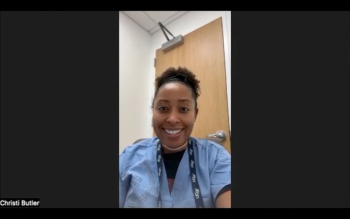
"We're trying to figure out how to improve people's relationships with their genitals and like their sexual practices," says Christi Butler, MD.

"PCM codes require the practitioner to develop a disease-specific care plan, to obtain a patient’s verbal or written consent, and to educate the patient on PCM," write Jonathan Rubenstein, MD, and Mark Painter.

“I think my biggest piece of advice would be to get a social worker into your clinic because there's so many things that we can do,” says Mara Markzon, LCSW, ACM-SW.

"Although efforts to increase diversity of our membership have been ongoing for years, there had not previously been an adequate investment to ensure an inclusive climate that emphasizes equity across our volunteers and programs."

In this article, an expert addresses the most common issues that come up with patients that may make them harder to deal with and solutions that may help a provider.
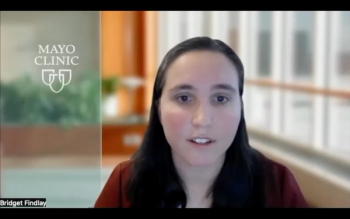
“It's important to continue to speak up about what we have previously deemed controversial or taboo topics, such as family planning, pay disparities, and discrimination,” says Bridget Lang Findlay, MD.

eCoin is approved by the FDA for the treatment of urinary urge incontinence, a condition experienced by more than 60% of patients with overactive bladder.

Urologist topped the list as the most stressful career among the 873 jobs ranked.
"The prior authorization and interoperability proposals we are announcing today would streamline the prior authorization process and promote health care data sharing to improve the care experience across providers, patients, and caregivers – helping us to address avoidable delays in patient care and achieve better health outcomes for all,” said CMS Administrator Chiquita Brooks-LaSure.

Amanda North, MD, discusses the AUA census in depth, specifically highlighting the data collected on residents and fellows.

“This is a huge topic within all academic medicine right now, whether it’s urology or otherwise,” says Moben Mirza, MD, FACS.

The Cures Act has teeth and consumers are becoming increasingly aware of their right to obtain their information.

Moben Mirza, MD, FACS, discusses the need to move toward an optimal number of urology residency applications for both the individual applicants and the residency programs.

“I think that, as is often the case with public health policy, we underestimated the difficulty of achieving the goals we were aiming for,” said Blumenthal, David Blumenthal, MD, MPP.

"In the office, absolutely, I should be called by my profession," says one urologist.

The collaboration between Streamline Scientific and UroGPO will help deliver PCR technology to UroGPO members.

"We once again note that even success in the efforts to avoid any payment decreases will be a failure in the long run as overhead continues to rise against flat reimbursement," write Jonathan Rubenstein, MD, and Mark Painter.

Annuities come in different varieties and each type offers different optional features that may be particularly worthwhile, depending on your circumstances and preferences.

"Instant and electronic access by patients to the electronic health record upends some long-established physician-centric traditions of medical practice and documentation and raises some concerns," writes Robert A. Dowling, MD.

Overworking has become the norm, but that doesn’t mean it should be.

Plaintiff’s attorneys are substituting regulations for standard of care.
Advertisement
Advertisement
Trending on Urology Times
1
Avoiding False Positives on Prostate Cancer PSMA PET Scans
2
Experts review evidence on testosterone and prostate cancer
3
Carotuximab plus apalutamide shows interim PFS benefit in mCRPC
4
Aglatimagene besadenovec shows sustained immune remodeling in localized prostate cancer
5