




Bladder Cancer
Latest News
Advertisement
Latest Videos





CME Content


Advertisement
More News

"What was great about this partnership is we recognized that this is going to be the future of medicine at some point, and we want to be able to be a part of that cutting edge technology," says Nitin K. Yerram, MD.

The FDA has issued a complete response letter to ImmunityBio regarding its biologics license application for N-803 (Anktiva) for use in combination with BCG for the treatment of patients with non–muscle-invasive bladder cancer.

"Proxies for social determinants of health that we found to be associated with higher overall mortality included living in a more deprived area, as well as having Medicaid or Medicare insurance," says David Miller, MD.
The methylation-based urine test is performed on a qPCR platform and is intended for use in conjunction with cystoscopy.
Preliminary findings from the single-arm, phase 2 CORE-001 trial showed that the combination of the oncolytic immunotherapy cretostimogene grenadenorepvec (CG0070) and pembrolizumab (Keytruda) elicited a high complete response rate in patients with BCG–unresponsive non–muscle invasive bladder cancer.
“The results of the study imply that UGN-101 is not only a renal-preserving therapy for UTUC in this comorbid population, but could potentially delay the time to dialysis or radical nephroureterectomy," says Kyle M. Rose, MD.

The guideline updates span non-metastatic upper tract urothelial carcinoma, female stress urinary incontinence, urethral stricture disease, and prostate cancer.
"Our findings underscore the commercial and market factors that have been influencing bladder cancer care," says Brian Chun, MD.
Shilpa Gupta, MD, shares her expert insight on the evolving treatment paradigm for patients with muscle-invasive bladder cancer, along with obstacles that must be overcome to further advance the field.
"In the periods where BCG utilization dropped, we saw a concomitant increase in mitomycin C," says Brian Chun, MD.
"Our preliminary clinical trial found that TAR-200 was generally safe, well tolerated, and had beneficial effects on bladder cancer outcomes in a group of patients with limited treatment options," said Mark Tyson, MD, MPH.

“I think clinicians can really take away that we have more work to be done in this space of evaluating patients with microhematuria, specifically when it comes to looking at assessments of upper tract urothelial carcinoma or renal cell carcinoma,” says Jacob Taylor, MD, MPH.

The investigators identified several genetic factors, including ARID1A mutation, that correlated with survival outcomes in patients with advanced urothelial carcinoma treated with immune checkpoint blockade.

"Understanding work productivity and activity impairment in the context of the treatment decisions are vital, not just for the provider who has to counsel on treatment benefits and risks, but also to the patient who's making the ultimate decision," says Angela Smith, MD, MS.

The current study is welcome news as it lends further support to the use of intravesical Gem/Doce as a safe and effective option that has the potential to become a new standard of care for high-risk NMIBC.

"From a urology provider perspective, we should be discussing this with our patients [with bladder cancer] as they make their treatment decisions," says Angela Smith, MD, MS.

Arya Mariam Roy, MBBS, discusses the effect of neoadjuvant chemotherapy on overall survival in patients with sarcomatoid bladder cancer.
The approval of pembrolizumab plus enfortumab vedotin in urothelial cancer was supported by results from the EV-103/KEYNOTE-869 trial.

“The readers of our paper should really understand that in microhematuria specifically, a lot of the recommendations are based on small amounts of data,” says Jacob Taylor, MD, MPH.
“First, we found that we should not be using voided samples for bladder cancer research,” says Laura Bukavina, MD, MPH.
No CxM-negative patients had findings of a recurrent tumor on a follow-up cystoscopy.

“These shortages and declines in supply have forced practitioners to readjust their diagnostic algorithms or at least question the usual practices,” says Jacob Taylor, MD, MPH.

“If you have 100 bacteria in the voided samples and you have 50 bacteria in the catheterized samples, you assume that a lot of it from the cup is because of contamination,” says Laura Bukavina, MD, MPH.
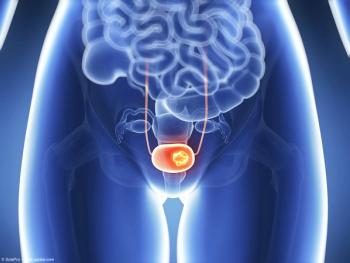
press release
Roger Li, MD, Moffit Cancer Center, was awarded the grant to study the novel oncolytic virus drug CG0070 in patients with intermediate-risk non–muscle-invasive bladder cancer.
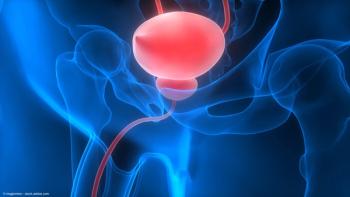
“Microbiome studies are small, and that's a problem. Usually, you have 20 patients here, 30 patients there…We were able to get about 120 patients,” says Laura Bukavina, MD, MPH.
Advertisement
Advertisement
Trending on Urology Times
1
AI-generated profiles impersonate female urologists to market ED products online
2
Alternative BCG strains may help address ongoing supply challenges in NMIBC
3
Doublet or triplet? Urologists weighs in on mCSPC options
4
Pearls & Perspectives: Sexual Health and Intimacy in Midlife, With Karen Bigman, MBA
5