


Bladder Cancer
Latest News
Advertisement
Latest Videos



CME Content


Advertisement
More News

Randomized controlled trial compares intracorporeal robotic technique with open surgery.

Guru P. Sonpavde, MD, discusses the 2022 ASCO Annual Meeting abstract, “Real-world treatment patterns and clinical outcomes with first-line therapy in cisplatin-eligible and ineligible patients with advanced urothelial carcinoma.”

Sumanta K. Pal, MD, highlights next steps now that the combination of cabozantinib and atezolizumab showed promising clinical activity in bladder cancer in the phase 1b COSMIC-021 trial.

Guru P. Sonpavde, MD, highlights long-term data from the phase 3 EV-301 trial of enfortumab vedotin versus chemotherapy in patients with previously treated advanced urothelial carcinoma.

Pal highlights results from the phase 1b COSMIC-021 trial in which cabozantinib plus atezolizumab showed promising clinical activity in patients with urothelial carcinoma.

In this interview, Eila C. Skinner, MD, discusses neobladder reconstruction in patients undergoing radical cystectomy.
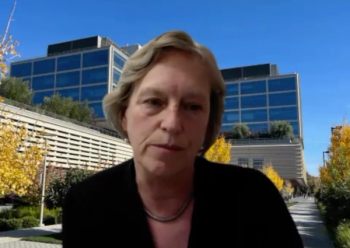
"It's not perfect; you have to sort of retrain it, and there are some downsides to it. But it's the closest that we can get to, essentially, an artificial bladder," says Eila C. Skinner, MD.

“Overall, these data…provide new insights about survival in patients receiving avelumab first-line maintenance in the JAVELIN Bladder 100 trial with or without second-line treatment," says Joaquim Bellmunt, MD, PhD.
“This is a new standard of care when managing metastatic bladder cancer patients,” says Joaquim Bellmunt, MD, PhD.

Among patients with bladder cancer, increased public welfare spending led to an 8.18% survival increase for Black patients and a 44% closing of the disparity gap with white patients.

Almost half of individuals surveyed were unaware of the link between smoking and bladder cancer.

Support for the application comes in large part from the phase 2/3 QUILT-3.032 trial.
Based on the recommendation of an independent Data Monitoring Committee, the CheckMate-901 trial is continuing in order to evaluate the other primary and secondary endpoints.
In the DS8201-A-U105 trial, the combination of the antibody-drug conjugate trastuzumab deruxtecan and the immunotherapy nivolumab demonstrated antitumor activity in patients with HER2-expressing urothelial carcinoma.

Press Release
Preventable factors account for a large part of the formation of tumors of the bladder and skin.

“Mitomycin gel, or Jelmyto, is the first agent that gives us a chance to be able to treat these low-grade upper tract cancers of the ureter and the kidney and prevent their recurrence,” says Munver.

“We know that, in general, cystectomy in women can disrupt pelvic floor support and innervation, as well as hormonal and sexual function, but there are no good prospective data to help us fully understand pelvic floor complications following the procedure,” said Jacqueline Zillioux, MD.

A computerized artificial intelligence (AI)-based decision support system (CDSS-T) enhanced the performance of clinicians when assessing patients’ response to chemotherapy prior to radical cystectomy.

“This study really shows the power of the area deprivation index in predicting postoperative and oncologic outcomes for bladder cancer patients undergoing radical cystectomy,” said Byron H. Lee, MD, PhD, Cleveland Clinic urologist and senior author of the study.
The approval was based on data from the phase 3 EV-301 trial, in which enfortumab vedotin reduced the risk of death by 30% versus chemotherapy in patients with heavily pretreated locally advanced or metastatic urothelial carcinoma.
Early findings from the phase 2 CORE1 trial showed that the combination of the novel oncolytic immunotherapy CG0070 and the immune checkpoint inhibitor pembrolizumab was safe and active in patients with BGG-unresponsive NMIBC.

Patients achieving RC-pentafecta had less blood loss, shorter hospital stays, and lower perioperative mortality.
The approval was based on results from the randomized, double-blind phase 3 CheckMate-274 trial.
The phase 1/2 study is exploring the anti–CTLA-4 immunotherapy zalifrelimab (UGN-301) in patients with recurrent non–muscle-invasive bladder cancer.

In discussing treatment determinations, Petrylak noted that for patients with low PD-L1 expression had decreased survival benefits compared with patients treated with chemotherapy in the monotherapy arms of the phase 3 KEYNOTE-361 (NCT02853305) and phase 3 IMVIGOR-130 (NCT02807636) trials.
Advertisement
Advertisement
Trending on Urology Times
1
AI-generated profiles impersonate female urologists to market ED products online
2
Alternative BCG strains may help address ongoing supply challenges in NMIBC
3
Doublet or triplet? Urologists weighs in on mCSPC options
4
Pearls & Perspectives: Sexual Health and Intimacy in Midlife, With Karen Bigman, MBA
5