



Bladder Cancer
Latest News
Advertisement
Latest Videos





CME Content


Advertisement
More News

“We need better tests and better biomarkers to try to determine who still has residual cancer, even though they look like they don't,” says Christopher B. Anderson, MD, MPH.
“Fortunately, since things have…eased up with the pandemic, I would say probably in the last 6 months I've noticed that the BCG availability has improved,” says Chad R. Ritch, MD, MBA, FACS.

"There are going to be more trials open for those patients who may not have received BCG...I think that's essential, to realize that there are other treatments on the horizon for patients with non–muscle-invasive bladder cancer," says Sam S. Chang, MD.

"At the end of the day, the idea is that it shows you what your next steps are based on what the AUA and SUO guidelines are for non–muscle invasive bladder cancer," says Chad R. Ritch, MD, MBA, FACS.
All efficacy-evaluable patients reached a complete response with the combination regimen.

“I wouldn't be surprised if we have spotty distribution areas of concern for the next several years,” says Sam S. Chang MD, MBA, on the latest episode of the UT podcast Speaking of Urology.

"This study provides credible support for the expectation that post-RC HRQOL should recover and improve over the first 2 years after RC, and provides a benchmark for comparisons with future bladder preservation strategies," writes Badar M. Mian, MD.

Neoadjuvant chemotherapy significantly benefited patients with classifier-identified non-luminal tumors.
Data from the phase 2/3 QUILT-3.032 trial showed that adding N-803 to BCG met the primary end point of disease-free survival in patients with BCG-unresponsive, high-grade non–muscle-invasive bladder cancer and papillary disease.
“This is an opportunity for [patients with NMIBC] to have a treatment that is successful and…promising in terms of its durability of responding to the treatment,” says William C. Huang, MD.
“If results of this study are compelling, we may have the opportunity to submit them to the FDA as part of an application for accelerated approval," said Roger Dansey, MD.
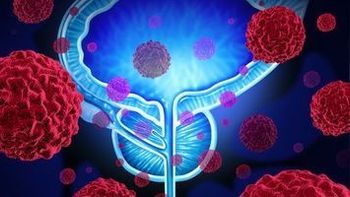
Early research has shown the capacity of PVSRIPO to activate a patient's immune system to help trigger a systemic antitumor response.

“In short, there's a ton of missed opportunity to see how smoking affects treatments, especially in trial patients, and even in our patients that are in our clinics,” says Richard Matulewicz, MD, MS.
"The focus of this study and the patient cohort that we're looking at are patients with intermediate-risk bladder cancer who [also have] low-grade bladder cancer. These patients [typically have] a lot of recurrences [and] multi-focal disease but are at low risk of progressing on to metastatic disease or developing invasion into their bladder wall,” says William C. Huang, MD.

The significant treatment response and sustained durability observed in this trial indicate that UGN-102 has the potential to become a nonsurgical alternative for these chronically relapsing patients, who typically undergo repetitive surgeries,” said William C. Huang, MD.

2 recent studies highlighted the continued emergence of liquid biopsies. One study involved bladder cancer and the other involved peripheral nerve tumors, which in rare cases occur in the prostate.

The noninvasive Oncuria immunoassay predicts response to BCG therapy in patients with intermediate-to–high-risk, early-stage bladder.
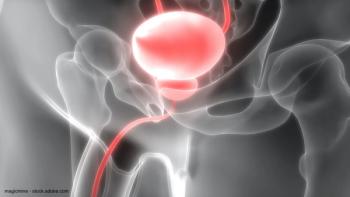
The approval was primarily supported by data from the phase 3 EV-301 trial, in which enfortumab vedotin reduced the risk of death by 30% versus chemotherapy in patients with heavily pretreated locally advanced or metastatic urothelial carcinoma.

“What was very impressive from the study was by sequentially using Cxbladder Triage, Detect, and Resolve, we could not only segregate those who had cancer versus not, but also those who had low-risk tumors versus high-risk tumors,” says Jay Raman, MD, FACS.

“The purpose of [Cxbladder] Resolve is to identify not only those patients who are at higher risk for urothelial or urinary tract cancer, but those that have a high probability of an aggressive cancer, such as high-grade TA, carcinoma in situ, or T1 to T3,” says Jay Raman, MD, FACS.

The novel oncolytic immunotherapy CG0070 is also currently being explored as a in a phase 3 monotherapy trial.

Michael S. Cookson, MD, previews the 2021 AUA Annual Meeting, with a focus on prostate, bladder, and kidney cancer. His in-depth analysis covers the plenary sessions, late-breaking abstracts, and other abstracts of interest.
Over half of patients had pathologic downstaging after receiving the neoadjuvant regimen.
The FDA has converted the accelerated approval of frontline pembrolizumab in advanced bladder cancer to a full approval and revised the indication to cover the treatment of patients with locally advanced or metastatic urothelial carcinoma who are not eligible for any platinum-containing chemotherapy.

Urologists and medical oncologists should collaborate to tailor therapy to the specific needs of the patient.
Advertisement
Advertisement
Trending on Urology Times
1
AI-generated profiles impersonate female urologists to market ED products online
2
Alternative BCG strains may help address ongoing supply challenges in NMIBC
3
Doublet or triplet? Urologists weighs in on mCSPC options
4
Pearls & Perspectives: Sexual Health and Intimacy in Midlife, With Karen Bigman, MBA
5