
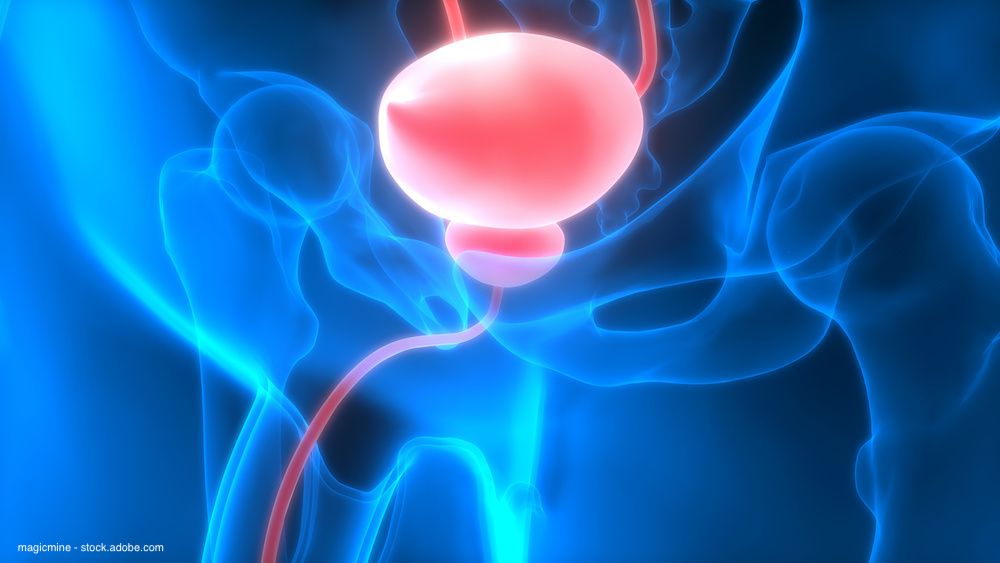



Bladder Cancer
Latest News
Advertisement
Latest Videos






CME Content


Advertisement
More News
The published data are from the pivotal CheckMate 274 trial and are currently being reviewed by the FDA for a potential approval of nivolumab in this setting.

Arjun V. Balar, MD, discusses notable findings from 2 separate studies of pembrolizumab (Keytruda).
The survival benefit in patients with PD-L1–negative tumors mirrored the benefit in the overall study population.
The ADXBLADDER urinary biomarker test is being explored as a tool to assist in the monitoring of cancer recurrence in patients with non-muscle invasive bladder cancer.
Thomas Powles, MBBS, MRCP, MD, director, Barts Cancer Institute, discusses findings from the pivotal EV-301 trial of enfortumab vedotin.
This installment of Around the Practice focused on the multidisciplinary approach to bladder cancer care.

The noninvasive UriFind test identifies bladder cancer based on methylation detection of exfoliated cell DNA in urine.

“The key message from this abstract is that the time duration for starting avelumab [Bavencio] maintenance didn't really affect the outcomes,” says Shilpa Gupta, MD.
Singh highlights the phase 3 INTACT trial, which is comparing the safety and efficacy of standard chemoradiation alone versus chemoradiation plus atezolizumab in patients who received TURBT.

Shilpa Gupta, MD, discusses several recent studies in the metastatic urothelial carcinoma space.
Yousef Zakharia, MD, discusses the design and results of a phase 2 trial that explored concurrent treatment with radiation and the PD-L1 inhibitor durvalumab followed by adjuvant durvalumab in patients with urothelial cancer.
Risa Wong, MD, discusses the sequencing of treatments in the metastatic urothelial carcinoma armamentarium, including chemotherapy, immune checkpoint inhibitors, and antibody-drug conjugates.
"I think [at] the 2021 ASCO annual meeting, we saw a lot of novel data focusing on bladder-preservation approaches," says Shilpa Gupta, MD.

Investigators report that high urinary cotinine levels are associated with a greater risk of recurrence in smokers.
The approval is based on findings from the EV-301 and EV-201 trials.

Dr. Michael Devitt, discusses whether circulating tumors cells are ready for primetime as a diagnostic/prognostic biomarker in urothelial carcinoma.

Recent trial demonstrates an improvement in outcomes with an adjuvant immune checkpoint inhibitor in urothelial cancer.
Trilaciclib is a CDK4/6 inhibitor that has been shown to help lower the occurrence of chemotherapy-induced myelosuppression.
The PD-1 inhibitor met the primary end point in a monotherapy trial but fell short when used in a combination regimen in a separate trial.
"This study provides important and clinically useful information that can be used to plan the intensity of treatment and counsel our patients regarding the cancer-related and QOL-related outcomes after treatment," writes Badar M. Mian, MD.
In Urology Times’ monthly installment of Around the Practice, experts discuss adverse event management from various treatments for prostate and bladder cancer.
The Uro-G single-use device arrives at a time when the FDA is actively investigating reports of infections associated with reusable cystoscopes.
Cystoscopy failed to detect residual muscle invasive bladder cancer in one-fourth of patients at the time of radical cystectomy.

Results of the phase 3 CALGB 90601 trial were published online in the Journal of Clinical Oncology.
The antibody-drug conjugate received a priority review for patients with locally advanced or metastatic urothelial carcinoma with disease progression.
Advertisement
Advertisement
Trending on Urology Times
1
AI-generated profiles impersonate female urologists to market ED products online
2
Alternative BCG strains may help address ongoing supply challenges in NMIBC
3
Doublet or triplet? Urologists weighs in on mCSPC options
4
Pearls & Perspectives: Sexual Health and Intimacy in Midlife, With Karen Bigman, MBA
5