



Bladder Cancer
Latest News
Advertisement
Latest Videos



CME Content


Advertisement
More News
A study investigating discharge destination and perioperative complications after radical cystectomy provides useful data for risk stratification and preoperative counseling of patients 80 years of age and older, said Hayden M. Hill, MD, who presented the research at the American College of Surgeons Clinical Congress in San Francisco.

Financial toxicity is prevalent among patients with bladder cancer, according to findings from a cross-sectional study presented at the American College of Surgeons Clinical Congress in San Francisco.

"It’s critically important to not overemphasize the benefits or overlook the concerns related to new technology or surgical approaches as is too often the case in the marketing campaigns by various centers (both academic and community)," writes Badar M. Mian, MD.

Adding immunotherapy in the form of atezolizumab (Tecentriq) to platinum-based chemotherapy extends progression-free survival compared with chemotherapy alone in patients with previously untreated metastatic urothelial carcinoma, according to results from a phase III study.
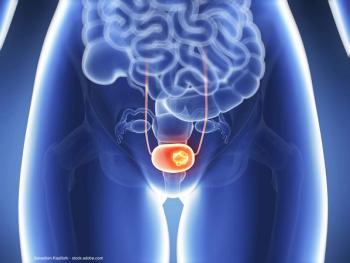
Access to novel therapies early in the regulatory process as a result of the FDA’s accelerated approval program can be valuable for many cancer patients, but the clinicians who are responsible for their care must have heightened vigilance for incoming data and FDA guidance about these drugs that have not gone through the “gold standard” of phase III testing.

Combined treatment with nivolumab (Opdivo), 1 mg/kg and ipilimumab (Yervoy), 3 mg/kg resulted in a 38% overall response rate in a study of platinum-pretreated metastatic urothelial cancer patients.

Despite recommendations for low-intensity cystoscopic surveillance in low-risk non-muscle invasive bladder cancer patients, U.S. Department of Veterans Affairs providers overused cystoscopy in 75% of these patients, according to a study published in Urology (2019; 131:112-9).
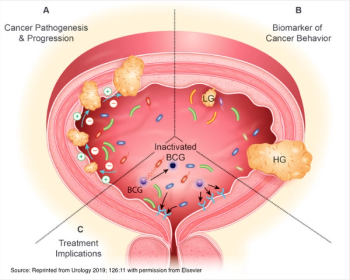
Study findings have implications for noninvasive markers to predict the course of UCC

Pembrolizumab (Keytruda) is showing encouraging antitumor activity in an ongoing phase II study including patients with high-risk, nonmuscle-invasive bladder cancer that is unresponsive to bacillus Calmette-Guérin treatment.

"There appears to be a strikingly high likelihood of increased morbidity and poor outcomes in patient who are not receiving definitive therapy," writes Badar M. Mian, MD.

“The variability in recommendations [for hematuria evaluation] and our study’s findings highlight implicit value judgments and a potentially high burden of harms not historically considered in many guidelines’ development process," says Matthew E. Nielsen, MD, MS.

Treatment combining the immunotherapy atezolizumab (Tecentriq) and platinum-based chemotherapy significantly improved progression-free survival in patients with previously untreated locally advanced or metastatic urothelial carcinoma compared to chemotherapy alone.

The novel antibody-drug conjugate enfortumab vedotin produced an impressive 44% response rate in a phase II trial of urothelial cancer patients who had been treated with standard chemotherapy and a checkpoint inhibitor.

Smoking’s strong impact on bladder cancer risk among men and women is clear, but a new study shows quitting smoking can greatly reduce risk of the cancer among menopausal women.

As urologists maneuver through the third shortage of bacillus Calmette-Guérin during the past decade, there is a sense of urgency to find short- and long-term alternative treatments to the only FDA-approved BCG strain as a therapeutic agent for nonmuscle-invasive bladder cancer.

The combination of an IL-15 cytokine agonist known as N-803 and bacillus Calmette–Guérin (BCG) was well tolerated and offered promising activity in patients with nonmuscle-invasive bladder cancer (NMIBC) who did not respond to BCG therapy, according to phase I and II study results.

New data suggest it may be possible to use computer-augmented cystoscopy to aid in diagnostic decision-making and improve the diagnostic yield of papillary bladder cancers.
Routine use of positron emission tomography/computed tomography prior to radical cystectomy is unlikely to benefit clinically node-negative patients, results of a recent investigation suggest.

Poor outcomes in women may stem from diagnostic, therapeutic, and biologic factors.

A new investigational diagnostic imaging technique based on analyzing nanoscale resolution maps of cell surfaces performed favorably compared to what might be expected with cystoscopy in detecting bladder cancer.

The risk of high-grade postoperative complications after radical cystectomy might be predicted using a model that incorporates several routinely collected preoperative variables.
“The results with neoadjuvant atezolizumab are preliminary but promising in this area of high unmet need,” says researcher Thomas Powles, MD.

Widowed bladder cancer patients are more likely to die from the disease than married patients, according to a recent study.

Errors related to bladder cancer site and symptom codes could lead to take backs.

“I hope we can continue to improve ERAS, but it’s already a significant advance,” says one urologist.
Advertisement
Advertisement
Trending on Urology Times
1
AI-generated profiles impersonate female urologists to market ED products online
2
Alternative BCG strains may help address ongoing supply challenges in NMIBC
3
Doublet or triplet? Urologists weighs in on mCSPC options
4
Pearls & Perspectives: Sexual Health and Intimacy in Midlife, With Karen Bigman, MBA
5