
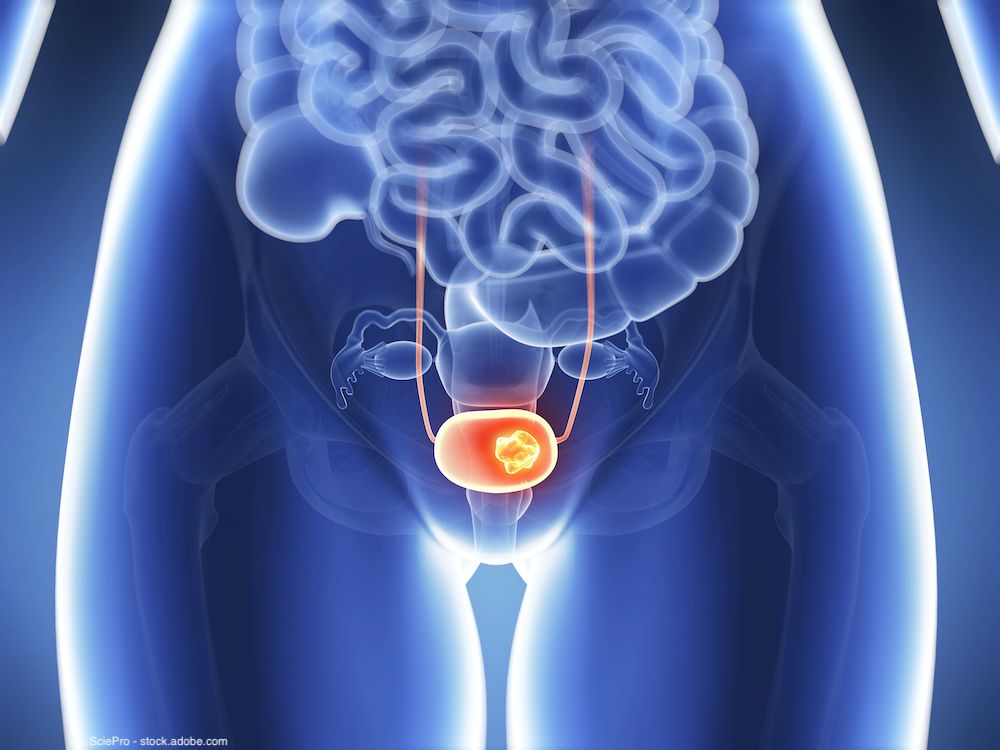


Bladder Cancer
Latest News


Upper tract transitional cell carcinoma: Diagnostic and therapeutic considerations
By Raoul S. Concepcion, MD, Jason M. Hafron, M.D., Partner and Director of Research, Michigan Institute of Urology, P.C.; Associate Professor of Urology, William Beaumont School of Medicine, Oakland University; Director of Robotic Surgery, William Beaumont Hospital, Royal Oak, Mich., Joelle Hamilton, MD
Advertisement
Latest Videos





CME Content


Advertisement
More News

“The biggest risk that our patients face is a severe COVID-19 episode,” says Kutikov.

Two supplemental Biologics License Applications have been submitted to the FDA for the antibody-drug conjugate.

The safety and efficacy of the locally administered fusion protein were assessed in the phase 3 VISTA trial.

“One of the things that distinguishes this treatment is its patient and provider ease of delivery,” says Boorjian.

"It is essential for us to be vigilant about all the complications, whether local or systemic, associated with intravesical BCG," writes Badar M. Mian, MD.

Williams discusses a study comparing costs for radical versus partial cystectomy.
A 4-week hypofractionated radiotherapy course was associated with a lower risk of bladder cancer recurrence compared with a 6.5-week standard treatment course.
The investigational padeliporfin ImPACT platform involves the intravenous delivery of the photosensitive drug padeliporfin, which is then activated by a non-thermal light delivery system.
The collaboration will focus on the novel combinatorial intravesical immunotherapy UGN-302 as a potential treatment for patients with high-grade non-muscle invasive bladder cancer.

Disease stage and adverse features were the main predictors of relapses and survival after robot-assisted radical cystectomy.

Register for a live, interactive event featuring leaders in oncology reviewing and discussing patient cases in Bladder Cancer/Renal Carcinoma.

Vikram M. Narayan, MD, discusses the high complete response rate and manageable safety profile with nadofaragene firadenovec in BCG-unresponsive non-muscle invasive bladder cancer.
The approval was based on findings from the phase 3 JAVELIN Bladder 100 study.
Vikram M. Narayan, MD, discusses how smoking is the most significant known risk factor for bladder cancer.
The combination of eganelisib and nivolumab demonstrated promising activity and was well tolerated in a phase 2 trial of patients with advanced urothelial cancer.
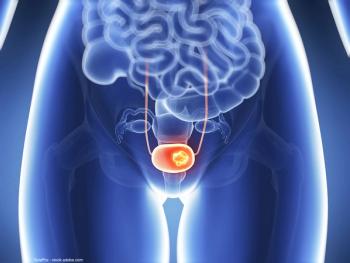
The paper is meant to serve as a single source of information for helping patients with bladder cancer.

Combining the novel interleukin-15 superagonist complex N-803 (Anktiva) with BCG led to a high complete response rate in patients with BCG-unresponsive, high-risk, non-muscle invasive bladder cancer with carcinoma in situ.

Gomella looks back on the year's top headlines in bladder cancer, from FDA approvals to notable clinical trial results.
Dr. Vikram M. Narayan describes treatment advances and next steps in non-muscle invasive bladder cancer.
The PD-L1 inhibitor has been recommended for approval in this setting based on data from the phase 3 JAVELIN Bladder 100 study.

The phase 2 study has a targeted enrollment of 37 patients and a primary end point of complete response.

Experts in prostate cancer, bladder cancer, kidney stones, OAB/incontinence, BPH, and sexual dysfunction recap all the key advances from 2020.
“These data published in the Lancet Oncology show that nadofaragene firadenovec, a first-of-its-kind therapy, may be an effective treatment option for BCG-unresponsive non-muscle invasive bladder cancer patients,” Colin P. N. Dinney, MD.

Improvement in imaging modalities may help in performance of transurethral resection of the bladder tumor.

The new fixed-dose schedule is approved for all of durvalumab's FDA indications, including advanced bladder cancer.
Advertisement
Advertisement
Trending on Urology Times
1
AI-generated profiles impersonate female urologists to market ED products online
2
Alternative BCG strains may help address ongoing supply challenges in NMIBC
3
Doublet or triplet? Urologists weighs in on mCSPC options
4
Pearls & Perspectives: Sexual Health and Intimacy in Midlife, With Karen Bigman, MBA
5