


Bladder Cancer
Latest News
Advertisement
Latest Videos




CME Content


Advertisement
More News

Dr Chamie shares advice for community urologists treating patients with MIBC.
Karim Chamie, MD, explains how he might approach immunotherapy in patients with MIBC if it were available for use in both the neoadjuvant and adjuvant settings in the future.
Dr Chamie comments on the significant unmet needs and clinical challenges in the management of MIBC.
Karim Chamie, MD, presents the case of a 77-year-old patient with T2N0M0 MIBC and the potential treatment regimen he would suggest.
Dr Chamie describes how he coordinates with medical oncologists after a referral for MIBC, and his strategies for following up with patients.
Karim Chamie, MD, reviews the currently available adjuvant therapy options for patients with stage II or III MIBC who received a cystectomy, and whether he would have treated the patient in the presented case or referred her to a medical oncologist.
Dr Chamie explains how cisplatin eligibility is defined in patients with MIBC and how many patients in his practice receive neoadjuvant cisplatin therapy.
Karim Chamie, MD, presents the case of a 60-year-old patient with stage 3A muscle-invasive bladder cancer (MIBC) and explains her risk of disease recurrence and whether the case is similar to the patients he typically sees in his clinical practice.
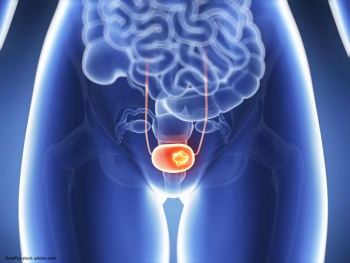
“The combination of NAI plus BCG was safe, it was effective, and it serves as a feasible and viable alternative to other agents in this disease space,” says Karim Chamie, MD.

The FDA will be evaluating findings from cohorts A and K from the phase 1b/2 EV-103 trial.
“First and foremost, it’s great that we have multiple lines of therapy for our bladder cancer patients,” says Tanya Dorff, MD.
Nadofaragene firadenovec is a non-replicating adenoviral vector based gene therapy.
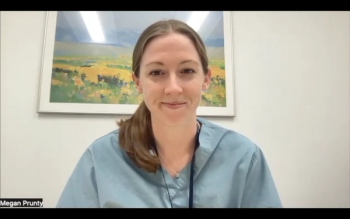
"It is safe to give 24 hours or less of antibiotics for radical cystectomy. It does not decrease your infectious complications to have extended duration antibiotics," says Megan Prunty, MD.

The phase 2 trial is assessing the MetAP2 inhibitor APL-1202 and the PD-1 inhibitor tislelizumab as a non-chemotherapy–based neoadjuvant regimen for patients with muscular invasive bladder cancer.

The confirmatory phase 3 IMvigor130 trial did not show an overall survival advantage with frontline atezolizumab plus chemotherapy vs chemotherapy alone in patients with advanced urothelial carcinoma.
“There is a critical unmet need for efficacious bladder-sparing therapies for patients with BCG-unresponsive bladder cancer,” said Roger Li, MD.

A retrospective multi-center trial assessed the safety and feasibility of antegrade administration of Jelmyto in patients with low-grade UTUC.

“Cigarette smoking and continued smoking exposes patients [with bladder cancer] to a lot of continued risk, and I don't think we're doing our job as a doctor by ignoring this critical part of counseling and education,” says Dr. Matulewicz.
The findings are from the phase 2/3 FORT-1 study published in the Journal of Clinical Oncology.
“We used this study as a first step in understanding at a baseline what patients with non–muscle-invasive bladder cancer thought and what they believe to be risk factors for their bladder cancer,” says Richard S. Matulewicz, MD, MSCI.

Richard S. Matulewicz, MD, MSCI, MS, discusses the findings from his recent study that looked at patient knowledge about the link between smoking and bladder cancer.

“It doesn’t necessarily mean that you have cancer. But the more you smoke, the more mutations accumulate in your cells, and the more you increase your risk for developing cancer," said study author Marcos Díaz-Gay, PhD.
Press Release
The study also identifies potential ways to make immunotherapy more effective in this setting.

“Our work indicates that these genetic signatures may prove to be tremendously valuable in predicting immunotherapy response in patients with bladder cancer, but also other tumor types," says Dan Theodorescu, MD, PhD.
The FDA has updated the label for mitomycin-containing reverse thermal gel (Jelmyto) in low-grade upper-tract urothelial cancer by extending the in-use period for pyelocalyceal solution admixture.
Advertisement
Advertisement
Trending on Urology Times
1
AI-generated profiles impersonate female urologists to market ED products online
2
Alternative BCG strains may help address ongoing supply challenges in NMIBC
3
Doublet or triplet? Urologists weighs in on mCSPC options
4
Pearls & Perspectives: Sexual Health and Intimacy in Midlife, With Karen Bigman, MBA
5