





Bladder Cancer
Latest News
Advertisement
Latest Videos








CME Content


Advertisement
More News

At 6 months, high-grade RFS in the BCG group was 76%, compared with 92% in the gemcitabine and docetaxel group.

“What we'd like to try to do in our research is see if we can begin to develop a tool that is more personalized for patients, that can provide a more useful approach to quality of life,” says Bernard H. Bochner, MD, FACS.

“When we looked at all the various domains in these 14 different standardized measures…essentially, patients returned to baseline reported levels, usually, by about 1 year or so,” says Bernard H. Bochner, MD, FACS.

Exploratory analysis shows no OS benefit with atezolizumab monotherapy in advanced urothelial cancer
An exploratory analysis of the IMvigor130 study failed to show an improvement in overall survival with atezolizumab, compared with placebo plus platinum-based chemotherapy and gemcitabine in patients with untreated locally advanced or metastatic urothelial cancer.
Treatment with nivolumab in patients with high-risk muscle-invasive urothelial carcinoma continued to improve survival, supporting its use as a standard of following radical resection.

In cohort B of the phase 2 Keynote-057 trial, pembrolizumab led to antitumor activity in patients with BCG-unresponsive, papillary high-risk non–muscle-invasive bladder cancer.
The ORR for patients was 47%. Of note, ORRs were higher in patients with specific alterations compared with wild type including ERBB2 (67% vs. 44%, respectively; P = .05) and TSC1 (68% vs. 25%; P = .04).

In the the phase 2 HCRN GU 16-257 trial, 33 patients with muscle-invasive bladder cancer were eligible to forego cystectomy and continue 240-mg maintenance nivolumab monotherapy every 2 weeks for 8 cycles followed by surveillance.

“There are a couple of nomograms that are good for predicting either T2 or higher disease at time of surgery, so on final pathology, or T3 or higher,” says Suzanne Lange, MD.

"It's important to make sure that this is something that is desired by our patients before pursuing further," says Timothy D. Lyon, MD, FACS.

“A majority of patients that present with bladder cancer do not have muscle invasive disease. They have earlier stage, non-muscle invasive, and the NCCN guidelines have detailed guidance for providers about managing those patients,” said Thomas Flaig, MD.

"In many cases, we're now bringing the capabilities of the hospital into a patient's home," says Timothy D. Lyon, MD, FACS.
Lerapolturev will be given via intravesicular instillation to adult patients with recurrent NMIBC intended for transurethral resection of bladder tumor (TURBT) or cystectomy.
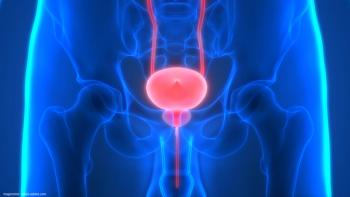
"Over the past 10 to 15 years, tremendous efforts have gone into robotic surgical innovation to improve perioperative morbidity for patients with bladder cancer undergoing RC," write Andrew M. Wood, MD, and Nima Almassi, MD.
Press Release
First-ever offering will help bladder cancer patients, caregivers and survivors cope with the disease.
Applicants may be working in basic, translational, clinical, epidemiologic, bioengineering sciences or any other field, but projects must be specific to bladder cancer and/or upper tract urothelial carcinoma.

Combining the approved antibody-drug conjugates with other agents in this space may provide some synergy and allow even more efficacy and disease control, explains Alicia Morgans, MD.
BCAN’s Young Investigator Awards support outstanding early-career scientists and clinical cancer researchers with a demonstrated commitment to improving the understanding and treatment of bladder cancer and/or upper tract urothelial cancer.

"Patients with intermediate-risk NMIBC remain an incredibly heterogeneous group," says Wei Shen Tan, MD, PhD.
“I think really identifying who's going to benefit from what combination for how long is going to be important,” says Stephanie Berg, DO.
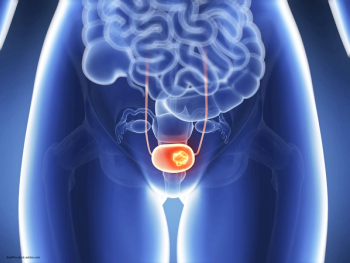
"Our new study is the first post-market analysis to see how doctors are using this drug in routine practice and what their patient outcomes are,” said Soloman Woldu, MD.

Several treatments are being explored across these trials, including pembrolizumab, nivolumab, enfortumab vedotin, durvalumab, avelumab, and cabozantinib.
Adding trilaciclib to platinum-based chemotherapy and maintenance avelumab yielded responses in patients with untreated, locally advanced or metastatic urothelial carcinoma.

Novel targeted therapy BT8009 granted FDA Fast Track Designation for urothelial cancer.

“Clinicians should do whatever they're able to try to limit or reduce the need for an intraoperative transfusion,” says Timothy D. Lyon, MD, FACS.
Advertisement
Advertisement
Trending on Urology Times
1
AI-generated profiles impersonate female urologists to market ED products online
2
Alternative BCG strains may help address ongoing supply challenges in NMIBC
3
Doublet or triplet? Urologists weighs in on mCSPC options
4
Pearls & Perspectives: Sexual Health and Intimacy in Midlife, With Karen Bigman, MBA
5