


Bladder Cancer
Latest News
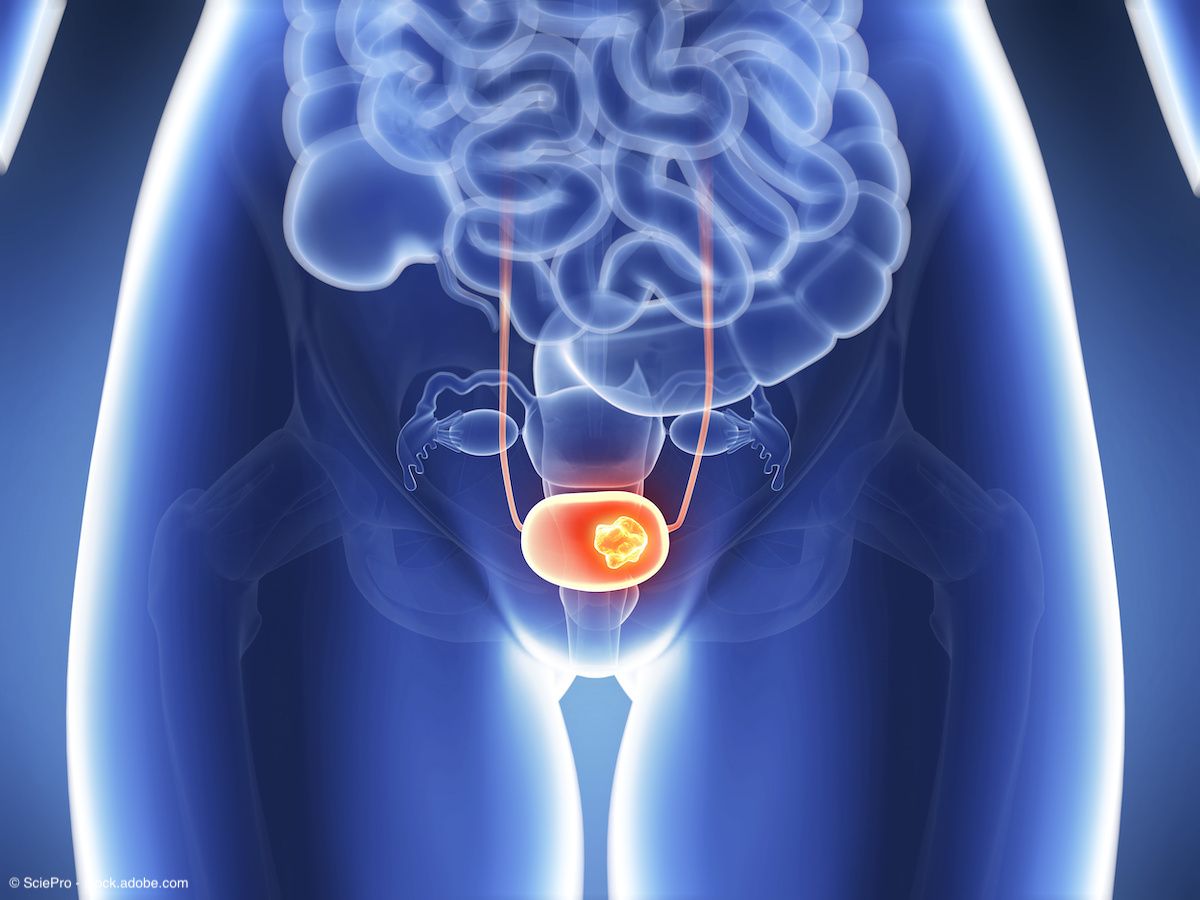
UGN-102 linked with reduced risk of recurrence, progression, or death in LG-IR NMIBC
Advertisement
Latest Videos



CME Content


Advertisement
More News

Some patients with bladder cancer have been traveling to other regions for treatment if their location has no available cisplatin, explains Scott Tagawa MD.

The mitomycin-containing reverse thermal gel UGN-102 with or without TURBT reduced the risk of recurrence, progression, or death vs TURBT alone in patients with low-grade intermediate-risk non-muscle invasive bladder cancer.

"In the setting of BCG shortages, our patients need alternatives that do not deprive them of the chance of cure," says Ashish M. Kamat, MD, MBBS.
The phase 3 ATLAS and ENVISION trials are exploring UGN-102 for intravesical solution in patients with low-grade intermediate-risk non–muscle-invasive bladder cancer.

Press Release
Increased precision, decreased blood loss, and less risk of infection are among the benefits of robotic-assisted surgery, according to Hackensack Meridian Health.

The study is exploring the intravesically-delivered oncolytic immunotherapy cretostimogene grenadenorepvec in patients with BCG-unresponsive non–muscle-invasive bladder cancer.
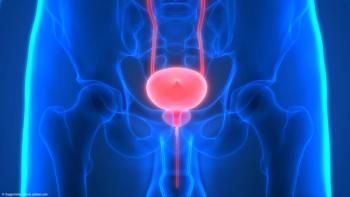
Pre-surgical treatment with the antibody-drug conjugate enfortumab vedotin elicited substantial antitumor activity in patients with cisplatin-ineligible muscle-invasive bladder cancer.

“Patients who present with [node-positive nonmetastatic bladder cancer] have a poor prognosis and should be counseled as to the most appropriate treatment, empowering them in their decision making with the knowledge that bladder preservation is a real alternative to radical surgery,” the authors wrote.

“One of the things we do is communicate with our teams and help them with some guidance about how to make decisions about which patients can potentially be treated with alternative approaches,” says Hamid Emamekhoo, MD.

“Although the future of AI within science is uncertain, disclosure of the use of AI is an excellent first step to balance academic integrity with disruptive innovation,” the authors write.

HUMC Department of Urology achievements demonstrate commitment to leading the way in urological care
Press Release
From urologic oncology and pediatric oncology to single port robotic surgery, the Department of Urology team is celebrating several achievements.

“Implementing Jelmyto earlier in real-world scenarios for LG-UTUC may offer appropriate low-risk patients the choice of minimal ablation or biopsy alone for renal preservation," says Hristos Z. Kaimakliotis, MD.
Patients receiving nivolumab plus cisplatin-based chemotherapy lived longer than patients treated with standard chemotherapy alone.
"If you were to look at this paper and others that are coming out like it, it appears that disposable cystoscopy is going to be the future for us," said David D. Thiel, MD.
Hamid Emamekhoo, MD, explains his approach to discussing the ongoing cancer drug shortage with his patients with genitourinary cancers.

"We make the argument in our discussion of this paper that any discussion further on cost needs to include encounters," says David D. Thiel, MD.
The shortage has been affecting the treatment of patients with genitourinary cancers, including bladder cancer.
"We wanted to look and see [if] there any differences between the disposable scope group and the reusable scope group, and as the paper shows, there were," says David D. Thiel, MD.

Press Release
Awardees are being recognized for creative approaches to accelerating progress in bladder cancer research.


A response was observed in nearly two-thirds of cisplatin-ineligible patients with advanced urothelial cancer treated with enfortumab vedotin plus pembrolizumab in the first-line setting.

"There are a lot of exciting data that are coming out, and, of course, a lot of physicians and physician-scientists [who] are interested in these questions, and we’re working on that," says Sophia C. Kamran, MD.

The Bladder Cancer Advocacy Network provides insight into the ongoing cisplatin shortage.
“Looking at the impressive results for cohort K, with enfortumab, it's amazing what that is going to provide our patients,” says Joshua J. Meeks, MD, PhD.

"Clinicians have opportunities to reduce patient subjective and objective financial burden if they continue to self-educate and communicate with patients and consider [financial toxicitiy] an adverse effect of treatment," write Alexandria A. Spellman, MD, MS, and Deborah R. Kaye, MD, MS.
Advertisement
Advertisement
Trending on Urology Times
1
AI-generated profiles impersonate female urologists to market ED products online
2
Alternative BCG strains may help address ongoing supply challenges in NMIBC
3
Pearls & Perspectives: Sexual Health and Intimacy in Midlife, With Karen Bigman, MBA
4
Doublet or triplet? Urologists weighs in on mCSPC options
5