


Kidney Cancer
Latest News
Advertisement
Latest Videos







CME Content


Advertisement
More News

A comprehensive guide to the key regulatory decisions and conferences slated for Q3 of 2025.
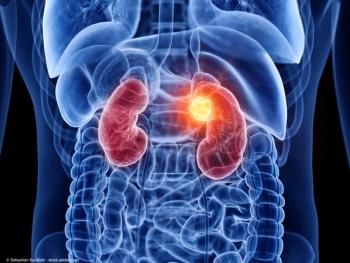
Data from the #HOPE4KIDNEY trial is intended to support submission for regulatory clearance of the Edison Histotripsy System.
The new drug application is backed by data from the phase 2/3 FRUSICA-2 trial.

ORR in the zanzalintinib plus nivolumab arm was 63% (95% CI: 46-77) vs 40% (95% CI: 25-57) in the zanzalintinib plus nivolumab/relatlimab arm.
"These long-term results continue to support [pembrolizumab's] use as a standard of care for patients at increased risk of recurrence," says Naomi B. Haas, MD.
The approvals are supported by findings from the phase 3 CheckMate-67T trial.
"Appropriate patient selection for CN is a highly individualized process that is improved with a multidisciplinary approach," write the authors.

"The use of telemedicine is heavily dependent on supportive legislature," write Tracey L. Krupski, MD, and Jeunice Owens-Walton, MD.

"The combination demonstrated clinical activity and an acceptable safety profile in the perioperative setting for locally advanced, non-metastatic clear cell RCC," says Mehmet Asim Bilen, MD.

"We must lobby to maintain our current funding levels and push for increased support to continue driving progress in cancer care," says Michael S. Cookson, MD, MMHC, FACS.

A recap of the FDA submissions and regulatory decisions in urology from March 2025.

The European Commission must issue a decision on the application on or by June 2, 2025.
The phase 2 STARLITE 2 trial is assessing 177Lu-girentuximab plus nivolumab in advanced clear cell renal cell carcinoma.
"The positive results from this phase 3 study of the sintilimab and fruquintinib combination represent a significant advancement in the treatment of advanced renal cell carcinoma,” says Prof Zhisong He.
The study will evaluate the investigational drug product ONC175 (orellanine) in patients with metastatic clear cell or papillary renal cell carcinoma.
“What we hope overall is that this is a biological study that might inform therapeutic development for this disease,” says David A. Braun, MD, PhD.
A recap of the FDA submissions and regulatory decisions in urology from February 2025.

“The primary end point is progression-free survival, and the secondary end points are overall survival, objective response rates, duration of response, and safety.”

“In the setting of widespread metastatic progression or failure, we typically prefer more systemic therapy with metastasis-directed therapy for symptomatic sites,” says Kate H. Gessner, MD, PhD.
"At ASCO GU, we presented the final analysis of the study, which confirmed the superiority of a combination over the TKI monotherapy in terms of both progression-free survival as well as overall survival," says Camillo Porta, MD.
Robert J. Motzer, MD, reported that median PFS was 16.4 months in the nivolumab plus cabozantinib arm (95% CI, 12.5-19.3) vs 8.3 months in the sunitinib arm (95% CI, 7.0-9.7) (HR=0.58, 95% CI, 0.49-0.70).
The conditional approval of belzutifan is valid for 1 year, with the opportunity for yearly renewal pending forthcoming data.
“Over 80% of patients…had at least 2 lines of therapy, so this is a heavily refractory population,” said Toni K. Choueiri, MD, FASCO.
ORR was 70% (95% CI, 55-82) in cohort 1 compared with 31% (95% CI, 19-45) in cohort 2.

"The take-home point from our study of these 92 patients is that in metastatic kidney cancer, there's a high concordance [between] MRD positivity and patients having progressive disease," says Alan Tan, MD.
Advertisement
Advertisement
Trending on Urology Times
1
AMA issues Category I CPT codes for implantable tibial neuromodulation in UUI
2
The UroOnc Minute: Key Updates to the AUA NMIBC Guideline, With Peter E. Clark, MD
3
Aglatimagene besadenovec shows sustained immune remodeling in localized prostate cancer
4
John Sfakianos, MD, on integrating ctDNA into bladder cancer trials
5