


Kidney Cancer
Latest News
Dr. Steven Campbell on choosing between partial nephrectomy and radical nephrectomy
Advertisement
Latest Videos





CME Content


Advertisement
More News
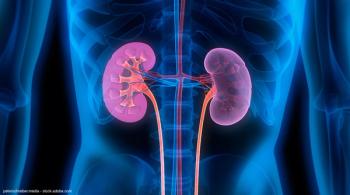
A retrospective analysis of the phase 3 CheckMate-214 trial showed a treatment-free survival advantage with the immunotherapy combination versus the targeted therapy sunitinib in patients with advanced renal cell carcinoma.

The new drug application is supported by a prior submission for premarket approval of Dovitinib-DRP, a companion diagnostic used to identify patients with RCC most likely to respond to dovitinib.
Adjuvant pembrolizumab was recommended for approval in renal cell carcinoma based on results from the phase 3 KEYNOTE-564 trial.
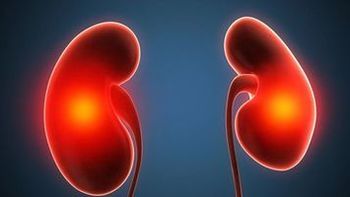
“The initial phase 1b data of batiraxcept in combination with cabozantinib are impressive and point toward the role of dual AXL and VEGF inhibition in the treatment of clear cell renal cell carcinoma,” said Eric Jonasch, MD.

The approval was based on data from the phase 3 KEYNOTE-564 trial.
Investigators reported that utilizing dosing interruptions or modifications for lenvatinib is an important part of managing toxicities.

"In this cohort study, cabozantinib showed considerable intracranial activity and an acceptable safety profile in patients with RCC and brain metastases," the authors wrote.
“These findings are exciting because we’re challenging the dogma in radiation oncology that RCC is biologically radioresistant," ,” said lead author Chad Tang, MD.
The study is specifically exploring the combination in patients with MET-driven kidney cancer.
The combination demonstrated encouraging clinical activity in patients with both clear cell and non–clear cell renal cell carcinoma.

Michael S. Cookson, MD, previews the 2021 AUA Annual Meeting, with a focus on prostate, bladder, and kidney cancer. His in-depth analysis covers the plenary sessions, late-breaking abstracts, and other abstracts of interest.
Patients may require specific diagnostic, surveillance, and therapeutic management.

The FDA is scheduled to decide on the application for adjuvant pembrolizumab in renal cell carcinoma on or before December 10, 2021.

Ventana MMR RxDx Panel is a qualitative immunohistochemistry test that assesses a panel of MMR proteins to help guide clinicians in their treatment decisions.
Rohit Jain, MD, Moffitt Cancer Center, discusses risk status and other factors he considers in treatment selection for patients with advanced renal cell carcinoma.
The FDA has approved belzutifan (Welireg) for adult patients with von Hippel-Lindau disease who require therapy for associated renal cell carcinoma.
The FDA has approved pembrolizumab plus lenvatinib for the first-line treatment of adult patients with advanced renal cell carcinoma.
Inhibiting the HDL cholesterol receptor SCARB1 can kill and stop the proliferation of clear cell renal cell carcinoma cells.
The application for adjuvant pembrolizumab in renal cell carcinoma is supported by data from the phase 3 KEYNOTE-564 trial, which were presented at the 2021 ASCO Annual Meeting.
The combination achieved a high objective response rate among patients previously treated with immune checkpoint inhibitors.

“To our knowledge, this study represents the first attempt to assess the associations between demographic factors and receipt of non–guideline-based treatment among patients with kidney cancer,” the authors of the study wrote.

Bradley McGregor, MD, explains how despite the groundbreaking immunotherapy-based advances in metastatic renal cell carcinoma, unmet medical needs remain.
Adjuvant pembrolizumab reduced the risk of disease recurrence or death versus placebo in the phase 3 KEYNOTE-564 trial, but overall survival data are still immature.
Neoadjuvant stereotactic ablative radiation followed by radical nephrectomy and thrombectomy was safe and showed signs of positive clinical activity in patients with renal cell carcinoma and inferior vena cava tumor thrombus.
The guideline was initially published in 2013 and was last amended in 2017.
Advertisement
Advertisement
Trending on Urology Times
1
AMA issues Category I CPT codes for implantable tibial neuromodulation in UUI
2
The UroOnc Minute: Key Updates to the AUA NMIBC Guideline, With Peter E. Clark, MD
3
Aglatimagene besadenovec shows sustained immune remodeling in localized prostate cancer
4
John Sfakianos, MD, on integrating ctDNA into bladder cancer trials
5