
Kidney Cancer
Latest News
Advertisement
Latest Videos


CME Content


Advertisement
More News
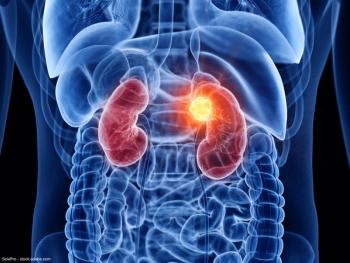
"Up-front CN is associated with a survival benefit in selected patients with mRCC treated with either targeted therapy or ICI therapy," writes Badar M. Mian, MD.

“There has never been a clinical trial for these patients. It is unclear whether these patients should be treated with medication, surgery, or another approach. This represents an unmet medical need,” said Raquibul Hannan, MD, PhD.
The focus of the analysis was to determine the HRQOL of patients who were enrolled on the phase 3 KEYNOTE-426 trial.
Patients in the CheckMate-914 trial had received radical or partial nephrectomy and were at moderate or high risk of relapse.
Exelixis plans to discuss the top level results of the phase 3 COSMIC-313 trial with the FDA regarding a potential application submission for the triplet in this setting.
Analysis is one of the largest-ever series of outcomes for patients with renal masses in a solitary kidney.

The study specifically examined this precision medicine pathway in the context of frontline treatment selection between nivolumab with or without ipilimumab and a VEGFR tyrosine kinase inhibitor.

Combination therapy with the novel TKI sitravatinib and the anti–PD-1 immune checkpoint inhibitor nivolumab showed promising efficacy and safety in patients with clear cell renal cell carcinoma and progression after antiangiogenic therapy.
Surgical approach and ischemia time are among key topics.

"Cryotherapy was the first energy source that we were able to ablate tissues with in either the kidney or prostate and understand what that ablation would do," says J. Stephen Jones, MD, FACS.

“The question of who is a candidate for active surveillance is hard to answer because this is a bedside, gut decision," says Primo Nery Lara, Jr, MD.

Gennady Bratslavsky, MD highlighted studies examining (neo)adjuvant immunotherapy in the setting of nephrectomy for locally advanced disease, such as the PROSPER (NCT03055013) and KEYNOTE-564 (NCT03142334) trials.

“One of the reasons I so enjoy this conference is the multidisciplinary nature,” says Peter A. Humphrey, MD, PhD.

“There are, indeed, numerous paths that we are trying to tackle from different angles,” says Gennady Bratslavsky, MD.

In this video, Ryan J. Nelson, DO, and Steven Ogilvy, PA-C, demonstrate the retroperitoneal single-port robotic surgical technique for a kidney tumor.
The approval is based on the pivotal phase 3 KEYNOTE-564 trial.
Naomi B. Haas, MD, discusses efforts to improve care in locally advanced renal cell carcinoma through research in the neoadjuvant setting.

Eric Jonasch, MD, offers his advice for physicians treating patients with renal cell carcinoma.
Sarah Elizabeth Yentz, MD, discusses what sequencing research and novel treatment development is needed to advance the metastatic renal cell carcinoma paradigm.

Ziad Bakouny, MD, MSc, highlights efforts to gain an understanding of the biology and genomic drivers of the rare and aggressive form of kidney cancer.

On this episode of Cleveland Clinic’s Cancer Advances podcast, urologic surgeon Steven Campbell, MD, PhD, discusses the longstanding controversy between partial nephrectomy and radical nephrectomy for patients with localized kidney cancer.
The trial is exploring tivozanib combined with the investigational HIF2α-inhibitor NKT2152 in patients with renal cell carcinoma who have not responded to or have relapsed from prior treatments.

The phase 3 CONTACT-03 trial is specifically accruing patients with inoperable, locally advanced or metastatic renal cell carcinoma with disease progression after receiving an immune checkpoint inhibitor as the immediate prior therapy.
Advertisement
Advertisement
Trending on Urology Times
1
AMA issues Category I CPT codes for implantable tibial neuromodulation in UUI
2
The UroOnc Minute: Key Updates to the AUA NMIBC Guideline, With Peter E. Clark, MD
3
Aglatimagene besadenovec shows sustained immune remodeling in localized prostate cancer
4
John Sfakianos, MD, on integrating ctDNA into bladder cancer trials
5