



Kidney Cancer
Latest News
Advertisement
Latest Videos




CME Content


Advertisement
More News
"We can individualize the access and the way we do the operation based on the patient's characteristics, and that hasn't happened in a very long time," says Ketan K. Badani, MD.

The grants will support research evaluating ATAD2 in advanced prostate cancer and 6MP in hereditary leiomyomatosis and renal cell cancer.
"While the addition of an ICI to low dose FOTIVDA did not improve PFS outcomes after prior ICI, we consider the control arm data an important, evidence-based and clinically meaningful contribution to the oncology community treating relapsed or refractory advanced RCC following front-line ICI combinations," says Michael P. Bailey.
“These findings provide a plausible mechanism for the enhanced clinical outcome with CBM588 now seen across 2 small, randomized trials,” write the authors.

This announcement comes on the heels of an FDA acceptance of an investigational new drug application for ADI-270 in June.
CBM588 could be exciting in cancer treatment because of its potential to enhance the efficacy of immune checkpoint inhibitor-based treatment, improve patient outcomes, and modulate the gut microbiota in beneficial ways,” says Sumanta Pal, MD.
"The addition of efficacy data from the KEYNOTE-B61 trial reinforces the important role of KEYTRUDA plus LENVIMA as a frontline treatment option for adult patients with advanced RCC regardless of histology," says Takashi Owa, PhD.
A phase 1 trial of ADI-270 in clear cell RCC is expected to launch in the second half of 2024.
"The positive trends emerging from the ongoing phase 1 trial of BMC128, particularly in combination with nivolumab, underscore the transformative potential of microbiome-based therapeutics in oncology,” says Gal Markel, MD, PhD, MBA.
“We may be tempted to conclude a causal relationship based on the results of this analysis; however, we should avoid making statements implying a causal relationship,” says Jaleh Fallah, MD.
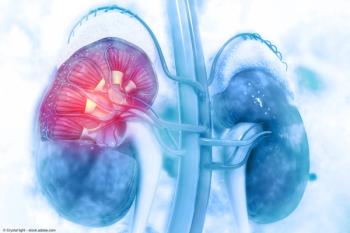
"There’s potentially a role here for patients with small renal masses that may not want to proceed with a minimally invasive laparoscopic or robotic procedure," says Arun Rai, MD, MBA, MSc.
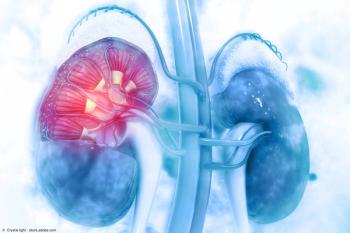
Among the 3 CD70-positive patients, the ORR was 66.7%, with 2 patients achieving a partial response.
The first-in-human study expects to begin dosing patients with DF9001 in combination with pembrolizumab in Q4 of 2024.
The dose escalation/dose expansion study is evaluating the safety and efficacy of AB-2100 in patients with ccRCC who either came back or did not improve following prior treatment with a checkpoint inhibitor and a VEGF inhibitor.
“What we need is continued work on integrating surgery and systemic therapy,” says Patrick Kenney, MD.
Urologists provide an overview of diagnostic tests for patients with kidney cancer, highlighting lab tests, imaging, and considerations for biopsy.
Neal Shore, MD, FACS, and Brian M. Shuch, MD, introduce themselves and discuss the growing incidence of kidney cancer, the general prognosis, and early signs and symptoms.
“This clinical study has the potential to demonstrate the value of Chimeric Antigen Receptor (CAR) T cell therapy in solid cancers such as kidney cancer with a high unmet medical need,” said Abla Creasey, PhD.
“ARO-HIF2’s ability to target cancer cells, disrupting a key tumor-driving mechanism, illustrates the potential of siRNA technology in oncology,” says James Brugarolas, MD, PhD.
“This is the first study to show a statistically significant and clinically meaningful survival improvement with any adjuvant therapy in kidney cancer, and this further supports adjuvant pembrolizumab as a standard of care after surgery in this disease setting,” says Toni K. Choueiri, MD.
The approval is based on findings from the phase 3 RENOTORCH trial, which showed that toripalimab plus axitinib prolonged progression-free survival and improved the objective response rate in patients with advanced RCC compared with sunitinib.
“Our trial presents the first and the longest durable response we have seen with an allogeneic, off-the-shelf, CAR T cell therapy in the treatment of refractory solid tumors," says Samer A. Srour, MB ChB, MS.
In the monotherapy cohort of TPST-1120, 53% of patients achieved a best response of stable disease, with 5 of those patients remaining on treatment for more than 5 months.
Treatment with stereotactic ablative body radiotherapy resulted in no observed local failures or cancer-related deaths among patients with primary renal cell cancer.

“The take-home message is: Don’t assume bad things if the tumor is growing during chemotherapy," says Andrew M. Davidoff, MD.
Advertisement
Advertisement
Trending on Urology Times
1
AMA issues Category I CPT codes for implantable tibial neuromodulation in UUI
2
The UroOnc Minute: Key Updates to the AUA NMIBC Guideline, With Peter E. Clark, MD
3
Aglatimagene besadenovec shows sustained immune remodeling in localized prostate cancer
4
John Sfakianos, MD, on integrating ctDNA into bladder cancer trials
5