

Kidney Cancer
Latest News
Advertisement
Latest Videos




CME Content


Advertisement
More News
The study achieved 100% local control and cancer-specific mortality rates with stereotactic ablative body radiotherapy.

The supplemental new drug application is supported by findings from the LITESPARK-005 trial.
The phase 1/2 Oncorella-1 trial is expected to enroll up to 40 patients with advanced kidney cancer who are on dialysis due to renal failure.
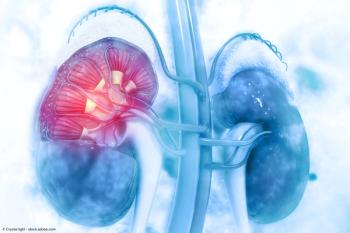
A Cleveland Clinic study found that TKIs in the neoadjuvant setting are associated with greater use of partial nephrectomy when treating patients diagnosed with renal masses in a solitary kidney.

The disease-free survival and distant metastasis-free survival benefits observed with adjuvant pembrolizumab in the intent-to-treat population of patients with clear cell renal cell carcinoma extended across all subgroups defined by disease risk, tumor stage, and lymph node involvement.

Patients in the phase 3 LITESPARK-005 trial were randomized to belzutifan or everolimus after receiving both a PD-1/L1 inhibitor and a VEGF-TKI for their renal cell carcinoma.
Due to rigorous data collection, there has been very little dropout and 3-year OS and PFS compare favorably to alternate regimens such as ipilimumab nivolumab,” says Elizabeth R. Plimack, MD, MS,
The CAR T-cell therapy IVS-3001 is being explored in patients with previously treated, locally advanced or metastatic solid tumors that are HLA-G–positive.

Although the use of immunotherapy treatments continues to become more prevalent in advanced renal cell carcinoma, high-level evidence showing benefit of sequential administration of these agents is limited.
Investigations of treatment regimens featuring antibody-drug conjugates or radiotherapeutics are part of the ongoing wave of research in renal cell carcinoma, according to Rana R. McKay, MD.

"We are hoping this is something that we can repurpose quickly for those affected by these variants,” says Heather Christofk, PhD.
The PARP inhibitor olaparib demonstrated antitumor activity in patients with BAP1-mutated renal cell carcinoma.
"To avoid unnecessary treatment, percutaneous biopsy of the small renal mass has increased for the past several years, but its use remains highly variable," writes Badar M. Mian, MD.

“Our findings show that race-modified equations account for some but not all of the disparity in partial nephrectomy use. We need to keep searching for answers to ensure people of all races receive appropriate care," said Christopher Weight, MD.
Investigators assessed integration of mGPS for risk stratification based on data from the phase 3 IMmotion151 study and the phase 2 IMmotion150 study.

"Clinicians have opportunities to reduce patient subjective and objective financial burden if they continue to self-educate and communicate with patients and consider [financial toxicitiy] an adverse effect of treatment," write Alexandria A. Spellman, MD, MS, and Deborah R. Kaye, MD, MS.

"The emulation framework lends the design and conduct of observational analyses some of the rigor required for the planning of a randomized trial. In doing so, it provides an innovative and principled approach to improve the evidence base on the comparative effectiveness of interventions," writes Boris Gershman, MD, and Aaron Fleishman, MPH.
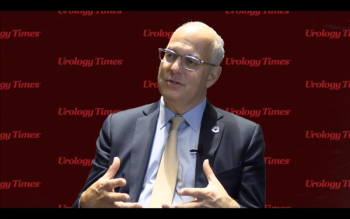
"Even though most urologists who do retroperitoneal surgery do it for posterior tumors, you actually can do it equally well with as equally good success for an anterior tumor," says Michael D. Stifelman, MD.

"We found out the using IRIS intraoperatively during partial nephrectomy does help us with preserving renal parenchyma," says Teona Iarajuli.

Increasing numbers of older patients with cancer necessitates adoption of an age-friendly approach to cancer care.
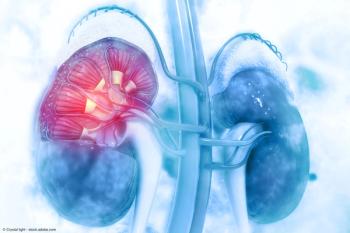
Trajectory inference analysis pointed to SIX2+CITED1+ as the nephrogenic cancer stem cells at the origin of Wilms tumor.
Adding cabozantinib to nivolumab/ipilimumab improved PFS in frontline renal cell carcinoma; however, there was increased toxicity with the triplet, including more adverse event–related discontinuations.
The phase 3 RENOTORCH study is comparing the combination of the PD1-inhibitor toripalimab and axitinib with single-agent sunitinib in patients with renal cell carcinoma.
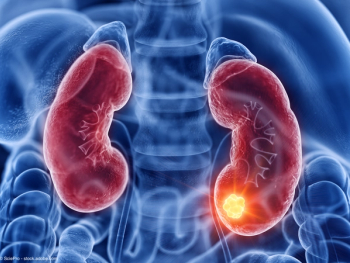
Results from the phase 1 TRAVERSE trial showed signals of anti-tumor activity with the CAR T-cell therapy ALLO-316 in patients with advanced or metastatic clear cell renal cell carcinoma.

Press Release
The AACU joined thirteen other organizations in asking the House and Senate appropriations committees to allocate $60 million in FY24 for the KCRP at the Congressionally Directed Medical Research Programs.
Advertisement
Advertisement
Trending on Urology Times
1
AMA issues Category I CPT codes for implantable tibial neuromodulation in UUI
2
The UroOnc Minute: Key Updates to the AUA NMIBC Guideline, With Peter E. Clark, MD
3
Aglatimagene besadenovec shows sustained immune remodeling in localized prostate cancer
4
John Sfakianos, MD, on integrating ctDNA into bladder cancer trials
5