




Kidney Stones
Latest News
Advertisement
Latest Videos



CME Content


Advertisement
More News

Amy E. Krambeck, MD, discusses her recent trial comparing the efficacy of Trilogy and ShockPulse-SE lithotripters used in percutaneous nephrolithotomy.
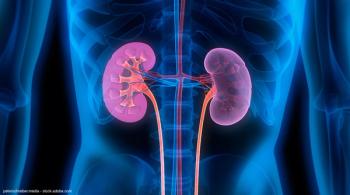
“For harder, more aggressive stones, I'm more likely to use the Trilogy based on the results of the study. If I have a softer, easier stone, I prefer the lightness of the ShockPulse," said lead study investigator Amy E. Krambeck, MD.
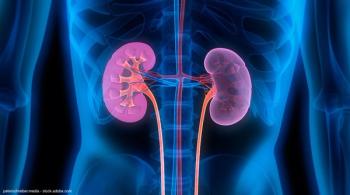
The FDA approved lumasiran in November 2020 as the first drug for the treatment of patients with primary hyperoxaluria type 1.
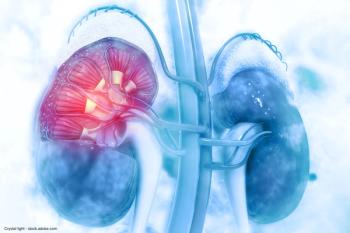
Kyle Wood, MD, discusses the different types of hyperoxaluria, the urologist’s role in managing the condition, and the treatments for it.

“While patient facing apps hold great potential to support self-management behaviors, particularly in stone disease, thoughtful consideration across an array of domains should really be taken prior to supporting or even recommending one of these apps to a patient,” says Jared S. Winoker, MD.

"If we can’t get the emergency rooms physicians to apply a bit of common sense to medicine, maybe we should require that they all have a ureteral stent placed for a few weeks during their residency so that they have a better idea of what these patients go through," writes Henry Rosevear, MD.
The study also confirms the growing popularity of ureteroscopy as a stone management tool.

Review of nearly 5600 patients found a 5% pooled incidence of postoperative urosepsis.

Here is what is recommended for fluid intake and dietary changes.

North American urologists analyzing outcomes from their initial experience treating urolithiasis with the high-power super pulse thulium fiber laser (Soltive) are encouraged by the results.

Analyses of data collected in a prospectively maintained database support the recommendation for urologists to consider the minimally invasive version of mini-percutaneous nephrolithotomy for stone removal in patients with medium-sized stones (10-20 mm).

"Everything comes down to patient selection and location of the stones," says one urologist.

The goal of the study is to establish real-world efficacy evidence of using the Soltive Laser System for laser lithotripsy.

Reza Z. Goharderakhshan, MD, discusses how patient compliance for recommended studies increased from less than 10% to 82% following implementation of the program.

Existing evidence does not clarify which patients with acute ureteral colic would benefit most from early surgical intervention.

Experts in prostate cancer, bladder cancer, kidney stones, OAB/incontinence, BPH, and sexual dysfunction recap all the key advances from 2020.

On the latest episode of the Speaking of Urology podcast, Dr. Amy Krambeck discusses her recent study evaluating the Axis single-use ureteroscope.

Obesity increases the risk of kidney stone disease, and some weight loss strategies actually increase the risk, according to a recent study.

Investigators have developed a cloud-based, HIPAA–compliant software solution to ensure timely ureteral stent removal and validated its performance in a pilot study.
"Treat the patient as a whole, not just as a stone former," Chew advises.

Quality-of-life data can help guide treatment.

Urologist Henry Rosevear, MD, turns his focus to the topic of evolving approaches to treating stones—and how urologists are compensated for these procedures.

Amy E. Krambeck, MD, discusses the findings of a recent 90-day trial of a single-use disposable ureteroscope.
In this episode, Peter L. Steinberg, MD, discusses a recent Urology Practice paper that examined medical malpractice cases involving kidney stones.

Holmium laser lithotripsy with Moses 2.0 is intended to enhance precision and versatility by optimizing laser energy transmission.
Advertisement
Advertisement
Trending on Urology Times
1
Evidence for Combining Prostatic Urethral Lift With Radiotherapy
2
After curative-intent treatment, prostate cancer recurrence is still an unmet need
3
Rezūm outperforms combination pharmacotherapy for BPH symptoms at 1 year
4
AACU, WOCN Society urge safeguards in Medicare catheter bidding
5