

Kidney Stones
Latest News
Advertisement
Latest Videos



CME Content


Advertisement
More News

Badar M. Mian, MD, discusses a recent study about the use of external physical vibration lithecbole for treating residual stones after retrograde intrarenal surgery.

Among ED visits within 30 days of elective ureteroscopy over the 6-month span, pain was the presenting complaint in about 60% of patients, Scott and White Medical Center researchers report.

Other pipeline developments include efficacy results for a bladder and prostate cancer drug, an infertility tool to predict sperm quality, the initiation of an immunotherapy combination for mUC, and more.
Urology Times reached out to four urologists (selected randomly) and asked them each the following question: How concerned are you about radiation exposure?
The results could have major diagnostic and treatment implications for pediatric kidney stone patients, a researcher says.
Researchers who are investigating burst-wave lithotripsy, a potential alternative treatment for kidney stones, report that magnetic resonance imaging and ultrasound scans hold promise as tools to help scientists analyze related kidney injuries.
Results of a retrospective study raise concern that ureteroscopy may adversely affect erectile function.
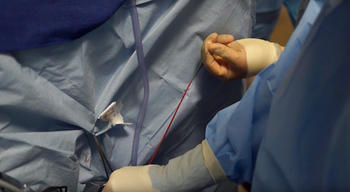
In these videos, high-volume stone surgeons demonstrate novel approaches to classification, visualization, and treatment of stones.
Urology-related FDA approvals from 2016 encompassed drugs and devices for prostate cancer, renal cell carcinoma, bladder cancer, stone disease, and more.
Other products discussed include an updated prostate tissue ablation device, a contrast agent for voiding ultrasonography, a bladder cancer test and more.
Despite the excruciating nature of kidney stones, many people can't manage to lower their risk by simply drinking more liquid. Now, a new study finds that one potential tool-a water bottle with a built-in consumption sensor and smartphone link-accurately tracks how much people drink.
A comparison of dusting versus basketing, the question of whether shock wave lithotripsy should be retired, and an expert interview on difficult stones were among the most-read Urology Times articles on stone disease in 2016.
Results of a study analyzing global trends in mortality attributable to urolithiasis show that the rate declined over a recent 20-year period.
Other pipeline developments discussed include an implantable device for OAB treatment, a subcutaneous hypogonadism treatment, efficacy results for an HPV drug, and the status of a device-based BPH treatment.
Whether or not medical expulsive therapy (MET) is a sound recommendation for patients with kidney or ureteral stones is a matter of debate.
Patients undergoing ureteroscopy while remaining on anticoagulant therapy may be at increased risk for bleeding complications, including significant bleeding events and unplanned returns to the operating room, according to a retrospective study
Results from bench studies favor a new open-faced stone retrieval device (Dakota, Boston Scientific) for having greater versatility, efficacy, and durability compared with a competing product, and the in vitro performance of the new instrument is consistent with early clinical experience, says Roger L. Sur, MD.
A large new study provides more evidence that cholesterol drugs may lower kidney stone formation.
"Increasingly, urologists are faced with patients who cannot safely discontinue anticoagulation or antiplatelet medications, even in the face of an impending surgical procedure. This is a trend that is likely to continue into the foreseeable future," writes Brian R. Matlaga, MD, MPH.
A study evaluating the oxalate content of foods as reported by two reputable sources shows discordance.
A recent review of medical literature adds to the debate surrounding medical expulsive therapy for stone disease.
Other products discussed include a stent system for treating ureteral obstructions, a male infertility test, and more.
Percutaneous nephrolithotomy in the presence of aspirin appears both effective and safe. In a retrospective review of almost 300 PCNL cases, postoperative hemorrhage was uncommon in patients who continued aspirin preoperatively, said Brandon Otto, MD, at the AUA annual meeting in San Diego.
Other pipeline developments discussed include a bladder cancer test, a male infertility assay, and the first oral dosage treatment for hypogonadism.
Advertisement
Advertisement
Trending on Urology Times
1
Evidence for Combining Prostatic Urethral Lift With Radiotherapy
2
After curative-intent treatment, prostate cancer recurrence is still an unmet need
3
Rezūm outperforms combination pharmacotherapy for BPH symptoms at 1 year
4
AACU, WOCN Society urge safeguards in Medicare catheter bidding
5