

"The end of the year presents a good opportunity to regroup, close out 2023 in the strongest position possible, and ready yourself for 2024," writes Jeff Witz, CFP.
"The end of the year presents a good opportunity to regroup, close out 2023 in the strongest position possible, and ready yourself for 2024," writes Jeff Witz, CFP.

"This is our biggest meeting ever in our 15-year history [with] almost 1100 people here," says Evan R. Goldfischer, MD, MBA, FACS.
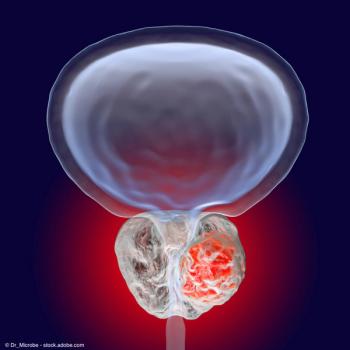
At the time of the data cutoff, a maximum tolerated dose of 225Ac-J591 had not yet been reached.

“Preclinical and clinical findings thus far indicate that SAR-Bombesin holds significant potential for improving the diagnosis and treatment of prostate cancer,” said lead principal investigator Andrei Iagaru, MD.

"All of our tools, including genomics and MRI, enable us to do a better job of risk stratifying [patients] to have a more appropriate shared decision-making discussion [about active surveillance]," explains David Morris, MD.
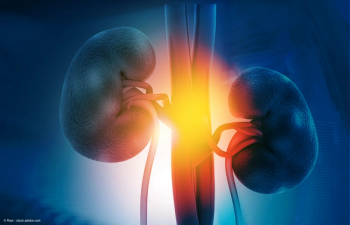
Data showed that plasma oxalate levels were maintained through 24 months of treatment with lumasiran.

"Patients shouldn’t be making the decision to do active surveillance without understanding what that means and what their other options are,” one panelist said.

“Radiation therapy continues to expand its role, especially if you start talking about [patients with] the ultra high–risk [prostate cancer] or node-positive [disease] and beyond,” says Daniel Spratt, MD.

“We went to medical school to take care of patients, not to service the computer, which is what we do for a large part of our daily work," said Inderbir Gill, MD.

“There’s a lot of clinical trial activity in the [bladder cancer realm], and hopefully [new therapies will] keep adding to our armamentarium of [treatment strategies] we can offer patients,” said Gautam Jayram, MD.

In this interview, Scott A. MacDiarmid, MD, discusses health care professional burnout, including how he came to be interested in the topic and what can be done to prevent burnout.

"An educated patient is one that's always going to want to be more involved in trying to make themselves better; they're going to be an empowered patient,” says Thomas J. Mueller, MD.

Much of the progress that has been observed in certain areas of prostate cancer care in the past 10 years could mirror what is on the horizon in the next 10 years in the bladder cancer space, according to Tom Jayram, MD.

"You might be the only female urologist in your practice, but you're not the only female urologist in the world, or in the country, or even probably in your state," said Kari Bailey, MD.
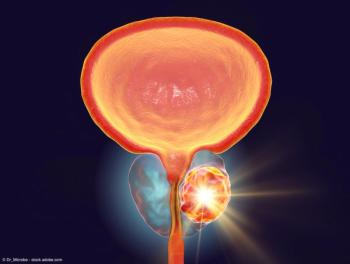
“One reason [the role of radiation has expanded] is the accuracy and precision of treatment, irrespective of a patient’s mutational profile. Radiation, irrespective of that heterogeneity and those mutations, has a high probability of killing those cancer cells,” said Daniel Spratt, MD.

“Sexual wellness is critical to overall health and happiness. That’s why you see more men and women turning to specialty health clinics for solutions to problems they consider more aesthetic versus medical,” said Mitchell Hollander, MD.
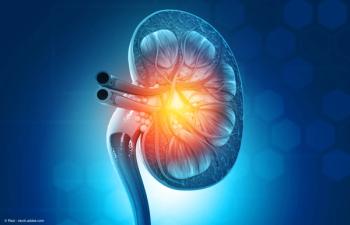
Adjuvant pembrolizumab improved overall survival compared with placebo in patients with renal cell carcinoma at intermediate-high or high risk of recurrence following nephrectomy, or following nephrectomy and resection of metastatic lesions.

AI scribe solutions are one of the easiest technologies to deploy into existing workflows, writes Vadim Khazan.

"Cross-examination offers the other side the opportunity to poke holes in the witness’s story contemporaneously, helping the jury evaluate the credibility of the witness in real time," writes Kenton H. Steele, Esq.

"ctDNA holds a unique position as it offers a molecular means to quantify the extent of residual disease burden," says Adanma Ayanambakkam, MD.
Combining the antibody-drug conjugates sacituzumab govitecan and enfortumab vedotin was safe, feasible, and produced high and early response rates in patients with treatment-resistant metastatic urothelial cancer.

“It was interesting to find that when Black and White men were provided equal access to the same therapies, given at the same dosage and monitored in the same setting, disparities in outcomes were eliminated," says Jun Gong, MD.
The application is based on results from the phase 3 CheckMate-901 trial.
Novartis is now equipped to provide 177Lu-PSMA-617 to patients within 2 weeks of diagnosis with advanced disease.

"If a patient begins treatment with platinum-based chemotherapy and maintenance immune checkpoint inhibition, second-line options may involve evaluating erdafitinib, ADCs, or participation in clinical trials," says Adanma Ayanambakkam, MD.

The FDA’s Fast Track designation is designed to expedite the review and development of novel treatments that will fill an unmet medical need.
The combination of oral masofaniten (formerly EPI-7386) and enzalutamide was well tolerated and elicited durable reductions in PSA levels in patients with metastatic castration-resistant prostate cancer.

The primary end point of the phase 3 CLARIFY trial is the diagnostic capability of 64Cu-SAR-bisPSMA PET to identify regional node metastases.
Patients were nearly twice as likely to develop urinary symptoms and urinary frequency when their prostatic urethra was greater than 4.6 cm in length.
At the time of data cutoff, 16 patients in cohort 1 and 27 patients in cohort 3 had been treated with TAR-210, an intravesical delivery system for erdafitinib.