
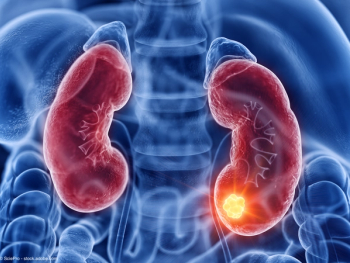
Results from the phase 1 TRAVERSE trial showed signals of anti-tumor activity with the CAR T-cell therapy ALLO-316 in patients with advanced or metastatic clear cell renal cell carcinoma.
Results from the phase 1 TRAVERSE trial showed signals of anti-tumor activity with the CAR T-cell therapy ALLO-316 in patients with advanced or metastatic clear cell renal cell carcinoma.

"The sad thing is that with something like OAB, we already have so many barriers to getting patients in to initiate care in the first place," says A. Lenore Ackerman, MD, PhD.

“The answer won’t be found in telling physicians to be more resilient,” said AMA president and health policy expert Jack Resneck Jr., MD.

“There is a lack of information regarding the prevalence and implications of [prostate cancer] in transgender women, and this highlights the crucial need for further research into prevention, detection, and treatment," says Hayley Premo.
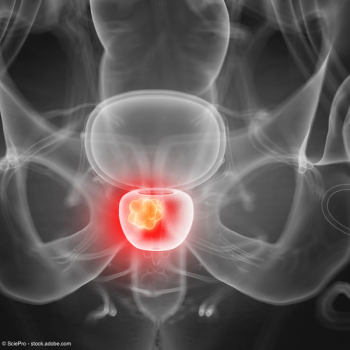
The PSMA-targeted fluorescent tracer OTL78 was shown to be safe and enabled real-time imaging during robot-assisted radical prostatectomy and provided valuable information on the localization and extent of prostate cancer.

“Our data indicate that usage of a PCNL equipment whiteboard led to significant improvements in team perception of inter-disciplinary communication and case item selection accuracy," says Jenny N. Guo, MD.

"The evidence is starting to show us that although efficacy in terms of managing OAB symptoms may be equal or similar across studies for these 2 classes of medications, safety and tolerability are very different," says A. Lenore Ackerman, MD, PhD.

In this installment, Jonathan Clavell, MD, FACS, highlights Clavell Urology, his private practice within Robert J Cornell MD, PA, in Houston, Texas.

The courses from the American Urogynecologic Society allow urologists to earn CME credits on their own time.

This legislation a bipartisan bill designed to improve affordability and access to prescription medications.

"The need for maintaining the high quality of education within the increasing number of restrictions and regulations is making the job as program director complex and time-consuming," writes Gopal H. Badlani, MD.
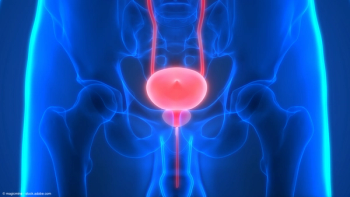
"Our preliminary clinical trial found that TAR-200 was generally safe, well tolerated, and had beneficial effects on bladder cancer outcomes in a group of patients with limited treatment options," said Mark Tyson, MD, MPH.

What plays out in real-life courtrooms differs greatly from those on television.

“Together, these changes will help ensure enrollees have consistent access to medically- necessary care while also maintaining medical management tools that emphasize the important role MA plans play in coordinating medically-necessary care,” CMS said.

Combination therapy with the novel agent BXCL701 and pembrolizumab showed strong clinical activity in in patients with platinum-resistant small cell neuroendocrine carcinoma metastatic castration-resistant prostate cancer.
The safety and efficacy of the Vivally System were established in the FREEOAB study, a prospective multi-center clinical trial that included 96 patients with overactive bladder.

Investigators found that the total out-of-pocket costs associated with oral therapies for prostate cancer were approximately 18 times higher compared with ADT.

The investigators identified several genetic factors, including ARID1A mutation, that correlated with survival outcomes in patients with advanced urothelial carcinoma treated with immune checkpoint blockade.
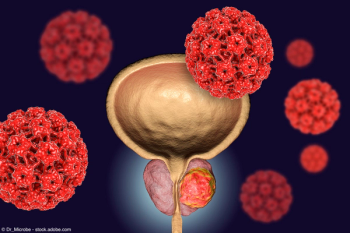
Clinical guidelines currently do not recommend PSMA-PET imaging before radical prostatectomy.

The Health Sector Cybersecurity Coordination Center of the US Department of Health and Human Services recently published a mobile device security checklist.

EHR measures are an indicator of how technology friendly your practice is.

“We recommend mirabegron monotherapy as an alternative medical treatment choice for the management of OAB,” the authors wrote.

"[This] could be a paradigm shift in prostate cancer,” says Eugene Shenderov, MD, PhD.

Study finds a 35% increase in vasectomy consultation requests.

Availability, expertise, and funding were the primary issues identified as barriers to use of sacral neuromodulation for the treatment of patients with overactive bladder.
In combination, the number of immune cells in and around kidney tumors, the amount of dead cancer tissue, and the mutations of PBRM1 can serve as biomarkers of response to immunotherapy in patients with kidney cancer.

The current study is welcome news as it lends further support to the use of intravesical Gem/Doce as a safe and effective option that has the potential to become a new standard of care for high-risk NMIBC.
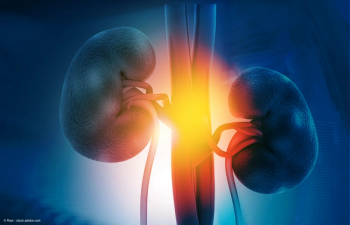
The phase 2 LITESPARK-003 study explored belzutifan plus cabozantinib in patients with locally advanced or metastatic clear cell renal cell carcinoma.

Rebekah Bernard, MD, provides tips for improving interactions with patients who are angry.
The findings suggest creatinine-based eGFR equations alone may be inaccurate, and cystatin C or combined eGFR equations may be a more accurate assessment of kidney function in this population.