

When compared with standard risk factors, only Decipher Prostate Genomic Classifier scores were independently associated with metastasis-free survival and distant metastasis.
When compared with standard risk factors, only Decipher Prostate Genomic Classifier scores were independently associated with metastasis-free survival and distant metastasis.
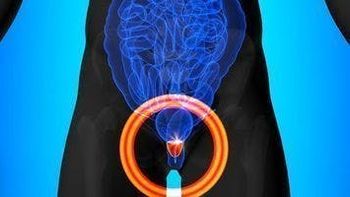
"A lot of patients with prostate cancer are going to receive one of these agents," says Tanya B. Dorff, MD.

"Make the proper beneficiary designation adjustments when warranted and review these annually with your adviser to ensure they remain up-to-date and make financial sense given your current situation," writes Jeff Witz, CFP.

“Patients who are candidates for bariatric surgery should be advised that improvement in urinary incontinence may also be a significant benefit of their intervention,” the authors wrote.

"If additional research confirms our findings, this may lead to a new paradigm in the treatment of muscle-invasive bladder cancer," says Matthew Galsky, MD.

"The question of when a surgeon should retire has been the subject of debate for decades," writes Raj S. Pruthi, MD.

"I treat all aspects of male and female incontinence, whether this be artificial urinary sphincter, the male sling, female sling, bladder Botox, or sacral neuromodulation," said Jas Singh, MD, FRCS.

Treatment with adjuvant pembrolizumab reduced the risk of disease recurrence or death versus observation in patients with localized muscle-invasive urothelial carcinoma and locally advanced urothelial carcinoma.

"ICD-10-CM coding denials have been increasing across the country as payers continue to refine edits," write Jonathan Rubenstein, MD, and Mark Painter.

The study achieved 100% local control and cancer-specific mortality rates with stereotactic ablative body radiotherapy.

"Psychological factors often have an important role [in erectile dysfunction], and psychological treatment options are available that have been found to improve outcomes," said Mark S. Allen, PhD.
This is the largest prostate cancer study that examined the exome, according to the researchers, who believe their findings can potentially inform the makeup of panels used for genetic testing in prostate cancer.

"Results showed that more than two-thirds of these men were found to have positive Posluma scans, with a quarter of them having extrapelvic lesions," says Ashesh B. Jani, MD, MSEE, FASTRO.

Data showed that the proportion of Black patients referred for genomic testing increased from 19% to 58% after the implementation of the precision medicine navigator.

The phase 1/2 COMBAT study examining the novel theranostic 64Cu/67Cu-SAR-Bombesin.

The approval is supported by findings from the phase 2 PHYOX2 trial and interim data from the phase 3 PHYOX3 extension study.

"The reported bpMRI-based AI model detected the majority of locally recurrent prostate cancer after radiotherapy," the authors wrote in their study conclusion.
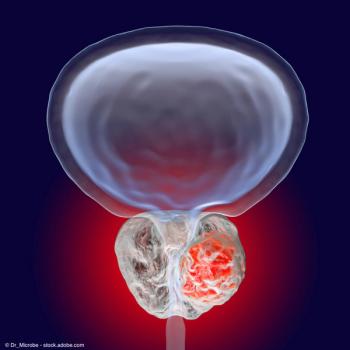
Patients who underwent treatment with SBRT demonstrated a 5-year disease control rate of 96%, compared with 95% among patients who underwent conventionally fractionated radiation therapy.

In the survey, 81% of residents in their final year of training reported that they sometimes, often, or always experienced feelings of burnout during their training.
The positioning system would allow patients with cancer to undergo radiation therapy in an upright, seated position.

About 1 of every 5 patients with stage I seminoma relapses; however, “the level of evidence supporting the use of currently defined risk factors in decision making is low,” wrote lead author Thomas Wagner, MD, and coinvestigators.
The inclusion of iTind is reflected in a newly added statement on temporary implanted prostatic devices.
If replicated with further study, the finding potentially expands noninvasive fertility treatment options and may minimize the need for expensive reproductive technology, according to lead author Scott D. Lundy, MD, PhD, of Cleveland Clinic’s Department of Urology.

“Implementation of the most recent PI-RADS update did not improve the incongruence in prostate cancer grade assessment between MRI/ultrasound fusion targeted biopsy and surgery,” the authors wrote.
"It is the right time and I have been fortunate to have such great people to work with locally and nationally," a urologist writes.
"It is erdafitinib’s time to shine," says Arlene O. Siefker-Radtke, MD.
The findings suggest that drug therapies targeting the NOTCH1 gene may serve as an alternative treatment option for patients with kidney cancer in whom surgery is not recommended.

The PSE test was shown to improve the predictive accuracy of a standard PSA test from 55% to 94%.

The reimbursement code for flotufolastat F 18 will be effective October 1, 2023.

“A hybrid telehealth approach expands access to specialized care, reduces travel burdens, promotes timely interventions, and enables continuous management of health conditions,” writes Kara Hartl, MD.