

The UK REIMAGINE study suggests that MRI screening can not only bolster PSA screening, but also has the potential to be the central component of a national prostate cancer screening program.
The UK REIMAGINE study suggests that MRI screening can not only bolster PSA screening, but also has the potential to be the central component of a national prostate cancer screening program.

Prostate cancer survivor Larry Ferguson, DMD, participated in a clinical trial at MUSC Hollings Cancer Center.

The BioProtect Balloon Implant System provides protection to the rectum during radiation therapy for prostate cancer.

In this episode, Janelle Bunce, PA-C, highlights the role that advanced practice providers can play in filling the gaps created by the growing workforce shortages in urology.

"There is nothing in the data to suggest any widespread abuse, improper inducements, or impropriety in the specialty. Nevertheless, urologists should be aware that this is an area of continued scrutiny by Congress and watchdogs," writes Robert A. Dowling, MD.
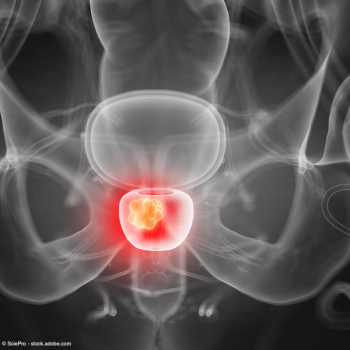
Cohort 3 of the SECuRE trial is exploring the safety and efficacy of a single-dose administration of 12GBq 67Cu SAR-bisPSMA in patients with metastatic castrate-resistant prostate cancer.
"I'm very pleased that this is now in the armamentarium for us," says Wayne G. Brisbane, MD.

The signatures were derived from the Decipher Genomics Resource for Intelligent Discovery (GRID) database in a retrospective analysis of the phase 2 STREAM study.

"These results show urologists that in this setting, pregabalin shouldn’t be routinely used," says Geoffrey H. Rosen, MD.

Benjamin N. Breyer, MD, is a urologic surgeon who is internationally known for performing complex urethral and penile reconstruction for urethra stricture and cosmetic disfigurement, male incontinence, male fistula, and surgery for erectile dysfunction.
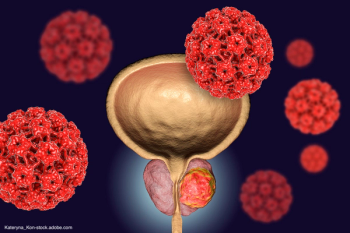
The approval of the olaparib/abiraterone regimen was based on an exploratory subgroup analysis of the phase 3 PROpel trial consisting of the 85 patients in the study with BRCA-positive metastatic castration-resistant prostate cancer.

"We found that urology practices increasingly using mpMRI, and tissue-based genomics to a lesser extent, are more likely to treat men who have a high risk of non-cancer mortality. These men have the least to gain from treatment and are likely being overtreated,” says Kassem S. Faraj, MD, MS.
The application is specifically for use of enzalutamide in patients with nonmetastatic hormone-sensitive prostate cancer with high-risk biochemical recurrence and is supported by data from the phase 3 EMBARK trial.

"Our study raises concerns that some insurance plan policies are denying an effective, research-proven therapy, for a very common condition for which treatment is considered medically necessary," says Mohit Khera, MD, MBA, MPH.
The FDA's decision was based on results from the OASIS trial, in which the Revi tibial neurostimulator device demonstrated significant efficacy for treating urge urinary incontinence in women.

In predicting PCSM at 10 years, the area under the curve with the P-score was 0.93, compared with 0.81 with D’Amico and 0.88 with CAPRA.

Patients in the CONTACT-02 trial were randomly assigned 1:1 to receive cabozantinib plus atezolizumab or a second novel hormonal therapy of either abiraterone and prednisone or enzalutamide.
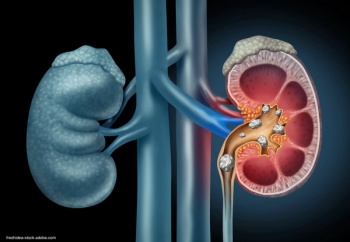
A multidisciplinary team at the Vanderbilt Institute for Surgery and Engineering is collaborating on a 3D navigational system to help limit kidney stone fragments that remain after surgery.
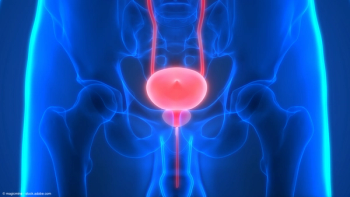
Laura Bukavina, MD, MPH, highlights a BCAN Think Tank session on real-world applications of microbiome in bladder cancer.

The Northwestern Medicine Department of Urology provides no-cost continuing medical education programs for urology professionals.
Use of non-contrast MRI also showed the potential to decrease identification of clinically insignificant disease.

Patients in the phase 3 LITESPARK-005 trial were randomized to belzutifan or everolimus after receiving both a PD-1/L1 inhibitor and a VEGF-TKI for their renal cell carcinoma.

In this interview, Yair Lotan, MD, discusses the steps needed for urine biomarkers to be incorporated into standard clinical practice in bladder cancer management.

Last year, a single health care breach involved 2 million records, but in the first half of 2023, there were 5 health care breaches of at least 3 million records each.

The incidence of 12-month surgical repair failure was 19% among those who received vaginal estrogen, compared with 9% among those who received placebo.

The prospective, open-label, phase 2 SOLAR study enrolled 26 patients with metastatic prostate cancer.
The study assessed MG-AGEs, SRAGE, GLO1, and AGER, 4 biomarkers that are associated with methyglyoxal.
"Despite challenges, ongoing research and advancements in risk stratification, imaging techniques, and targeted therapies are paving the way for personalized and precision medicine approaches in prostate cancer management," writes Michael S. Cookson, MD, MMHC, FACS.

Approximately half of prostate cancer patients with clinically actionable gene variants do not meet the NCCN guideline criteria for genetic testing, according to findings from the PROCLAIM trial.
The new drug application is supported by findings from the phase 3 CERTAIN-1 trial.