
BT8009 targets the tumor antigen Nectin-4, which has elevated expression levels in urothelial cancer.
BT8009 targets the tumor antigen Nectin-4, which has elevated expression levels in urothelial cancer.

The phase 3 URO-901-3005 study met its 2 co-primary end points with vibegron demonstrating a reduction in micturition episodes and urgency episodes from baseline to 12 weeks.

The EU application for erdafitinib in urothelial carcinoma is supported by data from cohort 1 of the phase 3 THOR trial.

Even before the pandemic, violence against health care workers was escalating.

Questions spanned urologic conditions such as benign prostatic hyperplasia, overactive bladder, erectile dysfunction, kidney stones, Peyronie disease, and recurrent urinary tract infections.

National MENtion It® campaign explores the impact stress has on men’s sexual and mental well-being.

"Am I close to an answer? Yes, my inner being tells me it is time to initiate letting go," says Gopal H. Badlani, MD.

"This could make a huge impact for patients with limited resources,” says Benjamin Pockros, MD, MBA.

"Encouraging our patients to adopt a healthy, plant-based diet is a great way to simultaneously promote both prostate and overall health," writes Stacy Loeb, MD, MSc.

In this installment, Kevin Zorn, MD, FRCSC, FACS, highlights his disease-specific practice, BPH Canada, which he designates as a “one-stop shop” for patients with benign prostatic hyperplasia.

The Society of Nuclear Medicine and Molecular Imaging announced a consensus statement on patient selection and appropriate use of the radionuclide therapy 177Lu-PSMA-617 in patients with prostate cancer.
Men who had a dorsal testosterone/peripheral testosterone ratio greater than 2 were found to have higher rates of PSA persistence compared with patients who had a similar ratio.

Proposed rule includes incorporation of controversial E/M code.
Adding perioperative durvalumab to standard care for patients with resectable muscle-invasive urothelial carcinoma demonstrated promising event-free and overall survival rates in a phase 2 trial.
The phase 1/2 Oncorella-1 trial is expected to enroll up to 40 patients with advanced kidney cancer who are on dialysis due to renal failure.

Congress has taken actions aimed at protecting arrangements in which hospitals and other entities provide bona fide mental health improvement, behavioral health improvement, or maintenance programs to physicians and other clinicians.
"The EOM may facilitate success for its oncology participants by reducing reporting burdens, simplifying requirements, and offering potentially large bonus payments for lowering costs," writes Robert A. Dowling, MD.
A Cleveland Clinic study found that TKIs in the neoadjuvant setting are associated with greater use of partial nephrectomy when treating patients diagnosed with renal masses in a solitary kidney.
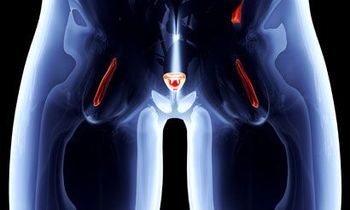
The published findings show the viability of using a transperineal ultrasound system as a means to monitor intra-fractional prostate motion for prostate stereotactic body radiotherapy.

“Our findings show that AI chatbots provided accurate information with little misinformation. However, the information was provided at a college reading level and with little actionability," says Abdo E. Kabarriti, MD, FACS.

"Portfolio rebalancing is a necessary part of an effective investment strategy, and a routine check of your investments should be completed regularly to ensure they have not drifted too far from their intended percentage targets," writes Jeff Witz, CFP.

The disease-free survival and distant metastasis-free survival benefits observed with adjuvant pembrolizumab in the intent-to-treat population of patients with clear cell renal cell carcinoma extended across all subgroups defined by disease risk, tumor stage, and lymph node involvement.

“A major finding from our study is how multiple sociodemographic, lifestyle, and medical factors influence testosterone levels in men," says Bu B. Yeap, MBBS, FRACP, PhD.

“Responsible application of AI is crucial, especially when the health and well being of people are at stake,” writes industry expert Manny Krakaris.

The authors suggest that metastasis-free survival may serve as a more suitable end point for future clinical trials of radiation therapy in localized prostate cancer.

"The purpose of the study is to compare the safety and efficacy of lutetium PSMA I&T vs standard of care hormone therapy in patients with metastatic castration-resistant prostate cancer," says Jason M. Hafron, MD.
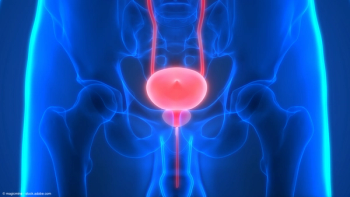
Aquablation is a “minimally invasive procedure [that] is safe with long-term durability and a low-side effect profile,” said urologist Dennis Bentley, MD.

Erdafitinib previously received an accelerated approved for the treatment of adult patients with FGFR2/3-positive, previously-treated locally advanced or metastatic urothelial carcinoma.

"Saving and investing a modest amount regularly and early in your life can have a huge impact on your ability to reach your financial goals," writes Jeff Witz, CFP.

About 30% of patients received a diagnosis of ED and prediabetes or type 2 diabetes on the same day.