

The addition of SBRT to upfront abiraterone acetate and prednisone (AAP) reduced the risk of disease progression or death by 65% compared with AAP alone in patients with oligometastatic castration-resistant prostate cancer.
The addition of SBRT to upfront abiraterone acetate and prednisone (AAP) reduced the risk of disease progression or death by 65% compared with AAP alone in patients with oligometastatic castration-resistant prostate cancer.

“[These] results imply that prostate cancer survival could be improved, especially in historically under-served groups, by improving the timeliness of access to medical care," says Sean Clouston, PhD.

"At some point, it will make sense, and it will be obvious to me and to my colleagues that it is time," a urologist writes.
UCSF is West Coast leader for the innovative, minimally invasive treatment for prostate cancer patients.
The EV-302 trial is the confirmatory trial for the FDA’s accelerated approval of pembrolizumab plus enfortumab vedotin for the first-line treatment of patients with locally advanced or metastatic urothelial carcinoma.

"We all need to revisit meaningful methods for ongoing assurance of competency specific to our fields of medicine and surgery across the physician career span," writes Hal H. Atkinson, MD, MS.

Proper coding for percutaneous nephrolithotomy includes code 50081.

Liposomal tacrolimus led to improvements in hematuria, bleeding sites on cystoscopy, microscopic urine analysis for red blood cells, and urinary symptoms.

"To form a connection between the witness and the jury and establish the witness’ credibility, the witness needs to be the star," writes Austin M. Richards, Esq.
“The ADVANCED-2 trial in NMIBC is an exciting opportunity to build on the favorable anti-tumor and safety data of TARA-002 presented earlier this year," says Gautam Jayram, MD.

There have been several recent regulatory updates related to cybersecurity in health care.

The inclusion of PAE in the American Urological Association BPH Guidelines offers a non-surgical alternative that can provide long-term relief with minimal downtime and fewer complications, according to the United Urology Group.

"As the number of women urologists continues to increase, the field of urology must pay attention to their needs and professional satisfaction as they will constitute an increasing proportion of the future urologic work force," writes Lourdes Guerrios Rivera, MD, MSc.
Patients with mCRPC will be randomly assigned 2:1 to receive masofaniten/enzalutamide or enzalutamide alone.

"Training with aging faculty teaches important lessons. And it is the right balance of the lessons with a young ambitious trainee that has molded me into the product I have become," the urologist writes.

The supplemental new drug application is supported by findings from the LITESPARK-005 trial.

In total, the prospective SOPHIA study enrolled 6 men with stress urinary incontinence who have reduced outlet resistance due to intrinsic sphincter deficiency.

Both the LUTS/BPH and testicular cancer guidelines were updated based on the availability of new literature, as identified through an AUA Update Literature Review process.
An exclusive Urology Times survey measured US-based urologists’ uptake, access to, and indications for utilizing prostate-specific membrane antigen-targeting agents.

"A lot of urologic associations have committed a lot of work to diversity, equity, and inclusion, and this just seems like a step backward compared with the policies that they've been working toward in diversifying the urologic work force," says Diana Magee, MD, MPH, MSc, FRCSC.
"The findings suggest that we may need to view urinary symptoms differently, possibly with an emphasis on earlier treatment,” says Blayne Welk, MD, FRCSC, MSc.
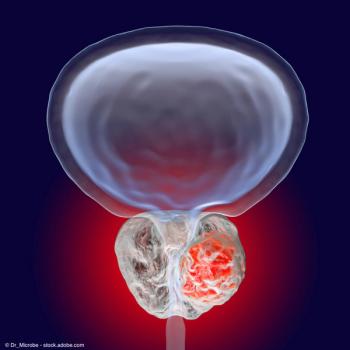
The incorporation of PSMA PET–imaging into a multivariate model enhanced the predictive accuracy for clinically significant prostate cancer in patients in the "PSA gray zone" of 4 to 10 ng/mL.
Patients with MIBC were randomly assigned to receive APL-1202 in combination tislelizumab or to tislelizumab alone.
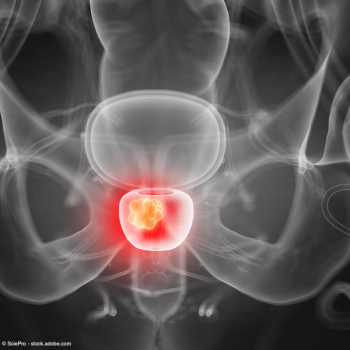
“We are pleased with the results we have generated in the BOP trial, which have shown that 64Cu SAR-Bombesin can detect lesions in men with biochemically recurrent prostate cancer that are negative or equivocal on PSMA PET,” said Louise Emmett, MBChB, FRACP, MD.

"The ABU continues to reevaluate all policies related to diplomates. As medical practice continues to evolve in United States, and these changes affect the practitioners of medicine, likely further changes will be necessary in board certification procedures," writes Roger Dmochowski, MD, MA (Conflict Management and Resolution), MMHC, FACS.
"Our study is the first report of bladder auto-transplantation in heart-beating, brain-dead human research donors as a necessary preparatory step toward clinical bladder transplantation in living patients," says Inderbir S. Gill, MD.

Participants who completed a survey following the intervention indicated that the program was most helpful for networking with other applicants, finding a mentor, and serving as an introduction to urology.
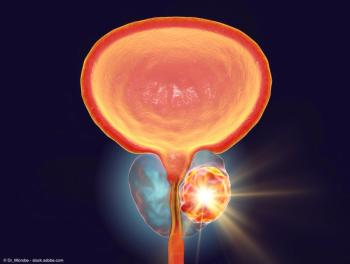
The Focal One high intensity focused ultrasound system uses precision sound waves to destroy prostate tumor tissue and spare healthy tissue, reducing the risk of side effects that would lower a patient's quality of life.

The first patient with NMIBC has been dosed with nadofaragene firadenovec-vncg as part of the Adstiladrin Early Experience Program.

"FPSA is an important, inexpensive, and readily available test in our risk-stratification toolbox," writes Badar M. Mian, MD.