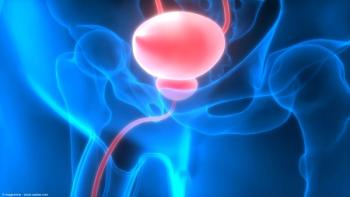
An expert discusses how his diagnostic treatment workflow for a new patient with benign prostatic hyperplasia (BPH) progresses from initial α-blocker therapy through noninvasive systematic testing with nurse practitioner review, followed by multichannel urodynamics, transrectal ultrasound, and cystoscopy if improvement is insufficient. He emphasizes that he pushes for a thorough evaluation even when symptoms seem mild because “the bladder is a notoriously unreliable witness,” and he wants to prevent emergency urinary retention by identifying underlying obstruction early.