

Experts discuss why accurately recognizing CIS in patients with suspected NMIBC is essential to preventing disease progression, guiding surveillance, and expanding treatment and clinical trial opportunities.
Experts discuss why accurately recognizing CIS in patients with suspected NMIBC is essential to preventing disease progression, guiding surveillance, and expanding treatment and clinical trial opportunities.

The expert faculty examine how access barriers, insurance coverage, and financial considerations can shape treatment decisions, often requiring clinicians to balance clinical preferences with practical realities.
The expert faculty emphasize that while ARPI-based therapies have significantly improved outcomes, successful treatment requires balancing clinical benefit with quality of life and long-term tolerability.

Joshua Halpern, MD, MS, reviews evidence supporting the accuracy of mail-in semen analysis and identifies patients who may benefit most from at-home testing.
Can Aydogdu, MD, highlights a study examining the utility of pre-surgical tumor-informed ctDNA to predict pathologic nodal status at radical cystectomy.

Scott Sellinger, MD, FACS, explains the biologic significance of PTEN loss in metastatic prostate cancer, why it is associated with aggressive disease and poor outcomes, and how the approval of capivasertib has transformed PTEN from a prognostic biomarker into a predictive biomarker with a targeted treatment option.

Experts discuss practical strategies to improve the detection of CIS through closer urologist-pathologist collaboration, optimized biopsy techniques, and complementary diagnostic tools.
Declan Murphy, MB, BCH, BaO, FRACS, FRCS, Urol, discusses the clinical significance of the phase 3 PROTEUS trial and addresses concerns about the study's use of ADT in the control arm.

Experts discuss why CIS is frequently underrecognized, highlighting the subtle clinical and cystoscopic features of the disease and the importance of integrating multiple factors to improve detection.

Kathryn H. Gessner, MD, PhD, discusses the current limitations in identifying appropriate candidates for bladder-preserving trimodal therapy, the promise of utDNA, and why shared decision-making remains essential.
The expert faculty discuss the opportunities and limitations of comparative analyses, highlighting the importance of understanding potential biases and patient-level factors when applying real-world findings to clinical practice.
As real-world evidence (RWE) becomes increasingly integrated into oncology research, the expert faculty discuss both the strengths and limitations of these analyses and how they complement findings from prospective clinical trials.
Richard N. Schlussel, MD, discusses how advances in robotic surgery and artificial intelligence are expected to transform care in pediatric urology.

Jamie Michael, MD, highlights a study exploring the impact of MRI and genomics on "extreme" grade reclassification in men on active surveillance.

Dose interruption rather than discontinuation addresses most gemcitabine intravesical system (Inlexzo) adverse events, with designated champions supporting consistent patient management, according to Elizabeth Mobley, MD.
Elizabeth Mobley, MD, shares practical tips for counseling patients and managing adverse events during treatment with the gemcitabine intravesical system.
Proactive adverse event counseling and a specific hydration protocol are the primary tools for supporting patient retention through the gemcitabine intravesical system's (Inlexzo) extended treatment course, according to Mobley.
University of Florida chief residents share practical advice for trainees on building mentorship networks, maintaining well-being, and navigating the personal and professional challenges of urology residency.
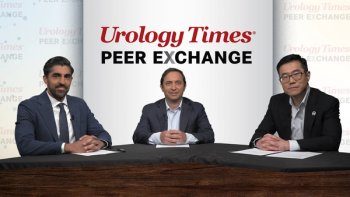
New FDA-approved perioperative options reshape bladder cancer care; learn how teams coordinate referrals, biomarkers, and bladder-sparing follow-up.
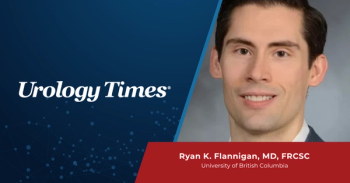
Ryan K. Flannigan, MD, FRCSC, highlights a phase 2 study of the sustained-release lidocaine formulation ST-01 as a potential nonsurgical treatment for chronic scrotal content pain.
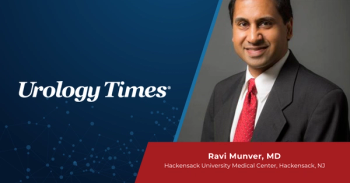
Ravi Munver, MD, discusses a propensity score–matched comparison of the AquaBeam system and the second-generation AI-powered HYDROS platform for BPH.

Enfortumab vedotin-ejfv (Padcev) plus pembrolizumab's (Keytruda) expanded approval shifts the perioperative MIBC conversation from cisplatin eligibility to optimal systemic strategy, according to María Natalia Gandur Quiroga, MD, MSc.

Daniel J. George, MD reviews the data behind the FDA approval of capivasertib for PTEN-deficient metastatic prostate cancer.
As the treatment landscape continues to evolve, the expert faculty discuss how real-world considerations, including treatment access, insurance coverage, and patient costs, can significantly influence therapeutic decisions, sometimes as much as the clinical evidence itself.
As treatment options continue to expand, the expert faculty discuss where current evidence remains limited and identify key areas for future research that may further refine treatment selection and disease management.

CVAC and FANS reflect different surgical philosophies—dusting vs fragmentation—with distinct ergonomic trade-offs and shared intrarenal pressure risks that urologists must actively monitor, according to Krambeck.
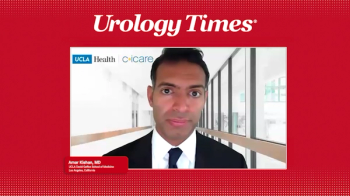
Amar U. Kishan, MD, explains how to translate the ArteraAI result into a meaningful patient conversation, reflects on what the cost-effectiveness data mean for the future of AI-guided precision oncology, and closes with a single takeaway for community urologists.

Sender Herschorn, BSc, MDCM, FRCSC, discusses a subgroup analysis of the COURAGE trial showing that vibegron provided comparable efficacy and favorable safety in men 75 years and older with persistent OAB symptoms receiving pharmacotherapy for BPH.
New perioperative bladder cancer options reshape referrals and biomarker-driven planning, helping more patients get safer, personalized care.
Experts debate bladder MRI limits after TUR/chemo and how ctDNA/utDNA may refine staging and bladder-sparing decisions in muscle-invasive disease.