
Urocross produced deepening IPSS improvement through 24 months post-retrieval, with Kevin T. McVary, MD, FACS, attributing a post-removal symptomatic boost to completed prostatic remodeling and full preservation of future treatment options.
Urocross produced deepening IPSS improvement through 24 months post-retrieval, with Kevin T. McVary, MD, FACS, attributing a post-removal symptomatic boost to completed prostatic remodeling and full preservation of future treatment options.

Kristen Scarpato, MD, discusses 2026 AUA/SUO Advanced Prostate Cancer Guideline amendment recommendations on the use of PSMA-PET imaging for staging and treatment selection.
Results from a cross-sectional study suggest that unmet social needs are associated with kidney stone disease and worse stone-specific quality of life.

This episode, titled “Emerging Treatment Strategies in mCSPC,” features panelists discussing the rapidly evolving treatment landscape in metastatic castration-sensitive prostate cancer (mCSPC) and the growing number of therapeutic approaches being incorporated alongside androgen deprivation therapy (ADT) and androgen receptor pathway inhibitors (ARPIs).
In “Risk Stratification and Treatment Intensification Strategies in mCSPC,” our panel explores how clinicians use clinical, molecular, and genomic risk factors to personalize treatment decisions for patients with metastatic castration-sensitive prostate cancer (mCSPC). The expert faculty discuss how disease volume, timing of metastasis, tumor burden, PSA kinetics, and patient comorbidities influence risk stratification and guide the selection of doublet, triplet, and metastasis-directed treatment approaches.
Matthew Truesdale, MD, FACS, discusses validation data showing that IsoPSA improves risk stratification for clinically significant prostate cancer in men with elevated PSA both with and without pre-biopsy mpMRI.
"This is really going to make access to care a lot better, and workflow is going to be a lot easier," says Ben H. Chew, MD, MSc, FRCSC.
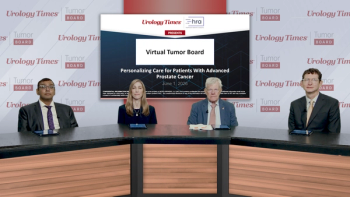
In the final episode, “Treatment Intensification in Metastatic Castration-Sensitive Prostate Cancer,” the panelists explored the evolving role of treatment intensification strategies for patients with metastatic castration-sensitive prostate cancer (mCSPC). Using the case of a 63-year-old man with de novo high-volume metastatic disease, the expert faculty discussed how disease burden, patient fitness, comorbidities, and individual treatment goals influence decisions regarding doublet versus triplet therapy.
In this episode of The UroOnc Minute, host Adam Weiner, MD, is joined by David Canes, MD, for a thoughtful discussion on practical strategies to improve efficiency, reduce physician burnout, and preserve meaningful patient-centered care in urologic oncology.

Amar U. Kishan, MD, translates cost-effectiveness findings on the ArteraAI test into practical guidance for clinicians, payers, and health systems.

Enucleation is appropriate for the vast majority of patients with BPH, but certain patient profiles—including prior radiation, significant neurologic conditions, morbid obesity, and dementia—warrant caution or referral to specialists, whereas the most consistent technical failure among surgeons past their learning curve is inadequate apical tissue removal driven by discomfort with sphincter proximity, according to Amy E. Krambeck, MD.

Gopa Iyer, MD, reviews early NEXUS-01 data evaluating the investigational anti–Nectin-4 ADC LY4052031, highlighting the importance of CYP2D6-guided dosing to optimize safety.

Experts debate bladder MRI limits after TUR/chemo and weigh ctDNA/utDNA promise, yet accuracy gaps keep bladder-sparing decisions cautious.
ctDNA and urine DNA reshape bladder cancer care, guiding surgery timing and adjuvant therapy—yet key questions await clearer trials.
The FDA's proposed narrowing of the testosterone therapy prostate cancer contraindication to metastatic disease only reflects current clinical evidence, opening the door to testosterone therapy in appropriately selected men with treated localized prostate cancer or on active surveillance, with shared decision-making and PSA-testosterone co-monitoring as the foundation of responsible care, as Helen L. Bernie, DO, MPH, outlines in this interview.

Sanoj Punnen, MD, highlights the importance of assessing and managing cardiovascular risk when initiating androgen deprivation therapy for patients with prostate cancer.
Panelists explore how clinicians differentiate among available androgen receptor pathway inhibitor (ARPI)-based doublet therapies for patients with metastatic castration-sensitive prostate cancer (mCSPC).
Experts unpack evolving mCSPC care, from ARPIs and chemo to PARP and PSMA advances, plus guideline-driven, personalized therapy choices.

Atish D. Choudhury, MD, PhD, discusses findings from the A-DREAM / Alliance A032101 trial evaluating treatment interruption following favorable response to combination ADT and ARPI therapy in mHSPC.
In “Managing High-Risk Biochemical Recurrence in Advanced Prostate Cancer,” our panel explores the evolving treatment landscape for patients experiencing biochemical recurrence following definitive therapy. Through the case of a 75-year-old man with a rising PSA after radical prostatectomy, a rapid PSA doubling time, and multiple cardiovascular and metabolic comorbidities, the expert faculty discuss how risk stratification and patient-specific factors influence treatment selection.

Kevin Koo, MD, MPH, highlights findings from a study evaluating automated kidney stone detection and measurement on CT.

In this video, Isaac Y. Kim, MD, PhD, MBA, discusses why immunotherapy may ultimately represent the next major advance in prostate cancer treatment.
Amar U. Kishan, MD, walks through the design and results of the Markov model-based cost-effectiveness analysis, explaining what it means for the ArteraAI-guided strategy to dominate both comparators and why that finding held up across a wide range of sensitivity analyses.
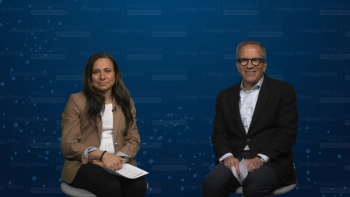
In this video, Neal D. Shore, MD, FACS, and Rana R. McKay, MD, FASCO, address the clinical positioning of darolutamide (Nubeqa) plus ADT in mHSPC, the favorable safety profile of darolutamide, and the importance of multidisciplinary involvement in prostate cancer management.
Break Wave lithotripsy's real-time ultrasound visualization of cavitation and its low-energy resonant frequency delivery mechanistically reduce the risk of renal hematoma and arrhythmia seen with conventional shock wave lithotripsy, while the boundaries of stone size, Hounsfield unit thresholds, and patient anatomy eligible for treatment remain to be defined in commercial practice, according to Ben H. Chew, MD, MSc, FRCSC.
Fred Saad, MD, CQ, FRCS, FCAHS, discusses additional efficacy data from the phase 3 PSMAddition trial, evaluating the addition of 177Lu-PSMA-617 to standard of care ADT plus an ARPI in PMSA+ mHSPC.

Aleece Fosnight, MSPAS, PA-C, identifies the 3 most consequential gaps between the 2024 AUA/SUFU OAB guideline and real-world clinical practice—clinician awareness, prescribing mindset, and payer alignment—and offers her single most important takeaway for clinicians applying this framework at the point of care.
In this video, Aleece Fosnight, MSPAS, PA-C, provides a comprehensive review of intradetrusor onabotulinumtoxinA in OAB practice, covering preprocedural counseling, dose individualization including the evidence for escalation to 200 U in refractory patients, post-void residual evaluation, catheterization risk, and the systems-level strategies she uses to sustain long-term patient adherence to retreatment schedules.
Aleece Fosnight, MSPAS, PA-C, explains how she translates the guideline's Grade A evidence for sacral neuromodulation, posterior tibial nerve stimulation, and intradetrusor onabotulinumtoxinA into individualized treatment recommendations, and describes the shared decision-making process she uses when a patient is a candidate for all 3 options.
In this video, Aleece Fosnight, MSPAS, PA-C, reviews the evidence and practical application of behavioral interventions and pharmacologic therapy for OAB, including the clinical and safety rationale for leading with beta-3 agonists over anticholinergics, and outlines how she frames the transition to minimally invasive therapy for patients who have not responded to prior treatments.