
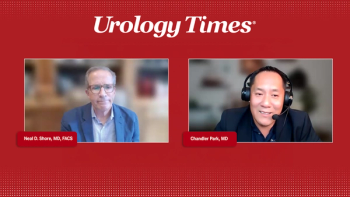
Neal D. Shore, MD, FACS, walks through exactly how POTOMAC's design showed durvalumab (Imfinzi) plus BCG improved disease-free survival in NMIBC.
Neal D. Shore, MD, FACS, walks through exactly how POTOMAC's design showed durvalumab (Imfinzi) plus BCG improved disease-free survival in NMIBC.

Hans Arora, MD, PhD, discusses how communication and collaborative leadership can strengthen teamwork and performance in the operating room.
Neal D. Shore, MD, FACS, and Chandler Park, MD, share how the POTOMAC data, and a newly FDA-approved combination, are opening up shared decision-making with patients.
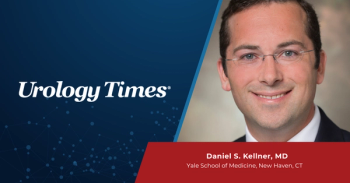
Daniel S. Kellner, MD, discusses patient selection for HoLEP and strategies for surgeons interested in adoption.
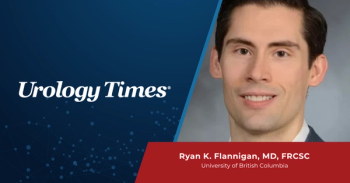
Ryan K. Flannigan, MD, discusses phase 2 data showing promising efficacy with sustained-release lidocaine in men with chronic scrotal pain.

Nima Almassi, MD, reviews long-term evidence for bladder preservation after systemic therapy in muscle-invasive bladder cancer.
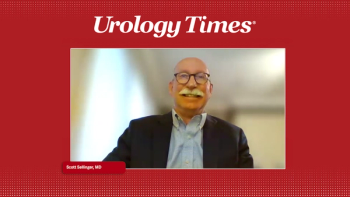
In this video, Scott Sellinger, MD, FACS, discusses important considerations for urologists who may be prescribing capivasertib (Truqap) for the first time following its approval in PTEN-deficient metastatic hormone-sensitive prostate cancer.

Functional reconstructive urology emerged gradually as anatomical success proved insufficient—enabled by urodynamics, neurourology, and institutional milestones, according to Sasha Vereecken, BScN, RN.

Narmina Khanmammadova, MD, discusses interim findings on preoperative pelvic floor therapy and its potential to improve continence recovery after HoLEP.

Jessica Yih, MD, reviews evidence on testosterone therapy for female sexual dysfunction, highlighting promising but limited data in premenopausal women.
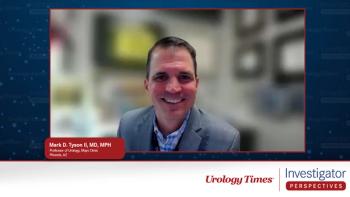
Mark D. Tyson II, MD, MPH, contextualizes the cretostimogene data within the broader BCG-unresponsive NMIBC treatment landscape, addresses the methodologic limitations of cross-trial comparison, discusses the heavily pretreated nature of the BOND-003 population, reviews his approach to treatment sequencing across available bladder-sparing options, and offers his central take-home message for urologists managing high-risk BCG-unresponsive disease.

The expert faculty emphasized that while new data continue to inform practice, treatment decisions must remain individualized and grounded in patient-specific factors, clinical judgment, and shared decision-making.
Mark D. Tyson II, MD, MPH, reviews the safety and tolerability profile of cretostimogene in BOND-003, including the absence of grade 3 or higher treatment-related adverse events, a 97% protocol completion rate, and the practical workflow considerations that would govern administration of cretostimogene in a urology practice if the agent receives FDA approval.
The expert faculty discuss the growing importance of incorporating germline and somatic testing into routine clinical workflows, emphasizing that early and comprehensive testing is essential for identifying patients who may benefit from PARP inhibitor–based strategies and other biomarker-driven treatments.
Elizabeth Nally, MBBS, highlights the impact of long-term immunotherapy toxicity and the need for patient-informed approaches to treatment decisions.
Abraham Morgentaler, MD, joins Neil Baum, MD, to discuss the historical origins of the belief that testosterone drives prostate cancer and the new framework presented in his recent Journal of Urology publication.
The phase 3 CAPItello-281 trial (NCT04493853) met its primary end point by showing that the addition of capivasertib (Truqap) to abiraterone (Zytiga) and prednisone significantly improved radiographic progression-free survival (rPFS) vs abiraterone and prednisone alone in patients with PTEN-deficient metastatic hormone-sensitive prostate cancer (mHSPC).

Alan Bryce, MD, breaks down the key prostate cancer studies that he believes are going to change practice from ASCO 2026.

Recent data suggest that bladder cancer burden is increasing across age groups, with a disproportionate rise among younger women.
The expert faculty highlight the importance of combining clinical evaluation, laboratory testing, and imaging to guide management decisions and identify disease progression as early as possible.
Mark D. Tyson II, MD, MPH, presents the efficacy results from BOND-003, Cohort C, including the 75.5% complete response rate at any time point, durability outcomes at 12 and 24 months, a median duration of response of 27.9 months, re-induction conversion data, and cystectomy-free survival rates of 89.2% and 81.3% at 12 and 24 months, respectively.
The expert faculty discuss how the expanding treatment landscape continues to evolve while highlighting the practical challenges associated with ensuring patients remain on therapy over time.
Mark D. Tyson II, MD, MPH, describes the design of the phase 3 BOND-003 trial, Cohort C, including the patient eligibility criteria, induction and maintenance dosing schedule, the clinical rationale and immunologic basis for allowing reinduction in patients with persistent disease at 3 months, and the definition and significance of the primary end point.
Joshua Lang, MD, MS discusses how emerging biomarkers may help personalize treatment decisions while highlighting barriers to precision oncology in prostate cancer.
Half of patients with MIBC never make it to perioperative therapy. In this video, Joshua J. Meeks, MD, PhD, unpacks the referral barriers behind that gap.
In this video, Scott Sellinger, MD, FACS, discusses how PTEN testing may become increasingly integrated into the routine evaluation of patients with newly diagnosed metastatic prostate cancer following the FDA approval of capivasertib (Truqap) for patients with PTEN-deficient disease identified by an FDA-authorized test.
Matthew D. Galsky, MD, discusses how the FDA approval of enfortumab vedotin plus pembrolizumab for MIBC is moving the field beyond cisplatin eligibility and influencing future approaches to surgery and response-guided therapy.
Mark D. Tyson II, MD, MPH, explains the mechanism of action of cretostimogene grenadenorepvec, including its selective replication in Rb-E2F pathway–altered cancer cells and its dual activity via tumor cell lysis and GM-CSF–mediated immune amplification, and reviews the early clinical evidence that supported its FDA breakthrough therapy and fast track designations.
Mark D. Tyson II, MD, MPH, characterizes the clinical landscape for patients with BCG-unresponsive NMIBC, outlines the real-world barriers that make bladder-sparing approaches important despite cystectomy's guideline-preferred status, and describes the efficacy and durability benchmarks he applies when evaluating new bladder-preserving therapies.

Adanma Ayanambakkam, MD, MS, highlights data from the phase 1 FIT-001 trial evaluating darlifarnib plus cabozantinib in patients with advanced renal cell carcinoma.