

Health care professionals discuss the growing preference for oral hormone therapy over injectables, emphasizing patient control and comfort in treatment choices.
Health care professionals discuss the growing preference for oral hormone therapy over injectables, emphasizing patient control and comfort in treatment choices.
Experts discuss the cardiovascular risks associated with androgen deprivation therapy, comparing relugolix and leuprolide's impact on coronary plaque formation.
Gordon A. Brown, DO, FACOS, gives an overview of PTEN biology, distinctions between PTEN loss and deficiency, and the clinical importance of PI3K/AKT pathway activation in prostate cancer progression.

Robert S. Svatek, MD, discusses the background and key findings from the SWOG S1602 trial, evaluating BCG strain differences and intradermal BCG before intravesical therapy for patients with BCG-naïve NMIBC.

Sophia C. Kamran, MD, highlights some of the key bladder cancer trials presented at ASCO GU 2026 from the perspective of a radiation oncologist.
According to Alex Tatem, MD, misinformation online and aggressive marketing frequently push patients toward unregulated providers offering injectable silicone or other non-medical substances.

A permanent J code helps standardize billing and clarifies expected payment levels, often embedding reimbursement terms into payer contracts.
Matthew D. Galsky, MD, discusses what is needed for successful integration of BCG/ICI combinations in BCG-naive non–muscle invasive bladder cancer.

Kristen R. Scarpato, MD, MPH, discusses the potential role of emerging immunotherapy-based combinations in the treatment of BCG-naive, high-risk non–muscle invasive bladder cancer.

As immunotherapy and antibody-drug conjugates move earlier in treatment, questions about sequencing therapies are emerging.

Toni K. Choueiri, MD, discusses the background and key findings from the phase 3 LITESPARK-022 trial.

David R. Wise, MD, PhD, highlights initial findings from a phase 1b study of pasritamig plus docetaxel in patients with metastatic castration-resistant prostate cancer.

Fred Saad, MD, FRCP, highlights the background and key findings from the phase 1 PAnTHa study.

Pooja Ghatalia, MD, shares data from an integrated analysis of the RETAIN trials in muscle-invasive bladder cancer.

Stacy Loeb, MD, MSc, discusses a study evaluating levels of at microplastics and nanoplastics in prostate cancer tissue.

Enrique Gallardo, MD, discusses the final overall survival (OS) results from the EORTC 1333/PEACE-3 trial of enzalutamide plus radium-223 in patients with metastatic castration-resistant prostate cancer.

Robert S. Svatek, MD, MSCI, highlights some of the greatest unmet needs in the non–muscle invasive bladder cancer space.

Leslie K. Ballas, MD, discusses the background and design for the phase 2 BRIGHT trial, evaluating a risk-adapted bladder preservation strategy in MIBC.

Melissa Moran, DO, explains how evolving approvals, careful off-label prescribing, and multidisciplinary collaboration can help clinicians address the high prevalence of hypoactive sexual desire disorder in peri- and postmenopausal women.
Austin Kirschner, MD, PhD, discusses the recent US commercial launch of the PROSTOX Standard test and its potential to inform radiation treatment decisions for patients with prostate cancer.
Healthcare professionals discuss the challenges of staff turnover and the importance of communication and systematic notes to ensure patient safety.
Oncologists discuss the importance of guidelines like NCCN and ASCO for navigating cancer treatment complexities and insurance challenges.
Tatem contrasts medically supervised treatments with rumored unsupervised or clandestine procedures.

Ezra J. Margolin, MD, highlights a recent study examining antibiotic prescribing patterns for patients presenting to the emergency department with kidney stones.

Bourlon outlines what to watch for in prostate, urothelial, kidney, and testicular cancer.

Jessica Yih, MD, highlights a study assessing vulvar tissue changes among non-diabetic women receiving GLP-1RAs for weight loss.

Kiera Liblik, MD, MSc, shares the background and key findings from the study, “Sex and Gender in Urological Research.”
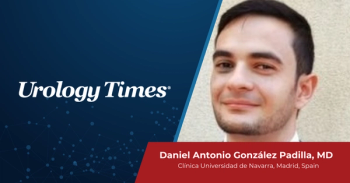
Daniel A. González Padilla, MD, emphasized that shared decision-making is essential, as patients must weigh potential benefits against adverse effects and the possibility of ultimately requiring radical cystectomy or clinical trial participation.
Health care professionals discuss the vital role of pharmacy teams in managing complex patient care, emphasizing collaboration and medication safety.
Urologists discuss the importance of monitoring cardiovascular health in patients undergoing androgen deprivation therapy for prostate cancer.