
Mark D. Tyson II, MD, MPH, discusses findings from the phse 3b PATAPSCO study, evaluating durvalumab plus BCG for patients with BCG-naïve, high-risk NMIBC.
Mark D. Tyson II, MD, MPH, discusses findings from the phse 3b PATAPSCO study, evaluating durvalumab plus BCG for patients with BCG-naïve, high-risk NMIBC.
Mark Garzotto, MD, discusses phase 3 data on aglatimagene besadenovec plus standard-of-care external beam radiation therapy with or without short-course androgen deprivation therapy in localized prostate cancer.
Bashir Al Hussein Al Awamlh, MD, MPH, discusses findings from an international registry study evaluating how baseline sexual interest may influence sexual bother outcomes after treatment for localized prostate cancer.
Sarah P. Psutka, MD, MSc, reflects on her AUA 2026 talk regarding frailty and surgical outcomes in urologic oncology.
R. Jeffrey Karnes, MD, frames the ongoing challenge of post–radical prostatectomy prognostication and explains the key criteria urologists should apply when evaluating new AI-based prognostic tools, including the centrality of external validation and patient population diversity.
Rana R. McKay, MD, FASCO, shares results from the ARASEC study, which evaluated darolutamide plus ADT in mHSPC using a novel external control-arm design.
In this video, recorded at the 2026 American Urological Association Annual Meeting in Washington, DC, Murilo De Almeida Luz, MD, gives an overview of the DAROL study design and key findings.
In this segment, C. Shawn West, MD, discusses patient selection, procedural technique, and optimization strategies for the prostatic urethral lift (UroLift).
The phase 1/2 ResQ133A-NMIBC trial (NCT06800963) is evaluating intravesical recombinant BCG in patients with BCG-naïve high-risk NMIBC across US sites, with safety as the primary end point and complete response and disease-free survival as secondary end points, building on European data showing 50% response rates and no dose-limiting toxicities in BCG-unresponsive disease.
Michael S. Cookson, MD, MMHC, FACS, unpacks the significance of the phase 2 ARASEC trial evaluating darolutamide in mHSPC.
The 2025 AUA Census documents significant geographic maldistribution of the urologic workforce—with 62% of US counties lacking a urologist—alongside a median practitioner age of 54 and generational shifts in career expectations that together pose near-term workforce sustainability challenges.
The INTIBIA Pivotal Study—the first sham-controlled, double-blind RCT of an implantable tibial nerve stimulation device—demonstrated significantly greater clinically meaningful improvements in symptom bother, health-related quality of life, and patient global impression at 3 months compared with sham, with durable benefits through 12 months.
Chad A. Reichard, MD, highlights real-world data presented at AUA 2026 on re-induction with nadofaragene firadenovec in patients with BCG-unresponsive non–muscle-invasive bladder cancer.
ARASEC provides US-based, contemporary evidence supporting darolutamide plus ADT in metastatic hormone-sensitive prostate cancer, demonstrating a 71% reduction in prostate cancer-specific mortality compared with a historical ADT control—while its use of propensity score matching with an external phase 3 control arm represents a novel trial design that may inform future studies in rapidly evolving treatment landscapes.
In this interview, Kari A.O. Tikkinen, MD, PhD, explains why effective nocturia management in geriatric patients requires systematic phenotyping across 4 primary subtypes—nocturnal polyuria, reduced bladder capacity, bladder outlet obstruction, and sleep-driven causes—rather than empiric pharmacologic treatment, with many cases requiring interdisciplinary referral rather than urologic intervention alone.
Health services research at UNC is informing community-based outreach efforts in prostate cancer—including engagement with HBCUs and patient groups across North Carolina—by centering patient and community perspectives to identify and address the barriers that prevent evidence-based care from reaching those who need it most.
Adam B. Weiner, MD, is joined by Mary Beth Westerman, MD, FACS, to discuss the landmark CISTO trial—a large pragmatic study examining patient-reported outcomes among individuals with high-risk non–muscle invasive bladder cancer who underwent either bladder-sparing therapy or radical cystectomy.
A real-world analysis found that PSADT was undocumented in most patients with high-risk biochemical recurrence of prostate cancer, potentially delaying treatment initiation and underestimating progression risk.

Krishnan discusses how prolapse stage, patient lifestyle, and nuanced mesh counseling inform individualized decision-making around robotic sacrocolpopexy vs vaginal reconstructive repair.
The 2026 AUA Annual Meeting will feature significant bladder cancer data, a plenary lecture on screening and overdetection, and programming that integrates advanced practice providers across sessions, against a backdrop of AUA-driven policy wins including removal of the vaginal estrogen black box warning and early steps toward a federal Office of Men's Health.
Isaac Y. Kim, MD, PhD, MBA, reflects on concerning trends in prostate cancer mortality, emphasizing how advances in diagnostics, treatment, and artificial intelligence may improve outcomes in the future.
C. Shawn West, MD, explores patient selection, symptom assessment, and clinical workflows guiding individualized treatment decisions in the MIST era.

Yeonsoo Sara Lee, MD, highlights the key networking and education opportunities she's most looking forward to at AUA 2026.
In the final installment of this 4-part series, Ravi D. Chauhan, MD, FACS, and R. Jonathan Henderson, MD, discuss the clinical value of enhanced cystoscopic imaging technologies and the operational barriers that may limit broader adoption in NMIBC care.
In part 3 of this 4-part series, Ravi D. Chauhan, MD, FACS, and R. Jonathan Henderson, MD, discuss practical strategies for communicating with pathologists when CIS is not clearly addressed in NMIBC pathology reports.
In part 2 of this 4-part series, Ravi D. Chauhan, MD, FACS, and R. Jonathan Henderson, MD, examine how collaboration among urologists and pathologists, along with renewed attention to bladder mapping techniques, may improve CIS detection in NMIBC.
In this opening segment, Ravi D. Chauhan, MD, FACS, and R. Jonathan Henderson, MD, discuss how underreporting of CIS in pathology reports may limit access to guideline-supported therapies for patients with NMIBC.
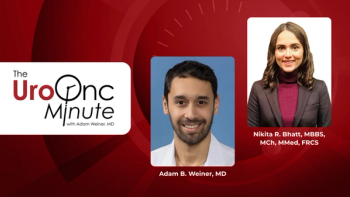
Adam B. Weiner, MD, is joined by Nikita R. Bhatt, MBBS, MCh, MMed, FRCS, to discuss the WASHOUT study, a prospective international collaboration examining outcomes among patients admitted with emergency hematuria.
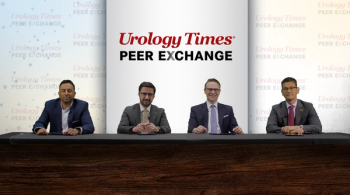
In this closing segment, Dr. Charles J. Ryan leads a discussion on how clinicians integrate multiple sources of evidence when making long term treatment decisions in metastatic castration sensitive prostate cancer (mCSPC).
In this segment, Dr. Charles J. Ryan invites the panel to discuss how clinicians evaluate evidence from observational studies and propensity matched analyses in metastatic castration sensitive prostate cancer (mCSPC).