
An oncologic urologist from the United Kingdom (UK) discusses the diffusion of focal therapy options for clinically localized prostate cancer in the United States and UK.
An oncologic urologist from the United Kingdom (UK) discusses the diffusion of focal therapy options for clinically localized prostate cancer in the United States and UK.
Dr Mark Emberton reviews safety and efficacy data supporting the use of focal therapy in patients with prostate cancer.
An in-depth discussion of emerging focal therapy options for clinically localized prostate cancer.
Insights on the drawbacks of older treatment approaches for clinically localized prostate cancer and how strategically implementing focal therapies may address remaining unmet needs and clinical challenges.
Dr Emberton provides a historical perspective of treatment options for clinically localized prostate cancer and discussed how use of these options has evolved over time.
A prostate cancer specialist breaks down prostate cancer staging and grading and identifies several shortcomings of established risk stratification methods for patients with clinically localized disease.
Mark Emberton, BSc, MBBS, FRSC (Urol), MD, FMedSci describes his approach to diagnosing patients with prostate cancer, highlighting prostate-specific antigen (PSA) testing and magnetic resonance imaging (MRI) as critical to cancer detection.

Pramit Khetrapal, MD, discusses the abstract, “Results of the intracorporeal robotic vs open cystectomy multi-centre randomised trial,” which he presented at the 2022 AUA Annual Meeting.
“We saw that with each additional enrichment feature the odds of finding a germline mutation would double,” says Alexis Rompré-Brodeur, MD.

“Coordination between urology and radiation oncology, if urology is placing the device, is really critical,” says Jonathan E. Shoag, MD.

In the third interview of the series, Sam S. Chang, MD, MBA, from the Vanderbilt University Medical Center shares key insights into the role of mitomycin gel as a kidney-sparing approach to the treatment of low-grade upper tract urothelial carcinoma.
“With an increase in medical and surgical therapies in younger individuals, health care providers must discuss fertility preservation options prior to affirmation therapy,” says Niki Parikh, MD, MBA, MSBA.

“The open operation is obviously done using a single incision that is quite big,” says Khetrapal.

“I think there is still a burden on women more than on men to manage everything, all at once simultaneously. And that leads to burnout, because you're constantly feeling pulled in multiple directions,” says Amanda C. North, MD.

A review of the currently available genomic testing options for patients with clinically localized prostate cancer and the NCCN and AUA/ASTRO recommendations based on risk group.
Stephen J. Freedland, MD, details which patient populations he orders genomic testing for, and how the tests can address clinical challenges in prostate cancer treatment.
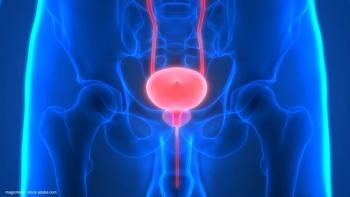
“UGN-102 may offer a patient-centered therapeutic approach, more patient centered than standard treatments like surgery,” says Angela M. Stover, PhD.
“Healthy Now is really committed to making access to care available to all men,” says Mohit Khera, MD, MBA, MPH.
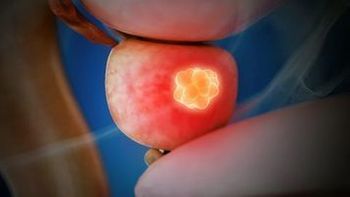
“Each patient is different, and some patients are more challenging than others in terms of placement,” says Jonathan E. Shoag, MD.

“Twenty-five percent of advanced practice providers more or less, experienced burnout, which I think is a lot higher than we would have expected,” says Amanda C. North, MD.
An expert urologist explains the potential for overtreatment of low-risk prostate cancer and undertreatment of high-risk prostate cancer and the potential consequences for patients.
A focused discussion on the challenges that urologists commonly face during the treatment decision-making process, and which factors typically inform treatment selection for clinically localized prostate cancer.

The novel PET imaging agent 68GA-EMP-100 PET measures c-MET expression in renal cell carcinoma.

“What we did find is that UGN-102 did not cause decrements in patient-reported urinary symptoms, bloating, flatulence, or malaise at the primary trial end point of 3 months,” says Angela M. Stover, PhD.
“We wanted to revisit the current main indications for germline testing,” says Alexis Rompré-Brodeur, MD.

“Almost half of the participating urologists did not agree that the televisits were as satisfactory as face-to-face visits,” says Nathan Feiertag.

"I would argue most people perform complicated vesicovaginal fistula repairs that can't be reached vaginally using a robotic abdominal approach," says Nitya E. Abraham, MD.

A urologist practicing in California defines the remaining general and region-specific challenges he faces in managing his practice and his hopes for future solutions.
Dr. John J. Kowalczyk identifies the features of integrated, urology-specific software systems that have the largest impact on the management of his practice.
Practice management concerns and considerations for clinicians intending to incorporate software tools into their practice workflows.