
In the third interview of the series, Benjamin H. Lowentritt, MD, FACS, reflects on financial and operational considerations in the use of leuprolide with emphasis on managing the cost burden, coding and reimbursement, and product inventory.
In the third interview of the series, Benjamin H. Lowentritt, MD, FACS, reflects on financial and operational considerations in the use of leuprolide with emphasis on managing the cost burden, coding and reimbursement, and product inventory.
Vignesh Packiam, MD, explains how innovation driven by the BCG shortage led to a potential promising new regimen of sequential intravesical gemcitabine and docetaxel for patients with BCG-naïve non–muscle-invasive bladder cancer.

Albert Jang, MD, discusses the promise of using ctDNA to determine whether patients with advanced genitourinary cancers are responding to immune checkpoint inhibitors.

Among the topics touched on in the discussion are lifestyle considerations, medical therapy, and surgical options.
There are still quite a few patients who still do not respond to immunotherapy, says Albert Jang, MD.

“I think my goal in doing all this research is to draw awareness to these problems and the disparities,” says Elisabeth M. Sebesta, MD.

In this companion article, Brenda Heath, RN, reflects on practical considerations in the preparation and administration of formulations of leuprolide acetate and leuprolide mesylate.

“Several of these patients were able to undergo surgery that spared them the need to remove their ureter and their kidney,” says Matthew T. Campbell, MD.
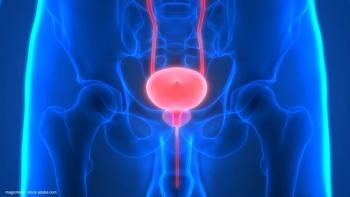
“The NRG SWOG 1806 trial is a phase 3 trial randomizing patients to standard trimodality therapy or trimodality therapy plus atezolizumab,” says Sophia Kamran, MD.
“We’re in the process of following patients who have taken saw palmetto extract and tracking their clinical diagnosis,” says Bilal Chughtai, MD.
“Health care disparities are very complex issues; it’s not like a linear cause-and-effect relationship,” says Elisabeth M. Sebesta, MD.

“[We] found that women were spending on average, nearly $35 a week on incontinence products in the highest symptom severity, which is a huge financial burden,” says Elisabeth M. Sebesta, MD.

Stephen J. Freedland, MD, highlights emerging data to look out for that might address unmet needs in prostate cancer testing and treatment.
Dr Freedland discusses the clinical implications of using genomic test results for management of patients with prostate cancer.
A key opinion leader provides an overview of study data investigating the clinical validity and clinical utility of the currently available genomic testing options in prostate cancer.
“I’ve been using it my practice and also based on the literature, it seems like it is a relatively safe extract with little to no change in sexual function…and no obvious contraindications,” says Bilal Chughtai, MD.

Sacral neuromodulation administered through an implantable neurostimulator has shown promise as a therapy for patients with bladder and bowel dysfunction.
In the second interview of the series, Brenda Heath, RN, examines special considerations in the preparation and administration of formulations of leuprolide acetate and leuprolide mesylate.

Chughtai was part of an international panel of leading urologists from North America and Europe who published the consensus paper, “Rethinking the Role of Saw Palmetto Extract for Men with Lower Urinary Tract Symptoms in North America."

“We call it ‘trimodality therapy,’ because it involves the 3 main disciplines: surgery, radiation oncology, and medical oncology,” says Kamran.
Dr Jason Hafron concludes his discussion of mCSPC by highlighting the need to work towards a cure for the disease, and two major clinical trials investigating triplet treatment regimens.
Jason Hafron, MD, revisits the patient profile and discusses factors that inform treatment decision-making in mCSPC.
An expert provides an overview of the types of androgen deprivation therapy (ADT) for mCSPC, other therapies that can be used in combination with ADT for treatment intensification and compares the safety and efficacy of the various regimens.
Jason Hafron, MD, presents the profile of a 66-year-old man with metastatic castration-sensitive prostate cancer (mCSPC).
Axonics F15, a recharge-free sacral neuromodulation implantable neurostimulator for the treatment of patients with bladder and bowel dysfunction, was approved by the FDA earlier this year.

I think we need to really carefully listen to and pay attention to our APPs’ needs,” says Amanda C. North, MD.
Dr Mark Emberton shares what developments are visible on the horizon and what they represent for the future of focal therapy and treatment of clinically localized prostate cancer.
An expert’s brief commentary on follow-up strategies in patients receiving focal therapy, including monitoring for disease relapse or recurrence.
An experienced clinician shares his personal experience with preventing and managing side effects related to focal therapy in patients with clinically localized prostate cancer.
A focused discussion on how the availability and use of focal therapy technology has changed treatment paradigms and affected patient outcomes.