

Stacy Loeb, MD, MSc, discusses a study evaluating levels of at microplastics and nanoplastics in prostate cancer tissue.
Stacy Loeb, MD, MSc, discusses a study evaluating levels of at microplastics and nanoplastics in prostate cancer tissue.

Enrique Gallardo, MD, discusses the final overall survival (OS) results from the EORTC 1333/PEACE-3 trial of enzalutamide plus radium-223 in patients with metastatic castration-resistant prostate cancer.
Robert S. Svatek, MD, MSCI, highlights some of the greatest unmet needs in the non–muscle invasive bladder cancer space.

Leslie K. Ballas, MD, discusses the background and design for the phase 2 BRIGHT trial, evaluating a risk-adapted bladder preservation strategy in MIBC.

Melissa Moran, DO, explains how evolving approvals, careful off-label prescribing, and multidisciplinary collaboration can help clinicians address the high prevalence of hypoactive sexual desire disorder in peri- and postmenopausal women.
Austin Kirschner, MD, PhD, discusses the recent US commercial launch of the PROSTOX Standard test and its potential to inform radiation treatment decisions for patients with prostate cancer.

Healthcare professionals discuss the challenges of staff turnover and the importance of communication and systematic notes to ensure patient safety.
Oncologists discuss the importance of guidelines like NCCN and ASCO for navigating cancer treatment complexities and insurance challenges.
Tatem contrasts medically supervised treatments with rumored unsupervised or clandestine procedures.

Ezra J. Margolin, MD, highlights a recent study examining antibiotic prescribing patterns for patients presenting to the emergency department with kidney stones.

Bourlon outlines what to watch for in prostate, urothelial, kidney, and testicular cancer.

Jessica Yih, MD, highlights a study assessing vulvar tissue changes among non-diabetic women receiving GLP-1RAs for weight loss.
Kiera Liblik, MD, MSc, shares the background and key findings from the study, “Sex and Gender in Urological Research.”
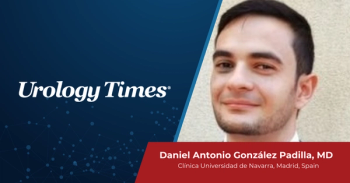
Daniel A. González Padilla, MD, emphasized that shared decision-making is essential, as patients must weigh potential benefits against adverse effects and the possibility of ultimately requiring radical cystectomy or clinical trial participation.
Health care professionals discuss the vital role of pharmacy teams in managing complex patient care, emphasizing collaboration and medication safety.
Urologists discuss the importance of monitoring cardiovascular health in patients undergoing androgen deprivation therapy for prostate cancer.
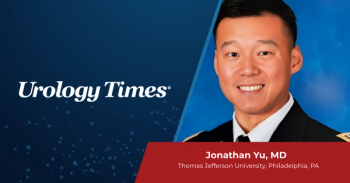
Jonathan Yu, MD, highlights a study on early repair of vesicourethral anastomotic leak, which was presented at the 2026 Desai Sethi Urology Institute Urology on the Beach meeting in Miami Florida.

Christopher P. Filson, MD, MS, highlights the evolving role of urine-based biomarkers in the diagnostic workflow for patients who present with microhematuria.

Singh concludes that increasing physician awareness and comfort with low-dose imaging is key to reducing unnecessary radiation while maintaining diagnostic accuracy and patient safety.

Amy Luckenbaugh, MD, FACS, outlines the ways that SWIU supports women across all stages of their urologic careers and the ways women can become involved with the organization.
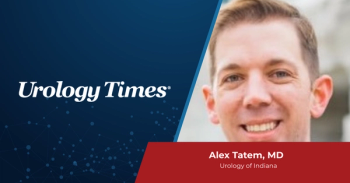
Alex Tatem, MD, explains that hyaluronic acid penile injections add temporary, measurable girth by safely distributing a reversible filler within soft tissue, though outcomes depend heavily on technique and vary between individuals.

Savannah Grandy, DO, highlights key takeaways from a MUSIC-KIDNEY study comparing single port vs. multiport robotic partial nephrectomy.

Kristen R. Scarpato, MD, MPH, recaps a panel discussion at SWIU 2026 focused on imposter syndrome.

Angela B. Smith, MD, MS, discusses the guiding priorities behind shaping this year’s Society of Women in Urology annual meeting.
Healthcare professionals discuss strategies to manage cardiovascular risks in cancer patients, emphasizing weight control, exercise, and collaboration with primary care.
Healthcare professionals discuss the importance of addressing quality of life and exercise for patients starting androgen deprivation therapy.
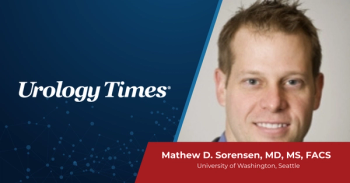
Because Break Wave uses lower pressure levels, patient discomfort is minimal, allowing treatments to be performed without sedation.

Francisco Ramos, MD, highlights a study examining the impact of socioeconomic hardship on cancer presentation and survival in testicular cancer.
Christopher P. Filson, MD, MS, highlights a study evaluating the real-world utility of incorporating the CxBladder Triage test to the diagnostic workflow for microhematuria.
To address high no-show rates typical of safety-net settings, JPS implemented proactive scheduling practices.