

Elizabeth Nally, MBBS, highlights the impact of long-term immunotherapy toxicity and the need for patient-informed approaches to treatment decisions.
Elizabeth Nally, MBBS, highlights the impact of long-term immunotherapy toxicity and the need for patient-informed approaches to treatment decisions.

Abraham Morgentaler, MD, joins Neil Baum, MD, to discuss the historical origins of the belief that testosterone drives prostate cancer and the new framework presented in his recent Journal of Urology publication.

The phase 3 CAPItello-281 trial (NCT04493853) met its primary end point by showing that the addition of capivasertib (Truqap) to abiraterone (Zytiga) and prednisone significantly improved radiographic progression-free survival (rPFS) vs abiraterone and prednisone alone in patients with PTEN-deficient metastatic hormone-sensitive prostate cancer (mHSPC).

Alan Bryce, MD, breaks down the key prostate cancer studies that he believes are going to change practice from ASCO 2026.

Recent data suggest that bladder cancer burden is increasing across age groups, with a disproportionate rise among younger women.

The expert faculty highlight the importance of combining clinical evaluation, laboratory testing, and imaging to guide management decisions and identify disease progression as early as possible.
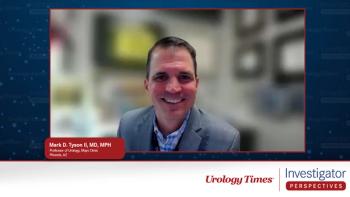
Mark D. Tyson II, MD, MPH, presents the efficacy results from BOND-003, Cohort C, including the 75.5% complete response rate at any time point, durability outcomes at 12 and 24 months, a median duration of response of 27.9 months, re-induction conversion data, and cystectomy-free survival rates of 89.2% and 81.3% at 12 and 24 months, respectively.
The expert faculty discuss how the expanding treatment landscape continues to evolve while highlighting the practical challenges associated with ensuring patients remain on therapy over time.
Mark D. Tyson II, MD, MPH, describes the design of the phase 3 BOND-003 trial, Cohort C, including the patient eligibility criteria, induction and maintenance dosing schedule, the clinical rationale and immunologic basis for allowing reinduction in patients with persistent disease at 3 months, and the definition and significance of the primary end point.
Joshua Lang, MD, MS discusses how emerging biomarkers may help personalize treatment decisions while highlighting barriers to precision oncology in prostate cancer.
Half of patients with MIBC never make it to perioperative therapy. In this video, Joshua J. Meeks, MD, PhD, unpacks the referral barriers behind that gap.
In this video, Scott Sellinger, MD, FACS, discusses how PTEN testing may become increasingly integrated into the routine evaluation of patients with newly diagnosed metastatic prostate cancer following the FDA approval of capivasertib (Truqap) for patients with PTEN-deficient disease identified by an FDA-authorized test.
Matthew D. Galsky, MD, discusses how the FDA approval of enfortumab vedotin plus pembrolizumab for MIBC is moving the field beyond cisplatin eligibility and influencing future approaches to surgery and response-guided therapy.
Mark D. Tyson II, MD, MPH, explains the mechanism of action of cretostimogene grenadenorepvec, including its selective replication in Rb-E2F pathway–altered cancer cells and its dual activity via tumor cell lysis and GM-CSF–mediated immune amplification, and reviews the early clinical evidence that supported its FDA breakthrough therapy and fast track designations.
Mark D. Tyson II, MD, MPH, characterizes the clinical landscape for patients with BCG-unresponsive NMIBC, outlines the real-world barriers that make bladder-sparing approaches important despite cystectomy's guideline-preferred status, and describes the efficacy and durability benchmarks he applies when evaluating new bladder-preserving therapies.

Adanma Ayanambakkam, MD, MS, highlights data from the phase 1 FIT-001 trial evaluating darlifarnib plus cabozantinib in patients with advanced renal cell carcinoma.

Experts discuss why accurately recognizing CIS in patients with suspected NMIBC is essential to preventing disease progression, guiding surveillance, and expanding treatment and clinical trial opportunities.
The expert faculty examine how access barriers, insurance coverage, and financial considerations can shape treatment decisions, often requiring clinicians to balance clinical preferences with practical realities.
The expert faculty emphasize that while ARPI-based therapies have significantly improved outcomes, successful treatment requires balancing clinical benefit with quality of life and long-term tolerability.

Joshua Halpern, MD, MS, reviews evidence supporting the accuracy of mail-in semen analysis and identifies patients who may benefit most from at-home testing.
Can Aydogdu, MD, highlights a study examining the utility of pre-surgical tumor-informed ctDNA to predict pathologic nodal status at radical cystectomy.
Scott Sellinger, MD, FACS, explains the biologic significance of PTEN loss in metastatic prostate cancer, why it is associated with aggressive disease and poor outcomes, and how the approval of capivasertib has transformed PTEN from a prognostic biomarker into a predictive biomarker with a targeted treatment option.

Experts discuss practical strategies to improve the detection of CIS through closer urologist-pathologist collaboration, optimized biopsy techniques, and complementary diagnostic tools.
Declan Murphy, MB, BCH, BaO, FRACS, FRCS, Urol, discusses the clinical significance of the phase 3 PROTEUS trial and addresses concerns about the study's use of ADT in the control arm.

Experts discuss why CIS is frequently underrecognized, highlighting the subtle clinical and cystoscopic features of the disease and the importance of integrating multiple factors to improve detection.

Kathryn H. Gessner, MD, PhD, discusses the current limitations in identifying appropriate candidates for bladder-preserving trimodal therapy, the promise of utDNA, and why shared decision-making remains essential.
The expert faculty discuss the opportunities and limitations of comparative analyses, highlighting the importance of understanding potential biases and patient-level factors when applying real-world findings to clinical practice.
As real-world evidence (RWE) becomes increasingly integrated into oncology research, the expert faculty discuss both the strengths and limitations of these analyses and how they complement findings from prospective clinical trials.

Richard N. Schlussel, MD, discusses how advances in robotic surgery and artificial intelligence are expected to transform care in pediatric urology.

Jamie Michael, MD, highlights a study exploring the impact of MRI and genomics on "extreme" grade reclassification in men on active surveillance.