
Opinion|Videos|August 20, 2024
Results of the CORE-001 Trial: 24-Month Complete Response Rate and Duration of Response
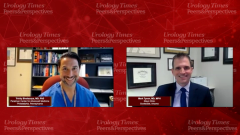
Experts discuss the results of the CORE-001 Trial.
Advertisement
Episodes in this series
Video content above is prompted by the following questions:
- In the CORE-001 trial, what were the results for the primary endpoint of complete response at 24 months as well as the secondary endpoint of duration of response? What is notable about these results?
- How do these results compare to those associated with other FDA-approved therapies and other investigational drugs?
- What was the overall cystectomy-free survival rate, and what was this rate among patients who experienced a complete response?
- Were there other notable efficacy outcomes?
Advertisement
Related to this article
Long-term QUILT-3.032 findings show durable responses with Anktiva plus BCG in BCG-unresponsive NMIBC, with an estimated 84.2% cystectomy-free survival at 3 years.
Vignesh Packiam, MD, discusses strategies to manage intravesical therapy toxicity in NMIBC, improve treatment tolerability, and preserve bladder function.

Sandip M. Prasad, MD, MPhil, discusses the safety profile of mitomycin intravesical solution, including common adverse events and patient counseling during chemoablation for NMIBC.
Sandip M. Prasad, MD, MPhil, discusses 3-year ENVISION trial data showing durable responses with mitomycin intravesical solution for recurrent LG-IR-NMIBC.
Armine K. Smith, MD, discusses sexual health counseling, sex-specific considerations, and organ-preserving approaches for patients undergoing radical cystectomy.

This approval expands the label for nogapendekin alfa inbakicept to include patients with high-grade papillary-only tumors.
Timothy N. Clinton, MD, recaps bladder cancer data from the 2026 AUA Northeastern Section meeting, including BOND-003 cretostimogene results and safety data on mitomycin intravesical solution.
Sandip Prasad, MD, MPhil, discusses ENVISION trial findings on mitomycin for intravesical solution and patient selection in clinical practice.
Advertisement
Advertisement
Trending on Urology Times
1
Anktiva plus BCG shows durable responses in BCG-unresponsive NMIBC
2
Sandip Prasad, MD, on the safety profile of mitomycin intravesical solution
3
Three-year data show durable responses with mitomycin intravesical solution
4
Urocross Expander System enters US commercial use for symptomatic BPH
5