






Prostate Cancer
Latest News
Advertisement
Latest Videos

CME Content







Advertisement
More News
Abreu’s group at USC provides an overview of the transperineal MRI/TRUS fusion prostate biopsy also utilizing the freehand technique.
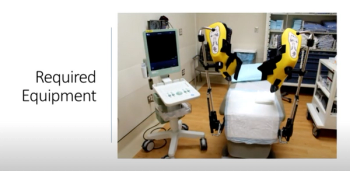
George and colleagues demonstrate the use of the Michigan Urological Surgery Improvement Collaborative (MUSIC) template to perform a freehand transperineal prostate biopsy using the PrecisionPoint Transperineal Access System.
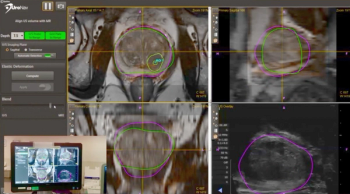
Pinto and colleagues provide an overview of MRI/TRUS fusion-guided transperineal biopsy utilizing the UroNav platform.

Results from 2 years of follow-up in men undergoing proton beam therapy for localized prostate cancer suggest that treatment with the rectal hydrogel spacer (SpaceOAR) provides better rectal sparing than rectal balloon immobilization.

In this interview, Leonard G. Gomella, MD, discusses the increasingly important role genetic testing plays in prostate cancer, current obstacles to testing, and when and how it will be carried out.

"Death due to prostate cancer was quite rare, with only four men (0.2%) dying of prostate cancer during the study period," writes Badar M. Mian, MD.
Stereotactic body radiation reduced the likelihood for future PSA rises and significantly prolonged survival in men with oligometastatic prostate cancer (≤3 metastases), according to recently published findings from ORIOLE, a phase II, multicenter, randomized, observation-controlled trial.
“It hasn’t become the gold standard yet. There are still a lot of inter-reader reliability issues. The same MRI scans, read by different radiologists, may be read differently," says one urologist.

Nanospectra Biosciences, Inc. recently announced the start of a pivotal study to determine the efficacy of using magnetic resonance imaging/ultrasound fusion imaging technology to direct focal ablation of prostate tissue using nanoparticle-directed laser ablation.

Recent research shows contemporary imaging and biopsy techniques often fail to identify contralateral tumors in men presumed to have unilateral prostate cancer-and the results have significant implications for identifying candidates for hemiablation.

In this video, Scott Eggener, MD, outlines which patients are the best candidates for focal therapy for prostate cancer, and discusses the differences in follow-up for patients treated with focal therapy compared with those undergoing active surveillance.

Martin Gleave, MD, of the University of British Columbia in Vancouver, discusses the Genomic Umbrella Neoadjuvant Study (GUNS) trial, which uses a multi-arm, multistage adaptive design to test targeted therapies in patients with high-risk localized disease by matching neoadjuvant therapies to baseline genomic alterations.

Modest hypofractionation is noninferior to conventional fractionation in the treatment of localized prostate cancer and causes no increase in side effects, according to 8-year outcomes from the CHHiP trial.

Inheriting the adrenal-permissive HSD3B1(1245C) genotype is associated with worse outcomes in low-volume metastatic prostate cancer and might someday help identify patients who could benefit from escalated therapy, according to a recent study.

"The recently reported change in PCa death rates should prompt men to undergo genetic testing and have a discussion with their doctor regarding the benefits and potential harms of PSA-based screening based on their individualized risk of developing the disease," write Franklin Gaylis, MD, and A. Karim Kader, MD, PhD.

Recommendations on opioid prescribing after endourologic and minimally invasive urologic surgery from an expert panel should help urologists align individual prescribing habits with current evidence, reduce opioid overprescribing, and provide a framework for refining patient-centered guidelines for opioid stewardship in urology, said Kevin Koo, MD, MPH, MPhil.

A multicenter study in the United Kingdom found 5-year prostate cancer control rates following treatment with focal therapy are similar to those of patients who have undergone radical prostatectomy, even when accounting for variation in tumor location, size, and risk.

A simple intervention aiming to curb the contribution of postoperative pain medication prescribing to the opioid crisis was shown to reduce post-discharge opioid prescribing and use and increase opioid disposal without seeming to jeopardize pain control for patients who had undergone radical prostatectomy.

Several decades of data show that Black men are less likely to be screened and treated for prostate cancer than their white counterparts. In this interview, Kelvin A. Moses, MD, PhD, of Vanderbilt University Medical Center, Nashville, TN discusses the reasons for these disparities and how practicing urologists can address them.

For this installment of “Speak Out,” urologists were asked to discuss recent studies indicating African-American men with prostate cancer may be put on active surveillance without suffering complications and that they respond to radiation and some chemotherapy better than Caucasian men.

"A more standardized protocol that is office based, reliable, and reproducible as well as cost- and time-efficient is required to entice more urologists to abandon the TRUS-BX approach," writes J. Brantley Thrasher, MD.

Reduced infection rate may drive increased use of the transperineal approach.

Eating more vegetables will not alter the natural history of prostate cancer or otherwise prevent progression of localized disease, according to a recent study.

“To my knowledge, this is the first sanctioned guideline from a national organization that addresses the role of molecular biomarker testing for localized prostate cancer,” says guideline panel co-chair Scott E. Eggener, MD.

"Irrespective of treatment, fewer than half of men reported the ability to maintain erections sufficient for intercourse at 5 years," writes Badar M. Mian, MD.
Advertisement
Advertisement