




Prostate Cancer
Latest News

Advertisement
Latest Videos


CME Content







Advertisement
More News

The miR Sentinel PCC4 Assay is a non-invasive test that has achieved sensitivity and specificity rates above 90% for both detecting and classifying prostate tumors.

Drs. Navin C. Shah and Vladimir Ioffe share their insight on the Urology Times September 2020 Cover Story, “PSA Screening in Prostate Cancer—The Controversy Continues.”

Short-term outcomes suggest feasibility of active surveillance for men carrying germline DNA repair gene mutations.

The researchers hope their findings can help deliver precision medicine to African American men with prostate cancer.

The intervention led to a significant reduction in urologists' opioid prescribing after prostatectomy and nephrectomy.

Transperineal targeted biopsy with electromagnetic-tracking fusion technology is low risk and detects clinically significant prostate cancer as well as the transrectal fusion-guided approach, investigators report.

Adding the PLK1 inhibitor to abiraterone acetate and prednisone led to disease control in patients showing initial signs of progression on abiraterone.

Although the overall incidence of prostate cancer has declined, the percentage of patients with metastatic disease at diagnosis has increased over the last decade.

The technique also led to better preservation of anatomical structures around the urethra and achieved a low rate of positive surgical margins.

Study explores impact of clinical and access factors on racial disparities in prostatectomy outcomes
When adjusting for only age and year of diagnosis, the mortality rate was 51% higher for Black versus White patients receiving the procedure; however, when the model adjusted for all clinical and nonclinical factors, this survival disparity dropped to 20%.
The immunotherapy was also associated with fewer emergency department visits than either of the androgen pathway receptor inhibitors.

Cognitive screening is recommended in patients receiving androgen-deprivation therapy.
Rucaparib pharmacokinetics in men with prostate cancer were comparable to those reported for women with ovarian cancer.
The ad hoc analysis also examined PSA response in the pivotal phase 3 ARAMIS trial.

Under the Prescription Drug User Fee Act, the FDA is scheduled to make its decision on relugolix by December 20, 2020.
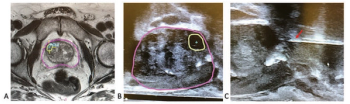
Advanced imaging and improvements in biopsy techniques usher in a new paradigm for screening and diagnosis.
The addition of the AKT inhibitor ipatasertib to abiraterone acetate and prednisone improved radiographic progression-free survival, with overall survival data still eagerly anticipated.
A new drug application has been submitted to the FDA for TLX591-CDx, a radiopharmaceutical cold kit for the preparation of 68Ga-PSMA-11 injection for PET imaging in prostate cancer.

Treatment with AMG 160 showed a manageable safety profile with preliminary efficacy in patients with metastatic castration-resistant prostate cancer.

The PARP inhibitor reduced the risk for death by 31% in men with metastatic castration-resistant prostate cancer, compared with enzalutamide or abiraterone plus prednisone.

Based on the findings, investigators recommended that systematic biopsy be performed in patients with negative MRI and in addition to targeted biopsies in men with a positive MRI.
The FDA has granted fast track designation to EPI-7386, an oral, highly selective N-terminal domain inhibitor of the androgen receptor for treatment of mCRPC resistant to standard-of-care treatment.
Updated results were also reported on other key end points, including time to pain progression, first symptomatic skeletal event, and initiation of chemotherapy.
Combination approach could overcome mechanisms that previously led to poor outcomes with single-agent checkpoint inhibition.

Advances in receptor targeted PET imaging continue to refine the identification of metastatic disease.
Advertisement
Advertisement