




Prostate Cancer
Latest News
Advertisement
Latest Videos




CME Content








Advertisement
More News
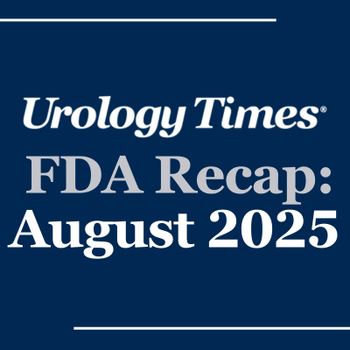
A recap of the FDA submissions and regulatory decisions in urology from August 2025.

Many clinicians do not explain how the consultation will unfold or clearly define the respective roles of physician and patient.

The approval is supported by findings from an open-label, single-arm, phase 3 trial.
Rana R. McKay, MD, FASCO, details the key efficacy and safety findings from the phase 2 COMRADE trial.

The findings highlight a lack of awareness on the signs and symptoms of prostate cancer, as well as common misconceptions about testicular cancer.

Timothy D. McClure, MD, offers his thoughts on how future advancements will inform the role for focal therapy in prostate cancer.

The findings were derived from the multicenter, prospective, phase 3 STAMPEDE trial.

Christopher Weight, MD, MS, discusses the current state and directions of AI and prostate cancer.
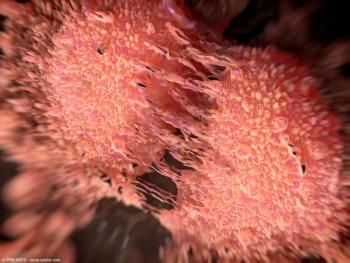
“This shows that AI analysis of routine biopsies can detect subtle signs indicating clinically significant prostate cancer before it becomes obvious to a pathologist," says Carolina Wählby, PhD.

Darolutamide plus ADT has also been approved in the US as well as in the European Union.
Kevin Shee, MD, PhD, shares findings on factors associated with recurrence and treatment failure following HIFU for prostate cancer.

The presentations featured data on the drug candidate BOTRESO for BPH and LUTS, as well as on the prostate cancer prevention drug MCS-8.

The tool is designed as a patient-facing application that can be used both during clinic visits and independently at home.
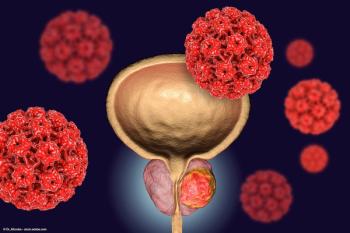
Robert B. Den, MD, outlines the exploratory applications of the Alpha DaRT technology across the prostate and bladder cancer landscapes.

Concurrent use of an ARPI with [177Lu]Lu-PSMA-617 did not improve response rates nor overall survival in patients with ARPI-refractory mCRPC.
Panelists discuss how patients currently on injectable androgen deprivation therapy can transition to oral options through an overlap period, and how stated drug interactions with androgen receptor pathway inhibitors have not been clinically significant in practice.

Timothy D. McClure, MD, outlines key findings from the PRESERVE trial, which evaluated IRE for prostate tissue ablation in patients with intermediate-risk prostate cancer.
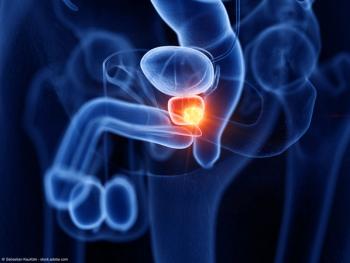
According to the authors, these data support the value of PSMA PET/CT in the pre-salvage radiotherapy selection process.
The agent is currently being evaluated in a phase 1/2 trial.

Urologists from the University of North Carolina share insights into key advancements across the field of urologic oncology.

Timothy D. McClure outlines his approach to patient selection with focal therapy as well as how NanoKnife fits into that landscape.
The ArteraAI test is now the first and only AI-powered tool to be authorized to prognosticate long-term outcomes in patients with localized prostate cancer.
Panelists discuss how shared decision-making allows patients to test-drive oral androgen deprivation therapy options, providing flexibility for those concerned about quality-of-life impact or performance status, enabling them to start or stop treatment as needed.
Panelists discuss how patient preference plays a significant role in androgen deprivation therapy selection, with most patients preferring oral agents that offer rapid onset and quick testosterone recovery when treatment is stopped.
HIFU was shown to be an effective and tolerable treatment option for patients with intermediate-risk localized prostate cancer.
Advertisement
Advertisement
Trending on Urology Times
1
Kathryn Gessner, MD, PhD, on the challenges of selecting patients for bladder preservation
2
First-in-human bladder transplant demonstrates sustained function at 6 months
3
Study shows durable 3-year outcomes with first-line gemcitabine/docetaxel in NMIBC
4
Department of Defense announces annual testosterone deficiency screening for service members
5