

Social media spreads significant misinformation about prostate cancer. Experts urge clinicians to provide trusted information sources.
Social media spreads significant misinformation about prostate cancer. Experts urge clinicians to provide trusted information sources.

View slated interviews with experts as well as insights from urologists on what to watch for.

Take a look through several of the notable phase 3 trials in progress that will be spotlighted at AUA 2025.

We preview several noteworthy P2 presentations in the urologic oncology space.

“At the Advocacy Summit earlier this spring, 2 of the 3 leave-behind documents that outlined specific issues related to urology priorities were directly informed by information from the Census,” says Matthew Nielsen, MD, MS, FACS.
“The way to move the organization forward is to listen to learn, not to win,” says J. Stuart Wolf, Jr., MD, FACS.

Raveen Syan, MD, highlights 2 sessions that she took part in during the 2024 AUA Annual Meeting in San Antonio, Texas on urodynamics in the context of the VALUE trial and the new wave of percutaneous tibial nerve stimulation devices.

"The other was that we found that about half of the patients in the CIS cohort and two-thirds of those in the Ta/T1 or papillary cohort had bladder preservation, meaning they were able to avoid cystectomy," says Vikram M. Narayan, MD.
“When we looked at the risk of bleeding and takeback for fulguration, the reported rate was 0.46%. Less than 1% of patients had any significant bleeding,” says Dean S. Elterman, MD, MSc, FRCSC.

"In our commercial all-comers cohort of patients undergoing Aquablation, efficacy was similar to and safety was improved compared to the WATER I and WATER II clinical trials," says Shawn H. Marhamati, MD, MS.
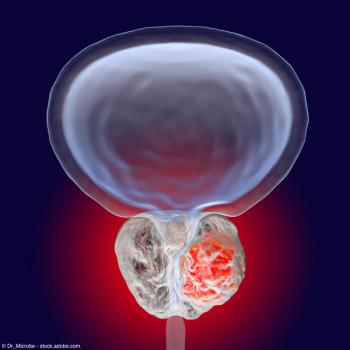
"So, there's a lot of evidence to point to the androgen receptor being an important player in at least developing this disease," says Edward M. Messing, MD.
“The 2018 AUA guidelines for testosterone therapy that were co-chaired by Dr. John P. Mulhall say that we have an absence or a paucity of data on using testosterone therapy on active surveillance,” says Helen L. Bernie, DO, MPH.

"But more excitingly, as early as 9 months, even though they were small numbers, the comparison between BCG and Anktiva vs BCG alone showed a statistical significance in the duration of ongoing complete response," says Patrick Soon-Shiong, MD.
"We're doing a lot of active surveillance, and it's good to know that most of these people are getting the appropriate care that they should receive," says Yuzhi (Katherine) Wang, MD.
“The results of the BRAVO study performed within the VA health care system showed significant decreases in the risk of recurrence and progression, as well as the potential for improved overall survival in patients who received a BLC compared to patients who received WLC only,” says Stephen B. Williams, MD, MBA, MS, FACS, FACHE.

Patients who received PUL experienced a greater reduction in inference regarding outdoor entertainment and community activities at 1 month vs WVTT.

“Also, the technique lends itself really nicely to these, what we call posterior ball-valve tumors, which are these tumors that sit behind the renal hilum, behind the blood vessels on the posterior side of the kidney,” says Alexander Kutikov, MD, FACS.

There was a statistically significant reduction in average daily micturition episodes and average daily urgency episodes with vibegron vs placebo.

In this video, 4 experts discuss the highlights and take-home messages from the 2024 American Urological Association Annual Meeting.

Real-world data showed routine use of darolutamide regimens in community urology practice for patients with metastatic hormone-sensitive prostate cancer.
"We've developed the Get Moving Trial, which is a randomized controlled phase 1/2 trial to demonstrate the safety, feasibility and efficacy of a home-based pre-op program that is personalized," says Sarah P. Psutka, MD, MSc.
UGN-101 showed efficacy in a broad population of patients with upper tract urothelial cancer and recurrence-free survival rates were high among patients who responded to UGN-101 induction therapy.

"So, in the MoonRISe-1 study, we're studying the efficacy of TAR-210 to prevent recurrence within the bladder by inserting the TAR-210 in the bladder every 3 months for up to 1 year, compared to intravesical chemotherapy," says Roger Li, MD.

Treating patients with localized prostate cancer with high-intensity focused ultrasound led to noninferior salvage treatment-free survival vs radical prostatectomy.
Patients receiving PUL experienced improvements of 8.6 and (39.1%) and 10 (46.8%) in IPSS total score.
The erdafitinib intravesical delivery system TAR-210 was safe and showed strong initial efficacy in patients with non–muscle-invasive bladder cancer with select FGFR alterations.

There were no adverse events, such as penile bruising, swelling, edema, allergy, or penile fracture, observed in patients treated with shockwave therapy plus platelet rich plasma.
The investigators found that the propulsion group had a 70% lower risk of relapse than the control group (HR 0.30, 95% CI: 0.13-0.68).

“At 60 months, nadofaragene allowed bladder preservation in nearly half of the patients in the CIS cohort and two-thirds of patients in the Ta/T1 cohort,” said Vikram Narayan, MD.
Roger R. Dmochowski, MD, MMHC, highlights the FDA approval of the Revi System, specifically touching on how the device may be used as a potential earlier line of therapy for patients with OAB.