

The median time to PSA0.2 was 3.5 months in the apalutamide group, 4.4 months in the enzalutamide cohort, and 7.1 months in the abiraterone acetate group.
The median time to PSA0.2 was 3.5 months in the apalutamide group, 4.4 months in the enzalutamide cohort, and 7.1 months in the abiraterone acetate group.

The deep PSA responses with the darolutamide regimen were found to be correlated with improved overall survival and a prolonged time to PSA progression.
The overall survival benefit of darolutamide in the North American population as a whole was also specifically observed in Black/African American patients.

"Something that we did find that was more promising was that regardless of whether a patient did or did not have a mental health disorder diagnosis, that did not affect their rate of receiving gender-affirming medical therapy," says Helen Sun, MD.
Irrespective of response to first-line platinum-based chemotherapy, frontline maintenance therapy with avelumab plus best supportive care (BSC), compared with BSC alone, prolonged overall and progression-free survival in patients with advanced urothelial carcinoma.
“The benefits of FAP-PET imaging include the higher specificity compared to conventional imaging. There's also the potential for upstaging,” said Domenique Escobar, MD.

"Patients with a prior BPH procedure were on average older than our HoLEP controls; however, there were no other differences in preoperative patient characteristics or postoperative functional outcomes," said Nicholas S. Dean, MD.
"We found that on average, [a] patient went into surgery with a GFR of about 55, and came out with a GFR of about 44," says Steven Campbell, MD, PhD.

"Dose reduction for patients with small body size may alleviate skin AEs without sacrificing oncological outcomes,” said Kyo Togashi.
"Overall, we found that Prostate Health Index above 55 preoperatively was associated with any incidental prostate cancer as well as clinically significant prostate cancer," says Eric Li, MD.

Clinical progression-free survival following the first cycle of radioligand therapy was 6.3 months, and overall survival following the first cycle was 21.4 months.
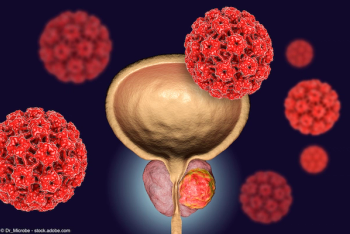
A database analysis of patients who participated in the STAMPEDE trial showed that zoledronic acid can significantly lower the risk of fracture in patients with with metastatic hormone-sensitive prostate cancer starting long-term ADT.

"When we put this course together, we didn't want it to be a course about working more; it was really about working more efficiently, so that you can gain more time outside of work," says Angela B. Smith, MD, MS.
Antegrade mitomycin gel instillation was done through a percutaneous nephrostomy tube.
“Our main finding was that participants who reported food insecurity in the past year were 65%, more likely to experience urge incontinence compared to those who were food secure,” says Chihiro Okada.
Patients in the study had tumors that were not completely resectable.

The investigators concluded that a phase 3 trial is warranted.
In the PADRES trial, neoadjuvant axitinib facilitated partial nephrectomy in patients with clear cell renal cell carcinoma and complex masses with an imperative indication for nephron-sparing surgery but no viable pathway to receive the procedure.
“We found that men with an elevated FSH but a normal semen test were more likely to have a decline in their sperm concentration and their total motile sperm count over time…when compared to men also starting with the normal semen test but with a normal FSH,” says Joshua Halpern, MD.
“It’s an exciting time in UTUC,” says Joseph Jacob, MD.

“A ureteral stent can be bothersome, but it’s quite variable. Some people don’t even feel the stent and some people have severe symptoms,” says Johnathan Harper, MD.

Investigators reported that all responders had FGFR3 mutations and that most non-responders had a prior history of bladder cancer, with 1 patient having a FGFR3-TACC3 fusion.

“These findings are hypothesis-generating and suggest a possible therapeutically synergistic role for immune checkpoint blockade in [patients with] BCG-unresponsive NMIBC who may have partial or short-term response to nadofaragene treatment,” said lead study author Anirban P. Mitra, MD, PhD.

“[Mitomycin gel] is efficacious as a [chemoablation] agent in adult patients with low-grade upper tract urothelial cancer, and while it’s FDA approved for both antegrade and retrograde administration, prior reports are limited to the retrograde experience,” said study investigator Kyle Rose, MD.

The neoadjuvant combination of the PD-1 inhibitor tislelizumab and nab-paclitaxel induced a high rate of pathologic complete response in patients with muscle-invasive bladder cancer.

The investigators report that no device or procedure-related serious adverse events have occurred.

Treatment with the temporary implantable nitinol device led to a marked reduction in symptoms and improvement in quality of life and functional parameters.

“With proper training and proper technique, there really can be drastic changes that can be made without having to do a surgical intervention,” commented first author Alissa Tyler, RN.

Concurrent treatment with intravenous vitamin C and chemotherapy may benefit cisplatin-ineligible patients with locally advanced muscle-invasive bladder cancer.

Katie Murray, DO, discusses findings from a real-world study of antegrade administration of reverse thermal mitomycin gel for primary chemoablation of upper tract urothelial carcinoma via percutaneous nephrostomy tube.