
“Our time with patients is very truncated. EMRs actually get in the way of good care. They consume huge amounts of time," says one urologist.
“Our time with patients is very truncated. EMRs actually get in the way of good care. They consume huge amounts of time," says one urologist.

"Advanced practice providers are uniquely positioned to advocate for an individualized approach to patient care through shared decision-making," writes Adele M. Caruso, DNP, CRNP.

"I'm not opposed to making a profit, and certainly businesses that take the risk to develop new technology should be financially rewarded for bringing that technology to market. But should life-changing technology be limited to those who can pay?" ponders Dr. Rosevear.

A 69-year-old woman was transferred from an outside institution to our inpatient service with recurrent gross hematuria. Two weeks prior to transfer, she underwent routine bilateral ureteral stent exchange, which was complicated by gross hematuria with significant clot burden.
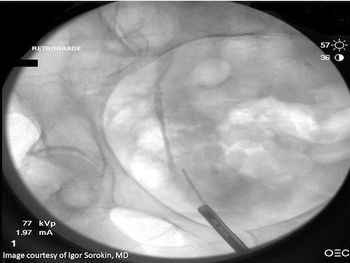
Igor Sorokin, MD, presents the case of a woman with a history of microhematuria and two positive cytologies for urothelial carcinoma. Ureteroscopy on the right side reveals three lesions.
“I don’t expect appreciation... But I believe patients do appreciate what we do, and it’s nice to receive thanks," says one urologist.
"The next time you think about what you would do instead of becoming a doctor and especially a urologist, just stop and be thankful you chose urology," writes Neil H. Baum, MD.
“Florida, specifically South Florida, is a very tough place to practice. There’s a fairly prominent infiltration of Medicare HMOs with a lot of obstruction to doing anything for the patient that’s necessary," says one urologist.
Practical strategies are available to help you collaborate, not compete.
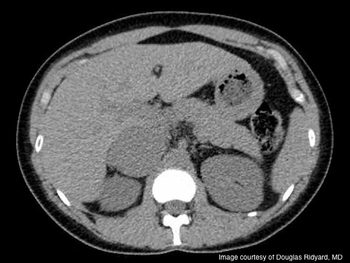
An 18-year-old previously healthy collegiate athlete presented to the emergency room with a rapid weight gain of 20 pounds during the previous 2 months. She complained of significant fatigue and irregular menstrual periods.
“I think the main thing is being able to empathize with your patients-simply because a lot of these patients become patients we end up having a pretty long relationship with," says one urologist.

These videos demonstrate significant advances in percutaneous nephrolithotomy technique that can serve to optimize outcomes, reduce OR time, and help achieve optimal results.
"It can be a scary world online and it did take me over 5 years in the real world to finally engage with social media. But it is something that I encourage all physicians to consider," writes Henry Rosevear, MD.
Urologists can easily miss or disregard these important aspects of contracts, which could come back to haunt them.
A 34-year-old male has a known left atrophic kidney. He has been suffering from recurrent bouts of prostatitis and ejaculatory pain radiating to his left flank. An MRI was obtained to evaluate the patient’s anatomy.
"Urologists frequently become enamored by the research and the unique characteristics of new technology. The business management team must ask the hard questions," writes Rick Rutherford, CMPE.
A 25-year-old male presents with 4 weeks of intermittent right flank pain occasionally radiating to the testicle. CT shows a 7-cm partially necrotic retroperitoneal mass at the level of the right renal vein and a 2-cm lesion overlaying the right psoas muscle.
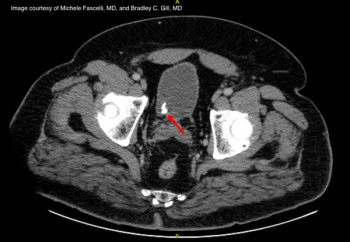
An elderly male with hypertension, lumbar spinal stenosis, morbid obesity, and ED presents with acute right-sided worsening of his chronic back pain. A distal right ureteral stone is found on CT and his symptoms respond well to medical therapy, but he later develops severe right flank pain.
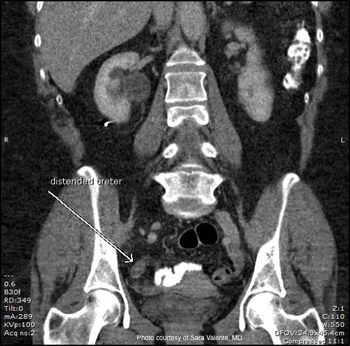
A 61-year-old female complains of acute-onset right-sided flank and abdominal pain. She describes associated nausea, but denied urinary symptoms, hematuria, fever, or chills.
Nirmish Singla, MD, offers career planning tips to urology residents who may be approaching the end of their training.
Urology resident Nirmish Singla, MD, discusses the insight he’s gained from the experiences and perspectives of visiting professors and residents.
While no resource is perfect, it is worthwhile to familiarize yourself with some contemporary methodology and predictive tools to help determine life expectancy in localized prostate cancer patients.
Millennial urologists appear to have developed strong opinions on health policy as reflected by their recent social media activity, observes urologist Alan L. Kaplan, MD.
"The use of Twitter continues to grow within the field of urology, and it is important for residents to become well-versed in this important platform," writes Stacy Loeb, MD, MSc.
While questions about experience can be uncomfortable for new surgeons, Nirmish Singla, MD, believes the process of mastering procedures is invaluable to conveying the confidence necessary to help patients feel comfortable.
Urologic oncology fellow, Ariel Schulman, MD, shares some tips to help residents make research a positive experience.
Urology resident, Nirmish Singla, MD, goes over some of the ways urologists can stay educated and informed in the infinite and dynamic curriculum that defines the medical field.
From AUA guidelines to a prostate cancer risk calculator, here are some useful apps recommended by urologists.
Urology resident, Amy Pearlman, MD, discusses how the experience of helping her mother go through radiation therapy changed how she is able to relate to her patients.