
Press Release
“The medication is given once a week for 6 weeks. It is an outpatient procedure with general anesthesia. And it is typically covered by insurance,” said Joseph Brito, MD.
Press Release
“The medication is given once a week for 6 weeks. It is an outpatient procedure with general anesthesia. And it is typically covered by insurance,” said Joseph Brito, MD.

Michael S. Leapman, MD, MHS, highlights a study of patient experiences with tissue-based genomic testing during active surveillance for prostate cancer.

"We also saw in the high-risk group that patients who identified as Black were much more likely to not receive treatment than their White counterparts," says Madison Novosel, BA.

"The Medicaid and uninsured patients had significantly lower odds of getting treatment than those who [have] private insurance," says Madison Novosel, BA.

Yale School of Medicine Associate Professor of Urology Michael Leapman, MD, MHS, and coauthors estimated the environmental impacts of prostate MRI and prostate biopsy.

“We need to leverage these great platforms to put out high-quality information with experts that people can listen to from home or on the go and get the information that they need,” says Stacy Loeb, MD, MSc.

"[This is] a group of patients that there are few treatments available for, and we're excited about the data," says Daniel P. Petrylak, MD.

“These data support further evaluation of sacituzumab govitecan—alone or in combination—in patients with metastatic urothelial carcinoma who progressed after prior CPI therapy,” says Daniel P. Petrylak, MD.

“It seems like podcasts really are a good way for people to learn about even a complex topic like this,” says Stacy Loeb, MD, MSc.

“I think this is a nice cluster of podcasts that really go at this from different angles,” says Stacy Loeb, MD, MSc.

“So many patients with prostate cancer qualify for genetic testing, but it's currently underutilized,” says Stacy Loeb, MD, MSc.

An associate professor of Urology at Yale School of Medicine, Dr. Kenney specializes in treating genitourinary cancers, with a particular focus on kidney cancers.

"I think there's a lot of fear that can go into talking about these topics," says Katherine Rotker, MD.
Press Release
“We now have convincing evidence that these tests help identify more sites of prostate cancer," said Michael Leapman, MD.

"We increasingly see the evolving role of ‘precision medicine’ in urology, using genetic and genomic testing to guide [management] for a variety of diseases, particularly bladder and prostate cancer," says 1 urologist.

Press Release
A Yale chemist and oncologist collaborated to create a new treatment for prostate cancer that tags specific proteins within the cancerous cells, making it easier for the body’s natural mechanisms to identify and destroy them.

Press Release
"I have no doubt we’ll become a destination program. We have a great team. Combined with a few key recruitments, we will be set to take our place on the global stage of urology," says Isaac Y. Kim, MD, PhD, MBA, urology professor and chair, Yale Urology.

Press Release
"It’s the most satisfying of all the things I do as a surgeon. The benefits are so dramatic and often immediate," said Daniel Kellner, MD.

Press Release
Yale Urology has ranked among the top 50 urology programs in the nation and #1 in Connecticut in U.S. News & World Report’s just-released listing.

Press Release
“We found that Medicaid acceptance differed widely across cancer care facilities," said Michael Leapman, MD, MHS, associate professor of Urology, clinical program leader for the Prostate & Urologic Cancers Program at Yale Cancer Center and Smilow Cancer Hospital.

Press Release
Smilow Cancer Hospital offers the latest treatments for prostate cancer, including single-port robotic radical prostatectomy.
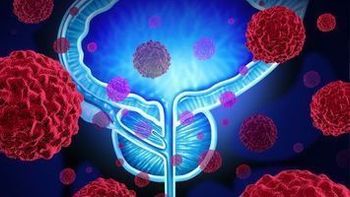
Proteolysis-targeting chimaera, or PROTACs, work by using elements of the body’s natural protein recycling system and recruiting them toward cancerous proteins

Press Release
"Because testicular cancer is most often diagnosed in young men and treatments are very successful, the focus is on minimizing the short- and long-term impacts of treatment," says Sprenkle.

Press Release
Preventable factors account for a large part of the formation of tumors of the bladder and skin.

In discussing treatment determinations, Petrylak noted that for patients with low PD-L1 expression had decreased survival benefits compared with patients treated with chemotherapy in the monotherapy arms of the phase 3 KEYNOTE-361 (NCT02853305) and phase 3 IMVIGOR-130 (NCT02807636) trials.
“There are many trials that clinicians should be aware of,” says Daniel P. Petrylak, MD.

“One of the reasons I so enjoy this conference is the multidisciplinary nature,” says Peter A. Humphrey, MD, PhD.
“This first disclosure of data supports the ongoing phase 2 and 3 programs evaluating enfor-tumab vedotin alone or in combination with pembrolizumab in MIBC,” said Daniel P. Petrylak, MD.

"These findings underscore the importance of screening guidelines from the task force and the rapid responsiveness of clinicians and patients,” said Michael S. Leapman, MD.

A recent study sought to investigate the trends in sudden and significant private equity acquisitions among urology practices between 2011 and 2021.