

MRI-guided transurethral ultrasound ablation (TULSA) demonstrated efficacy and safety as a treatment for patients with lower urinary tract symptoms due to benign prostatic hyperplasia.
MRI-guided transurethral ultrasound ablation (TULSA) demonstrated efficacy and safety as a treatment for patients with lower urinary tract symptoms due to benign prostatic hyperplasia.
The mechanism of action of roxadustat differs from that of erythropoietin stimulating agents.
The VERACITY study was launched following positive findings with sabizabulin in a phase 1b/2 trial, the latest data from which were presented at the 2021 ASCO Annual Meeting.

No serious complications occurred during or following the surgical procedure.
The approval is based on a subgroup analysis of the pivotal phase 3 PROfound trial.
The study is enrolling patients with DNA damage response–deficient metastatic castration-sensitive disease.

Integrating immunotherapy into bladder-sparing approaches may enhance the efficacy and uptake of these strategies in bladder cancer.
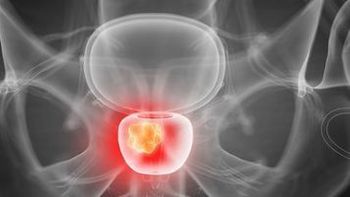
225Ac-J591 combines J591, a monoclonal antibody that recognizes PSMA, with actinium-225 (225Ac), a potent alpha-emitter.

Here are some news items in the urology field you may have missed this week.

There were no reductions in any sperm parameters, including semen volume, sperm concentration, sperm motility, and total motile sperm count.
Piflufolastat F 18 effectively detected and pinpointed metastatic lesions with high positive predictive value, regardless of anatomic region.
The primary outcome measure of the phase 3 ATHLETE study is the noninferiority of aquablation versus HoLEP in alleviating lower urinary tract symptoms related to benign prostatic obstruction.

The designation, which will expedite the development and review of 177Lu-PSMA-617 in this setting, is based on findings from the phase 3 VISION trial.

The national health insurance program is now covering Elitone, a surface-applied electrical muscle stimulation device for female stress urinary incontinence that patients self-administer at home.
A single-dose of the targeted radioligand therapy administered with pembrolizumab led to durable objective responses in patients with mCRPC.

The Decipher Prostate genomic classifier identified biomarkers associated with improved apalutamide outcomes in nonmetastatic castration-resistant prostate cancer.
Trilaciclib is a CDK4/6 inhibitor that has been shown to help lower the occurrence of chemotherapy-induced myelosuppression.

A phase 2 study explored the addition of berzosertib to standard cisplatin/gemcitabine in patients with advanced urothelial cancer.
The phase 3 SWOG S1216 trial compared ADT plus either the novel agent TAK-700 or bicalutamide in patients with newly diagnosed metastatic hormone-sensitive prostate cancer.

The phase 2 HCRN GU16-257 trial explored the bladder-sparing regimen of TURBT plus nivolumab and chemotherapy in patients with muscle-invasive bladder cancer.

The final KEYNOTE-426 analysis represents the longest follow-up of a checkpoint inhibitor plus a VEGF/VEGFR inhibitor in frontline clear cell RCC, according to the investigators.
Amid a recent FDA approval and impressive phase 3 data shared during ASCO, there has been a flurry of activity in the PSMA space.
Overall survival and progression-free survival data from the phase 3 VISION trial were shared as part of the 2021 ASCO Annual Meeting.
The PD-1 inhibitor met the primary end point in a monotherapy trial but fell short when used in a combination regimen in a separate trial.

PARP inhibitors are recent additions to the prostate cancer armamentarium and adverse event management is critical to their optimal integration into clinical practice.

The guideline was initially published in 2013 and was last amended in 2017.

Ahead of the 2021 ASCO Annual Meeting, Michael S. Cookson, MD, co-editor in chief of Urology Times, shared his thoughts on the most pivotal abstracts in genitourinary cancer.
The new treatment is a ready-to-use 6-month subcutaneous depot formulation of leuprolide mesylate.
The FDA has approved the PSMA PET imaging agent 18F-DCFPyL for use in prostate cancer.
The updated data included 132 patients, all of whom had prior enzalutamide and/or abiraterone acetate.